

Think the shiny claim on the front tells you if a food helps your blood sugar?
Not even close.
The nutrition facts panel is the tool that actually predicts how a food will hit your energy, hunger, and insulin—if you know where to look.
This post gives a simple, repeatable scan: serving size first, then %DV for fiber, added sugars, saturated fat and sodium, plus the ingredient list, so you can pick groceries that keep blood sugar steady without overthinking it.
Core Steps for Reading Nutrition Labels to Support Metabolic Health
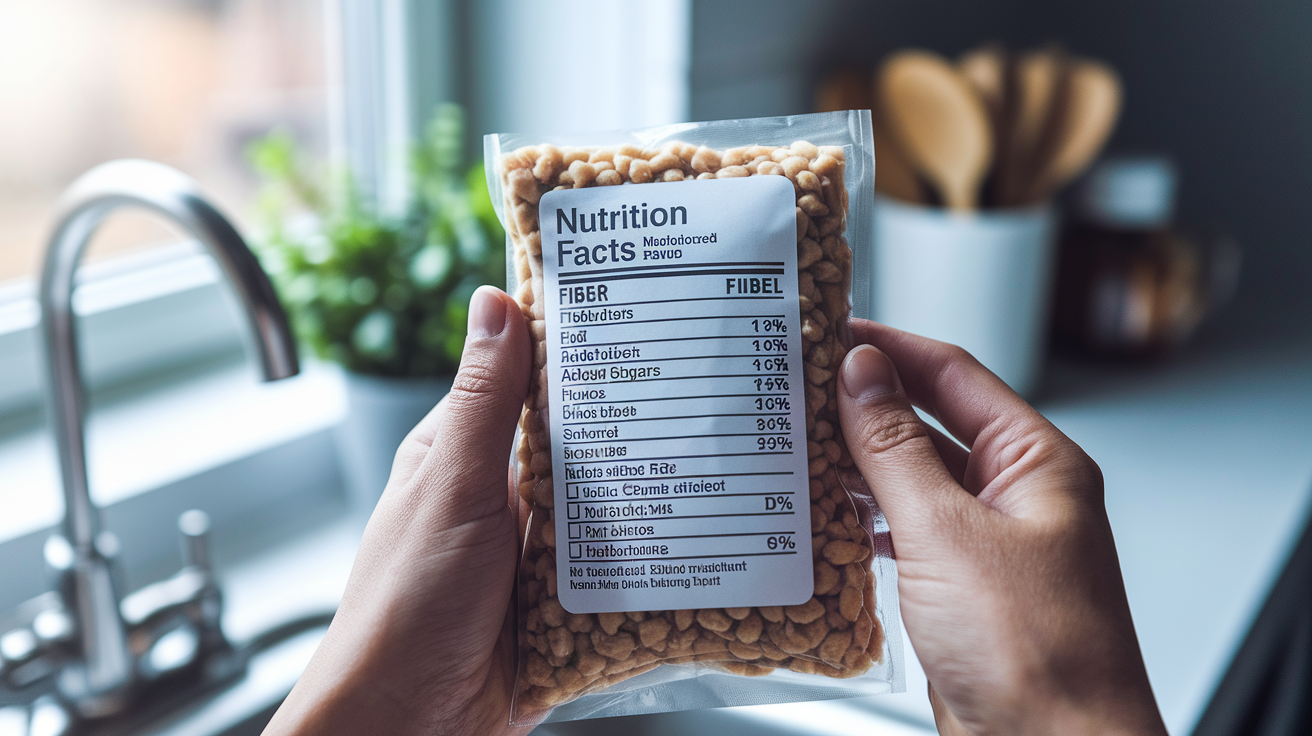
The nutrition facts panel is the most practical tool you’ve got for picking foods that keep blood sugar stable, dodge insulin spikes, and cut long-term disease risk. When you know how to read it, you stop falling for front-of-package nonsense and start making calls based on what actually happens in your body after you eat. The label shows you exactly what your meal delivers: carbohydrate load, fiber to slow things down, protein to keep hunger away, and the kinds of fats and additives that either work with your metabolism or mess it up.
You don’t need a nutrition degree. You need a simple scan order and a few key numbers. The %DV column helps you judge nutrient density fast. It’s built on a 2,000-calorie baseline, and the 5/20 rule (5% DV is low, 20% or higher is high) tells you whether a food loads you up on what you need or what you should avoid. Added sugars, fiber, saturated fat, sodium, and serving size are the big five. Together they predict how a food will hit your energy, hunger, and insulin over the next few hours.
Here’s the order to follow every time:
- Start with serving size and servings per container so you know if the numbers reflect what you’ll actually eat, not some tiny marketing portion that’s half a cookie.
- Scan the %DV column for fiber (want high), added sugars (want low), saturated fat and sodium (both want low).
- Check the ingredient list for whole foods first, and watch for red flags like partially hydrogenated oils, long chemical names, or sugar hiding under five different names.
- Recalculate total calories and carbs if you’re eating more than one serving, which you almost always are with snacks, drinks, and prepared meals.
Later sections break down each piece, but that scan handles 90% of your grocery calls.
Serving Size and Calories on Nutrition Labels for Metabolic Health
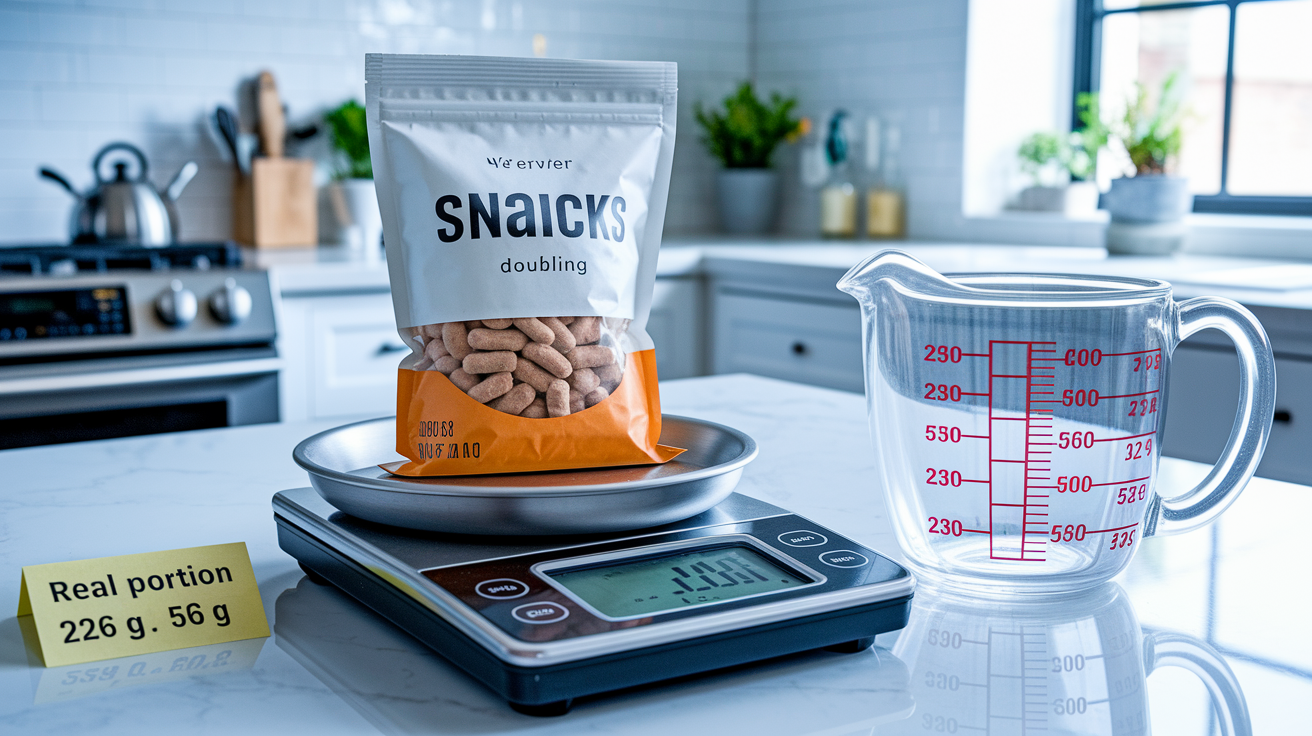
Serving size is bold at the very top, and it controls every other number below it. If a bag of chips says “150 calories per serving” but the package holds 2.5 servings, you’re looking at 375 calories if you finish the bag. Not 150. The same math applies to total carbs, added sugars, sodium, everything. Serving sizes are set by the FDA to reflect what people typically eat in one sitting, but labeled servings are often way smaller than real portions. Especially for calorie-packed snacks, sugary drinks, and packaged desserts.
To get the real numbers, check “servings per container” and multiply. Or weigh your actual portion in grams or ounces and compare it to what’s listed. If the label says “serving size: 28 grams (about 10 chips)” and you measure out 56 grams, you’ve eaten two servings. Double everything. Calories per serving assume a 2,000-calorie diet, typical for a moderately active woman. The average man needs closer to 2,500. Your target might be higher or lower depending on age, activity, and whether you’re trying to lose weight or build muscle.
| Item | Labeled Serving | Realistic Portion | Total Calories |
|---|---|---|---|
| Potato chips | 28 g (1 oz, about 10 chips) = 150 cal | 56 g (2 servings) = typical handful | 300 calories |
| Granola | 30 g (¼ cup) = 120 cal | 60 g (½ cup) = typical bowl serving | 240 calories |
| Pasta sauce (jar) | ½ cup = 60 cal | 1 cup (2 servings) = one-person portion | 120 calories |
| Peanut butter | 2 Tbsp (32 g) = 190 cal | 3–4 Tbsp (1.5–2 servings) = generous sandwich spread | 285–380 calories |
Carbohydrates, Fiber, and Added Sugars on Nutrition Labels

Total carbs on the label include everything that turns into glucose. Dietary fiber, naturally occurring sugars (like lactose in milk or fructose in fruit), and added sugars (syrups, table sugar, honey, sweeteners added during processing). For metabolic health, the type of carb matters way more than the total. Fiber slows digestion, blunts the glucose spike, feeds good gut bacteria, and keeps you full. Added sugars do the opposite. They deliver fast glucose with no fiber buffer, spike insulin, and pack empty calories that don’t kill hunger.
The label breaks out “Dietary Fiber” and “Total Sugars” as sub-items under total carbs. Since 2020, it also lists “Added Sugars” separately. Your daily fiber target is 25 to 35 grams. Look for products that deliver at least 3 grams per serving to qualify as a “good source,” and go for 5 grams or more when you’re picking a carb-heavy food like bread, cereal, or pasta. For added sugars, the Dietary Guidelines say keep them under 10% of total daily calories, roughly 50 grams on a 2,000-calorie diet. But the American Heart Association sets tighter limits. Women should stay at or below 25 grams per day (about 6 teaspoons), men at or below 36 grams per day (about 9 teaspoons). If one snack bar has 12 grams of added sugar, you just burned half your daily budget.
Net carbs are a number you won’t see printed, but lots of people calculate it for blood sugar management. It’s roughly Total Carbs minus Fiber minus certain sugar alcohols (like erythritol, which barely touches blood sugar). The formula looks like this: if a protein bar lists 20 g total carbs, 10 g fiber, and 5 g erythritol, net carbs are about 20 − 10 − 5 = 5 grams. Net carbs give you a better read on glycemic load than total carbs alone, especially when fiber and sugar alcohols are significant.
Here are the cues to watch for:
- Hidden sugar names include high-fructose corn syrup, cane syrup, maltose, dextrose, agave nectar, rice syrup, and fruit juice concentrate. Any of these in the top three ingredients means added sugars run the show.
- High-fiber product markers are whole grains listed first (whole wheat, oats, quinoa), legumes (lentils, chickpeas), or vegetables and fruits with skin. A fiber-to-total-carb ratio above 1:5 is a decent rough target.
- Sugar alcohols like xylitol, maltitol, and sorbitol are only partly absorbed and have about half the glycemic punch of sugar, but they can mess with your stomach in bigger doses. Erythritol is easier on digestion and has almost zero glycemic impact.
- Glycemic-load inference from the label is simple. Divide net carbs by portion size and compare fiber content. A 30-gram net-carb serving with 1 gram of fiber will spike blood sugar way faster than a 15-gram net-carb serving with 8 grams of fiber.
- Realistic serving check matters most for carb-heavy foods. If the label says “1 cookie = 15 g total carbs” but you eat three cookies, you’re at 45 grams. Often more than a full meal’s worth.
How to Estimate Glycemic Load from Label Data
Glycemic load combines the quality and quantity of carbs in a serving. The label doesn’t print a glycemic-load number, but you can estimate it using net carbs and portion size. High glycemic load means a big, fast blood sugar spike. Low glycemic load means a smaller, slower rise. To judge it, look at net carbs per serving (total carbs minus fiber) and compare that to the food’s fiber and protein content. A slice of white bread with 15 net carbs and less than 1 gram of fiber has a high load. A slice of whole-grain bread with 12 net carbs, 4 grams of fiber, and 5 grams of protein has a much lower load, even though the total carb difference is tiny.
Pair any higher-carb food with protein and fat (like peanut butter on toast or cheese with crackers) to blunt the glucose response. And always recalculate for realistic portions, since glycemic load scales directly with how much you eat.
Understanding Fat Quality, Sodium, and Cholesterol for Metabolic Health

Total fat on the label includes saturated, unsaturated, and trans fats, but only saturated and trans are required to be listed separately. Saturated fat is the kind that raises LDL cholesterol and bumps up heart and metabolic risk when you eat too much. Current guidance says limit saturated fat to about 10 to 13 grams per day on a 2,000-calorie diet, roughly 5 to 6% of total calories. Trans fat should be zero. Period.
Even if the label says “0 g trans fat,” check the ingredient list for “partially hydrogenated oil.” FDA labeling rules let products with less than 0.5 grams of trans fat per serving round down to zero. Those small amounts add up fast if you eat multiple servings or multiple products in a day.
Unsaturated fats, the heart-healthy kind in olive oil, avocados, nuts, seeds, and fatty fish, don’t get their own line on the nutrition facts panel. You have to infer them by looking at total fat minus saturated fat. For metabolic health, go for foods where most of the fat is unsaturated, and use the %DV column for saturated fat as a quick filter. Sodium is another big risk factor. The USDA says no more than 2,300 milligrams per day, and many experts push for even lower if you have high blood pressure or insulin resistance. A single serving of many packaged soups, frozen meals, and salty snacks can deliver 600 to 1,200 milligrams. Sometimes half your daily limit in one item.
For cholesterol, current guidelines suggest staying under 300 milligrams per day if you have elevated LDL or a history of heart disease. But dietary cholesterol has less impact on blood cholesterol than saturated and trans fats do for most people.
Here are the label red flags that scream poor fat and sodium quality:
- Saturated fat %DV above 10% per serving, especially in snacks, desserts, or processed meats. Those pile up quick.
- “0 g trans fat” paired with partially hydrogenated oils in the ingredient list, which means hidden trans fat that rounds down on the label.
- Sodium content over 600 milligrams per realistic meal portion, common in canned soups, deli meats, frozen dinners, and restaurant-style sauces.
- High total fat with very low protein, often a sign of empty-calorie foods like chips, pastries, or fried snacks that deliver fat and refined carbs without filling you up or doing anything useful.
Using % Daily Value to Judge Nutrient Density

Percent Daily Value, or %DV, is the column on the right side of the panel. It tells you how much one serving contributes toward the daily recommended intake of each nutrient, based on a 2,000-calorie diet. The 5/20 rule is the fastest way to read it. 5% or less means the food is low in that nutrient. 20% or more means it’s high. For nutrients you want more of (fiber, protein, vitamin D, calcium, iron, potassium), look for high %DV. For nutrients you want to limit (saturated fat, sodium, added sugars), look for low %DV.
%DV helps you spot nutrient-dense foods versus empty-calorie junk at a glance. A breakfast cereal with 20% DV fiber and 3% DV added sugars is useful. A cereal with 2% DV fiber and 25% DV added sugars is basically dessert. Same logic applies to snacks, breads, sauces, any packaged food. The %DV column gives you a fast yes or no on whether the product works with your goals or against them.
| Nutrient | Desired %DV Range | Reason for Metabolic Health |
|---|---|---|
| Dietary Fiber | ≥20% (high is good) | Blunts glucose spikes, improves satiety, supports gut health |
| Added Sugars | ≤5% (low is good) | Reduces insulin spikes, lowers inflammation, prevents empty-calorie intake |
| Saturated Fat | ≤5% (low is good) | Lowers LDL cholesterol and cardiovascular risk |
| Sodium | ≤10% per serving; ≤20% per meal | Reduces blood pressure and fluid retention, supports heart health |
| Vitamin D, Calcium, Iron, Potassium | ≥20% (high is good) | Supports bone health, oxygen transport, nerve and muscle function; most Americans are low in vitamin D and potassium |
Ingredient List Analysis for Blood Sugar and Inflammation Control

The ingredient list, printed below the nutrition facts panel, shows you what’s actually in the product. Not just the nutrient totals. Ingredients are listed by weight, heaviest first, so the first three ingredients make up most of what you’re eating. If the first ingredient is a whole food (like “oats,” “chicken,” or “black beans”), you’re starting from a good place. If the first ingredient is sugar, enriched flour, or soybean oil, you’re looking at a heavily processed product built on refined carbs and low-quality fats.
Short ingredient lists with recognizable whole foods are almost always better than long lists full of preservatives, artificial colors, and chemicals. Added sugars hide under dozens of names. Corn syrup, high-fructose corn syrup, cane sugar, maltose, dextrose, rice syrup, fruit juice concentrate, agave nectar, and more. Manufacturers often split sugars across multiple ingredients to keep any single sugar from showing up first on the list. Artificial sweeteners like aspartame, sucralose, and acesulfame potassium are calorie-free but may mess with insulin signaling, gut bacteria, and how your brain responds to sweet taste in ways that can undermine metabolic goals for some people.
Sugar alcohols like erythritol, xylitol, and sorbitol have varied effects. Erythritol is mostly inert. Others can cause digestive upset and modest blood sugar changes. Artificial colors (Red 40, Yellow 5, Blue 1) and preservatives (BHA, BHT, sodium benzoate) are markers of heavy processing and have been linked in some studies to inflammation and metabolic disruption, though the evidence is still evolving. The practical rule is simple. The fewer unpronounceable ingredients, the better. Look for whole-food sources of flavor, color, and preservation. Things like turmeric for color, vinegar for preservation, or spices for flavor, rather than lab-synthesized additives.
Here are the common ingredient red flags that signal metabolic trouble:
- Partially hydrogenated oils anywhere on the list, which means hidden trans fat even if the label says 0 grams.
- Sugar listed under multiple names in the first five ingredients, a tactic to hide total added-sugar content.
- Enriched or refined flour as the first ingredient, which strips fiber and micronutrients and delivers fast-digesting carbs.
- Artificial sweeteners (aspartame, sucralose, saccharin) if you’re trying to retrain taste preferences or avoid potential metabolic signaling effects.
- Artificial colors and preservatives (Red 40, Yellow 5, BHA, BHT), which are unnecessary in minimally processed foods and mark heavy processing.
- Long ingredient lists with more than ten items, especially if most are chemical names rather than recognizable foods. Sign of heavy processing and low nutrient density.
Recognizing Processed vs. Whole-Food Ingredients
The first three ingredients tell you almost everything. If you see “whole oats, almonds, honey,” you’re looking at a minimally processed food with intact nutrients and fiber. If you see “enriched wheat flour, sugar, soybean oil,” you’re looking at refined carbs, added sugars, and low-quality fats. The foundation of most metabolically harmful ultra-processed foods. Whole grains should say “whole” in the name (whole wheat, whole oats, whole rye), not just “wheat flour” or “multigrain,” which can still be refined.
Whole-food-first ingredients are single words or short phrases you’d recognize in a kitchen. Things like chicken, black beans, tomatoes, olive oil, sea salt, garlic, or cinnamon. Chemical-sounding names, long preservative lists, and multiple sugar synonyms are all signs to put the product back and look for something simpler.
Comparing Nutrition Labels to Make Better Metabolic-Health Choices

When you’re standing in the grocery aisle deciding between two similar products (bread, crackers, yogurt, pasta sauce), label comparison is the fastest way to pick the better option. Start with serving size to make sure you’re comparing apples to apples. If one product lists a 30-gram serving and the other lists 60 grams, you need to recalculate so you’re looking at the same portion. Then scan fiber, added sugars, sodium, and saturated fat. The product with higher fiber, lower added sugars, and lower sodium almost always wins, even if total calories are similar.
Lots of products use unrealistic serving sizes to make the nutrition numbers look better. A cookie that lists “half a cookie” as a serving, or a bag of chips that claims “about five chips,” is designed to trick you into thinking the product is lower in calories, carbs, or sugar than it really is. Check servings per container and grams per serving, and do the math for what you’ll actually eat.
For whole-grain claims, read the ingredient list to confirm that a whole grain (whole wheat, whole oats, brown rice) is listed first, not just somewhere on the list. “Enriched” or “wheat flour” without the word “whole” means refined grain. Low-sodium labels are regulated. A product can only claim “low sodium” if it has 140 milligrams or less per serving, which is a helpful shortcut when you’re managing blood pressure or fluid retention.
| Product A vs Product B | Fiber (per serving) | Added Sugar (per serving) | Sodium (per serving) | Serving Reality |
|---|---|---|---|---|
| Whole-grain bread A | 4 g | 2 g | 150 mg | 1 slice = realistic sandwich portion (2 slices = 8 g fiber, 4 g sugar) |
| Wheat bread B | 1 g | 5 g | 210 mg | 1 slice = realistic sandwich portion (2 slices = 2 g fiber, 10 g sugar) |
| Greek yogurt A (plain) | 0 g | 6 g (natural lactose, 0 g added) | 75 mg | 1 cup = typical single serving |
| Flavored yogurt B | 0 g | 18 g (12 g added sugars) | 90 mg | 1 cup = typical single serving (added sugars = half daily limit for women) |
Quick Label-Reading Checklist for Metabolic Health Success

Here’s the step-by-step order to follow every time you pick up a package. Designed to protect blood sugar, cut insulin spikes, and support long-term metabolic function.
- Check serving size and servings per container first, then recalculate all nutrients for what you’ll actually eat, not the marketing portion.
- Scan total calories per realistic portion to stay within your daily energy budget and avoid calorie-dense, nutrient-poor foods.
- Look at added sugars and aim for less than 5% DV per serving, ideally under 5 grams, to cut insulin spikes and empty calories.
- Check dietary fiber and go for products with at least 3 grams per serving, 5 grams or more is even better for blood sugar control and staying full.
- Review total carbs and calculate net carbs (total carbs minus fiber minus sugar alcohols) if you’re managing glucose closely.
- Verify protein content and aim for at least 20 to 25 grams per meal, using label data to build protein-rich plates that keep you full.
- Check saturated fat and keep it under 5% DV per serving, favoring unsaturated fats from whole-food sources.
- Look at sodium and avoid products with more than 600 milligrams per meal portion, especially if you have high blood pressure or metabolic syndrome.
- Read the ingredient list for whole foods first and red-flag partially hydrogenated oils, multiple sugar names, and long chemical lists, all markers of ultra-processing.
- Use the %DV column to compare products side by side, choosing high fiber and protein, low added sugars, low saturated fat, and low sodium as your green-light pattern. Put back anything with high %DV for added sugars or sodium and low %DV for fiber and protein.
Red flags include any product with 5% DV or higher for added sugars, sodium over 600 milligrams per realistic portion, saturated fat above 10% DV, artificial additives in the top five ingredients, and ingredient lists longer than ten items with mostly unrecognizable names. Green flags include 20% DV or higher for fiber or protein, whole grains or whole foods listed first, short ingredient lists with recognizable kitchen ingredients, and realistic serving sizes that match how people actually eat.
Final Words
Scan the serving size and calories first, then check added sugars, fiber, protein, and %DV. This post walked through serving math, carbs and sugar cues, fats and sodium red flags, ingredient‑list signals, and quick comparison tricks.
Use the short checklist when you shop to pick higher‑fiber, lower‑added‑sugar options more often.
Practice how to read nutrition labels for metabolic health by making one small swap this week — replace a sugary snack with a higher‑fiber choice. You’ll likely feel the difference.
FAQ
Q: How to read nutrition labels for weight loss?
A: Reading nutrition labels for weight loss means checking serving size and calories per realistic portion first, then prioritizing protein and fiber, limiting added sugars, and scanning %DV and ingredients for ultra‑processed cues.
Q: What is the 4 4 9 rule in nutrition?
A: The 4‑4‑9 rule means carbs and protein each provide 4 calories per gram, while fat provides 9 calories per gram—use it to estimate calories from macros on a label or for quick portion math.
Q: Does honey count as added sugar?
A: Honey counts as added sugar when it is used as an ingredient in foods or drinks; it will be included in the label’s added sugars total and should count toward daily limits.
Q: Is 20% DV good?
A: A 20% DV is considered high for that nutrient; it’s useful for fiber, potassium, vitamin D, or iron, but concerning for saturated fat, sodium, or added sugars—always check the nutrient context.

