

Think the calorie count is the whole story?
Not even close.
Calories are useful, but sodium and serving size usually do the real damage — one plate can wipe out most of your daily salt or be two or three listed servings in one go.
This post shows exactly what to scan on restaurant nutrition labels: the calories per full meal, the sodium in milligrams, and whether the serving size matches the plate in front of you.
Read on and you’ll learn quick checks and simple swaps that save calories and salt without killing the taste.
Key Elements to Examine on Restaurant Nutrition Labels
When you’re looking at a menu or staring at the wall board in a chain restaurant, start with calories. Federal rules require chains with 20 or more locations to post calorie counts next to every item, and those numbers reflect what you actually get unless the menu says otherwise. A combo meal showing 1,200 calories? That’s the whole thing. Drink and fries included. If only the entrée appears, you’ll need to add up the sides and beverage yourself or ask for the complete breakdown.
After calories, check sodium, saturated fat, added sugars, and the exact portion size those numbers are based on. Sodium matters because plenty of restaurant plates deliver more than the 2,300 milligram daily recommendation in one sitting. Saturated fat piles up fast in fried dishes, creamy sauces, and anything loaded with cheese. Added sugars sneak into glazes, barbecue sauce, sweet tea, dessert toppings. Portion size tells you whether the data matches what lands on your table, and that’s critical since restaurants often serve two or three times what you’d call a standard serving.
Most chains offer full nutrition info on printed cards, kiosks, or their website. If you want more than just the calorie number, you can ask for it. Here’s what to focus on when you get that panel:
- Calories per serving and per full meal. Multiply if the portion covers more than one serving.
- Sodium in milligrams. Compare it to the 2,300 mg daily limit. One entrée can eat up half or all of that.
- Saturated fat in grams. Try to keep total daily intake under about 13 grams if you’re eating around 2,000 calories.
- Added sugars in grams. The American Heart Association suggests limiting added sugars to around 25 grams per day for women, 36 for men.
- Serving size in grams, ounces, or pieces. Check whether the posted numbers reflect the whole plate or just part of it.
How Descriptive Menu Language Can Mislead Health Decisions

Words like “fresh,” “wholesome,” “fit,” “light,” or “garden” sound healthy but don’t mean anything regulated on a restaurant menu. A “fresh grilled chicken salad” can still pack 800 calories and 1,500 milligrams of sodium if it shows up with fried toppings, creamy dressing, and extra cheese. “Fresh” just means the lettuce wasn’t frozen. It doesn’t mean the dish is low in anything. “Wholesome” is pure marketing. “Fit” or “lighter fare” sections sometimes offer modest calorie cuts, maybe 600 instead of 900, but that’s still a big meal for one sitting, and sodium often stays high.
When you see feel-good language, skip the adjectives and go straight to the numbers. Here are four common phrases that can mess with your expectations:
- “Guilt-free” or “better-for-you.” Not defined by regulation. A “guilt-free dessert” might still contain 300 calories and 20 grams of added sugar.
- “Garden” or “harvest.” Suggests vegetables but doesn’t limit cheese, dressing, or fried add-ons that can double the calorie count.
- “Artisan” or “handcrafted.” Describes how it’s made, says nothing about sodium, fat, or portion size.
- “Lightly seasoned” or “lightly dressed.” “Lightly” has no numeric threshold on menus. Sodium or calories can still run high depending on the base recipe.
Serving Size and Portion Discrepancies to Watch For
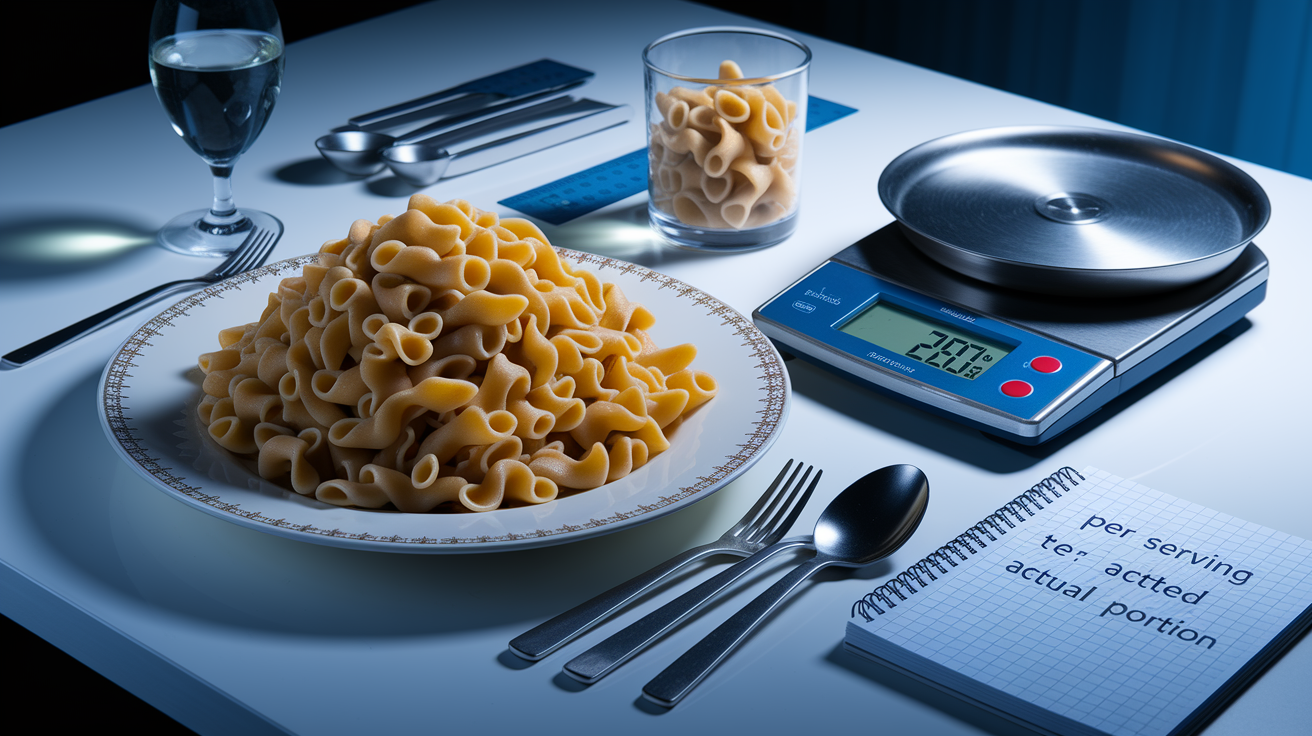
Nutrition values on a menu panel should match the portion you receive, but discrepancies happen. Especially with shared appetizers, combo meals, and family-style dishes. A restaurant might list a “serving” as half an appetizer platter or one cup of pasta when the actual plate holds three cups. If the menu says “per serving” in small print and the dish feeds two people, you need to split the posted calories and sodium in half. Or multiply by two if you eat the whole thing yourself.
Combo meals are frequent offenders. A burger, large fries, and regular soda can total 1,500 to 2,000 calories, yet some menus break out each item separately, making it easy to miss the combined load.
Always compare the listed serving size in grams, ounces, or pieces to the physical portion. If a menu shows 8 ounces for a steak but your plate holds a 12-ounce cut, multiply every nutrient by 1.5. If an entrée salad lists nutrients “per half salad” and you order the full bowl, double the numbers. When in doubt, ask the server whether the nutrition data reflects the full plate as served or a smaller reference portion.
Use this table to spot common portion mismatches:
| Item | Listed Serving Size | Actual Typical Portion |
|---|---|---|
| Pasta entrée | 1 cup (about 200 g cooked) | 2.5–3 cups on the plate |
| Fried appetizer platter | “Per serving” (assumes 2–3 people share) | Often eaten by 1–2 people, doubling individual intake |
| Fountain soda (large) | 20–24 fl oz listed | 30–44 fl oz in some chains, with free refills |
Comparing Similar Menu Items for Better Choices
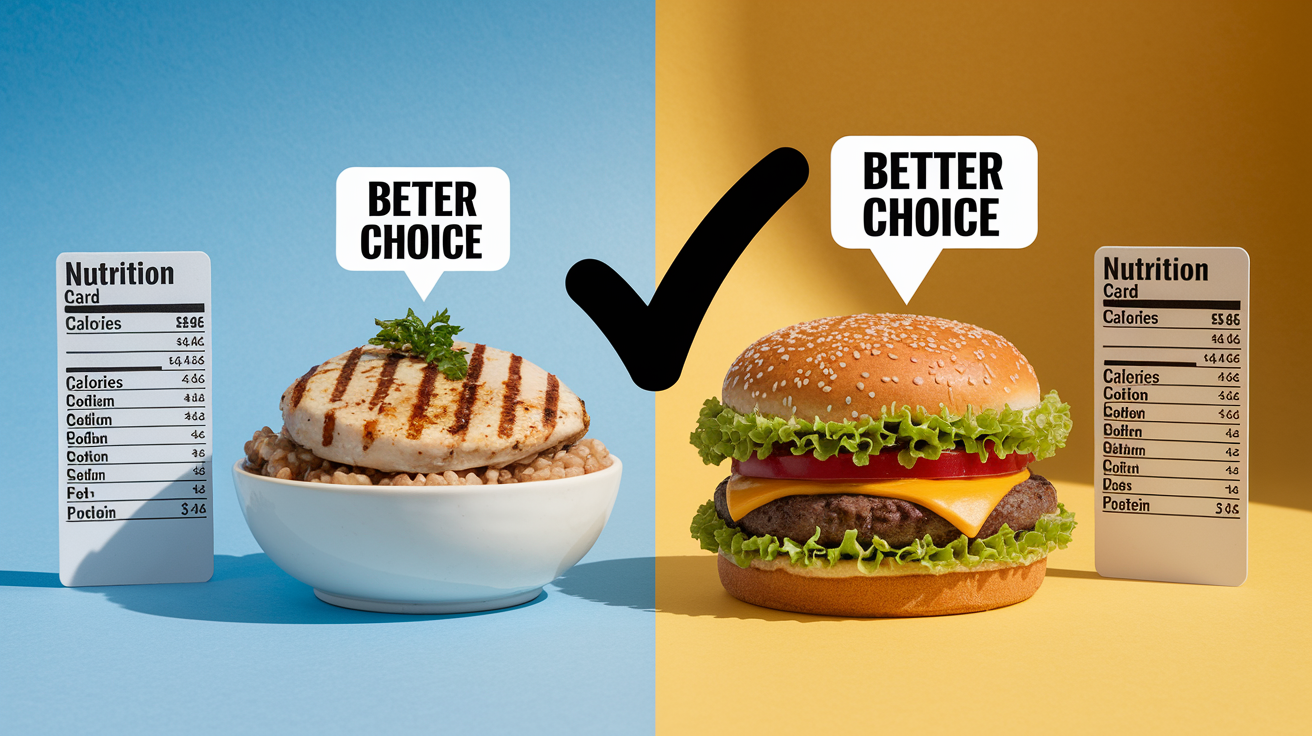
When you’re choosing between two burgers, two salads, or two grain bowls, line up the calories, sodium, and saturated fat side by side. Most chains post this data online or in-store, and a quick comparison often reveals that one option has 300 fewer calories or half the sodium of another item that looks similar on the menu. Grilled chicken typically carries less saturated fat than fried chicken or beef, but sauces, cheese, and crispy toppings can erase that advantage fast.
Here are five ways to narrow your choice to the better pick:
- Compare sodium milligrams first if you’re watching salt. Two similar-sounding sandwiches can differ by 500 to 800 mg. Choose the lower number.
- Check saturated fat grams when deciding between fried and grilled. Fried items often pack 10–15 g saturated fat per serving versus 3–5 g for grilled.
- Look at added sugars in grams for glazed, barbecue, or teriyaki dishes. Sweet sauces can add 15–25 g of sugar in one entrée.
- Note the protein grams if you want a filling meal. Higher-protein dishes (25–40 g) tend to keep you satisfied longer than lower-protein, carb-heavy plates.
- Scan side-dish options. Swapping fries (300–500 calories, high sodium) for a side salad with vinaigrette or steamed vegetables cuts 200–400 calories and significant sodium without losing volume.
Practical substitution patterns repeat across most menus. Ask for dressing or sauce on the side and use half. Pick grilled over crispy. Choose water, unsweetened iced tea, or black coffee instead of sweet tea or soda to eliminate 150–300 liquid calories and 40–80 grams of added sugar. Share a large entrée or box half before you start eating. These moves stack, cutting 400–700 calories and 500–1,000 milligrams of sodium from a typical restaurant meal without special orders or complicated requests.
How FDA Menu Labeling Rules Affect Nutrition Information

The FDA menu labeling rule took effect in 2018. It requires restaurant chains and similar retail food spots with 20 or more locations to display calorie information on menus, menu boards, and drive-through displays. So if you’re ordering at a national burger chain, a pizza franchise, or even a large regional bakery café, calories must appear next to the item name or price. The rule also covers vending machines and some grocery-prepared foods, so the same disclosure standards apply whether you’re at a sit-down chain or grabbing a pre-made sandwich from a supermarket kiosk.
Calories are the only nutrient required to be posted directly on the menu itself, but restaurants must make additional written nutrition information available upon request. That includes sodium, total fat, saturated fat, trans fat, cholesterol, total carbohydrates, sugars, fiber, and protein. This additional detail usually lives on printed pamphlets near the counter, downloadable PDFs on the restaurant’s website, or digital displays at in-store kiosks. If you don’t see it, ask a manager or check the company website before you order.
Restaurants can choose how and where to present the full nutrition data, which is why formats vary. Some print trifold cards. Some use QR codes. Some post a large wall chart in the dining area. The law doesn’t require servers to recite nutrition facts or integrate them into every menu page. It just mandates that the information be accessible in writing and that calories be visible at the point of choice.
Final Words
Scan the menu numbers first: calories, sodium, saturated fat, added sugars, and serving size. Those give the quickest sense of a dish.
Don’t trust marketing words. Watch portion gaps and sauces — they’re the usual calorie and sodium traps.
Compare similar dishes, ask for full nutrition info when you need it, and favor grilled or smaller portions for an easy win.
If you still wonder what to look for on restaurant nutrition labels, use these quick checks. Small swaps add up—try one at your next meal.
FAQ
Q: What is the 4 4 9 rule in nutrition?
A: The 4 4 9 rule in nutrition is a quick calorie shortcut: carbs and protein each provide 4 calories per gram, while fat provides 9 calories per gram, useful for rough calorie estimates from macros.
Q: Is 20% DV good?
A: The 20% DV is generally considered a high amount per serving; it’s a good target for fiber, protein, or vitamins, but a warning for sodium, added sugar, or saturated fat.
Q: What is the 5/20 rule when looking at food labels?
A: The 5/20 rule when looking at food labels is a simple guide: 5% DV or less is low, 20% DV or more is high—choose low for things to limit and high for nutrients you want more of.
Q: What are the main things to look for on a nutrition label?
A: The main things to look for on a nutrition label are serving size, calories, sodium, saturated fat, added sugars, fiber, protein, and % Daily Value to compare and make quick swaps.

