

Think a grocery list can’t change your metabolism?
Turns out what you put in your cart this week decides whether you crash at 3 PM or keep steady energy.
This printable smart grocery list focuses on lean protein, fiber-rich vegetables, low-sugar fruits, whole grains, and healthy fats so your blood sugar stays level, digestion moves at the right pace, and you feel more alert.
Use it to stock simple, ready-to-eat pieces so you can build quick meals, skip impulse snacks, and keep your energy consistent.
Printable Metabolism-Boosting Grocery List (Quick Start)
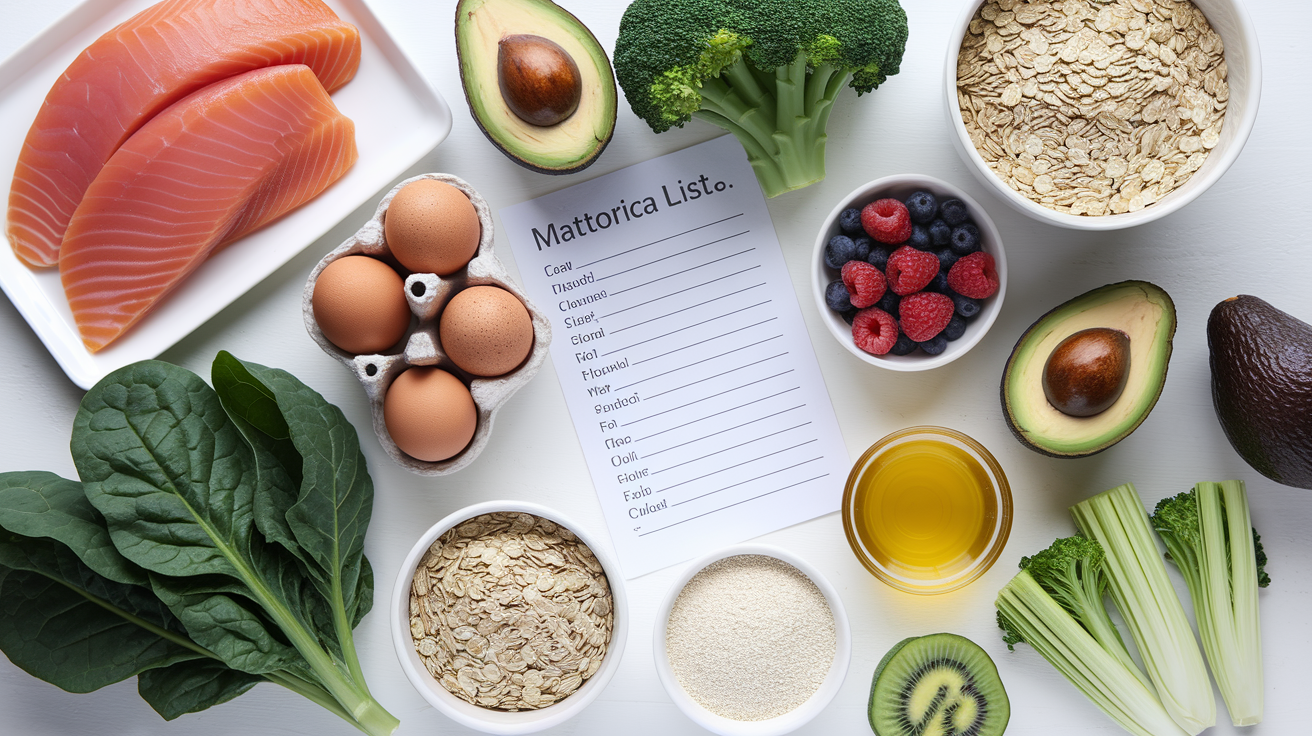
Your next grocery run is where the work actually starts. What you buy this week decides whether your blood sugar stays steady or spikes all over the place, whether your body burns through energy efficiently or starts hoarding it, whether you feel sharp at 3 PM or need another coffee just to function.
This list gives you protein that makes your body work harder during digestion, fiber that keeps insulin from doing stupid things between meals, omega-3s that help your cells actually use the fuel you give them, and water-dense vegetables that keep everything moving.
Lean Proteins
Skinless chicken breast
Salmon fillets
Eggs (whole or whites)
Plain nonfat Greek yogurt
Canned tuna in water
Lean ground turkey
Fiber-Rich Vegetables
Spinach
Broccoli
Bell peppers
Brussels sprouts
Zucchini
Cauliflower
Low-Sugar Fruits
Berries (blueberries, strawberries, raspberries)
Green apples
Grapefruit
Oranges
Whole Grains & Starchy Vegetables
Rolled oats
Brown rice
Quinoa
Sweet potatoes
Whole wheat bread
Healthy Fats
Olive oil
Avocados
Unsalted almonds
Ground flaxseed
Chia seeds
Pantry & Flavor Staples
Low-sodium vegetable broth
Canned low-sodium black beans
Garlic powder
Cumin
Apple cider vinegar
Print it. Check what’s already sitting in your kitchen. Add what’s missing before you go. You’re not building a gourmet pantry here. You’re stocking simple pieces that let you throw together meals without googling a recipe every time you’re hungry.
Why These Food Categories Support a Faster Metabolism
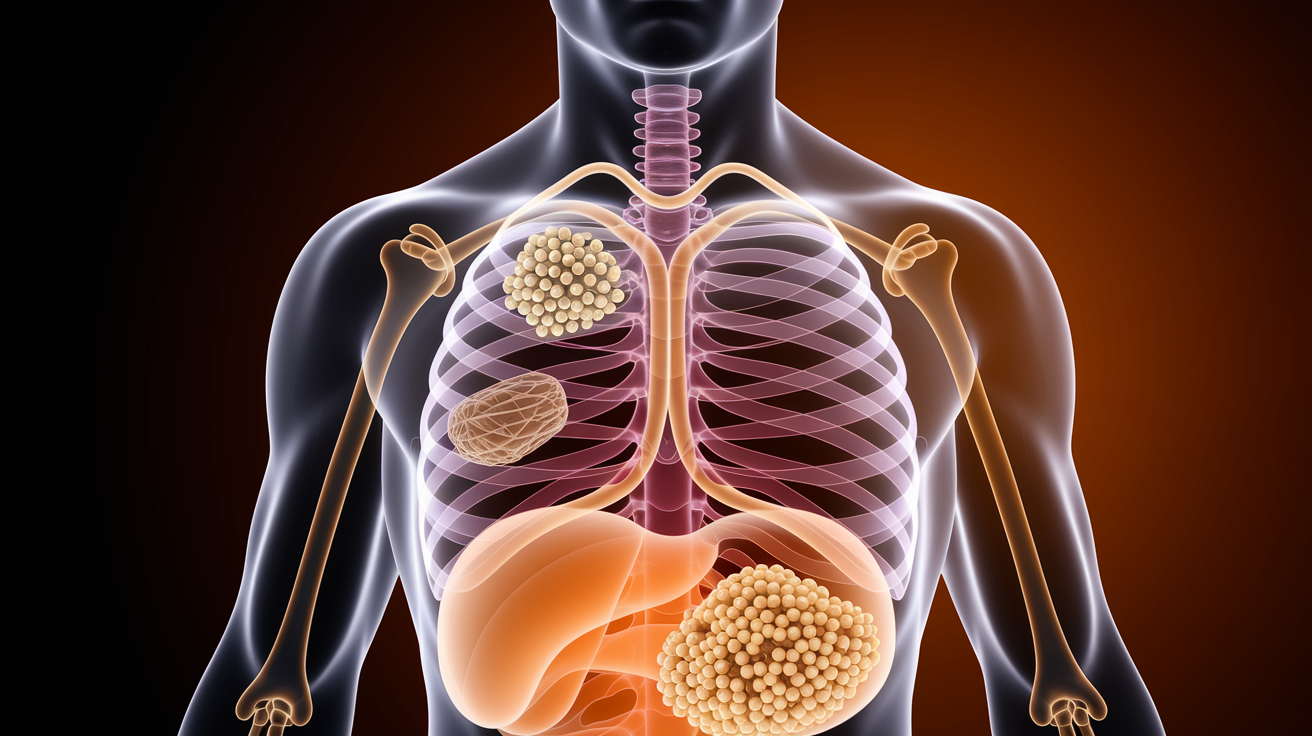
Protein comes first because your body actually has to burn calories just to digest it. Somewhere between 15 and 30% of the calories in chicken, fish, eggs, or Greek yogurt get used up in the breakdown process itself. That’s called the thermic effect, and it’s real.
Fiber from spinach, broccoli, bell peppers? It slows digestion down in the right way. Your blood sugar doesn’t shoot up and crash an hour later. You don’t get that insulin spike that shoves everything into storage and leaves you tired and starving by mid-afternoon. When glucose stays level, your metabolic rate doesn’t get yanked around.
Leafy greens also bring iron and magnesium. Your thyroid needs both to make the hormones that tell your cells how fast to burn fuel. Run low on either one and your thyroid taps the brakes. Everything slows down.
Berries, green apples, citrus. They give you antioxidants and fiber without the sugar bomb you’d get from juice or dried fruit. You get vitamins and a little sweetness without sending your insulin through the roof.
Fats from olive oil, avocados, nuts, seeds. They’re part of how your body makes testosterone, thyroid hormones, leptin. All the stuff that decides whether your metabolism runs hot or cold. They also help you absorb vitamins A, D, E, and K, which your cells need to actually produce energy.
Oats, brown rice, quinoa, sweet potatoes. Because they’ve got fiber built in, they release carbs slowly. Your body stays working instead of getting a glucose dump all at once and then stalling out when it’s gone.
Recommended Portions and Simple Daily Use Guidelines
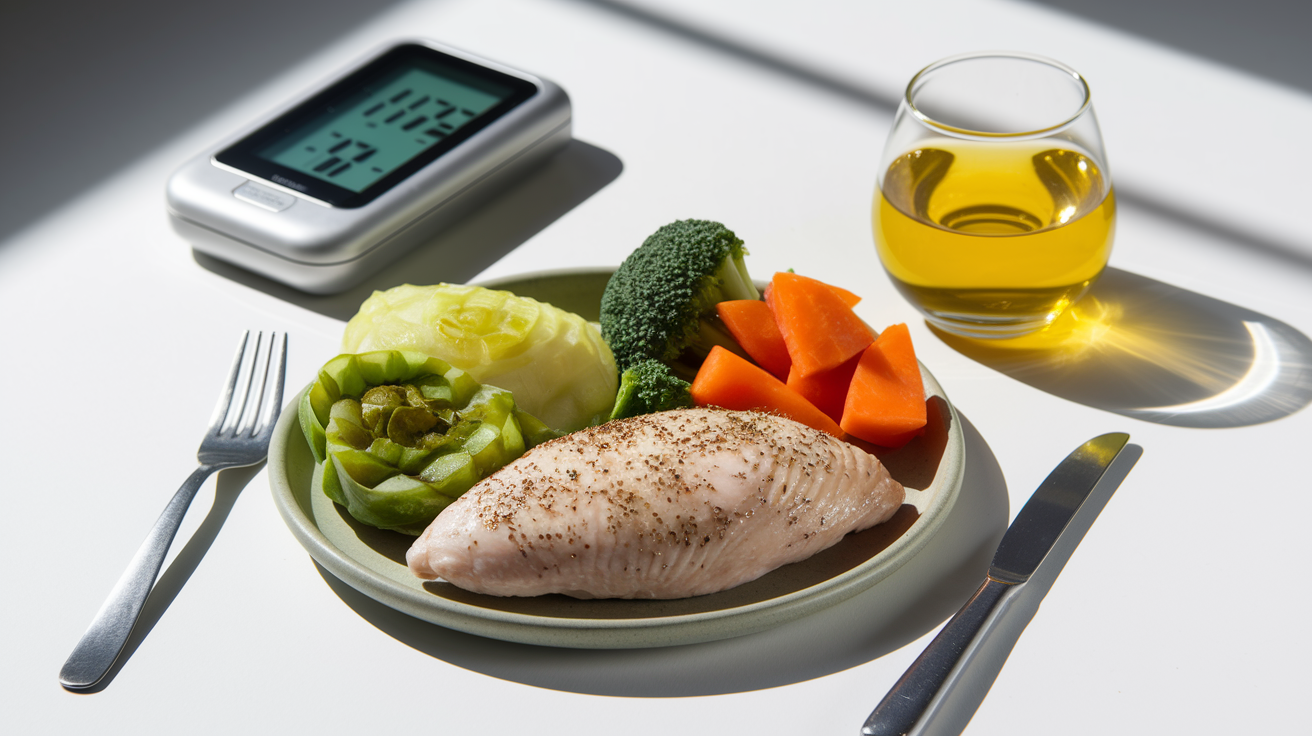
Each main meal should give you 20 to 30 grams of protein. That’s a palm-sized piece of chicken or fish. Three whole eggs. A big cup of Greek yogurt. Spread that across three meals and you keep the thermogenic effect going all day. You also stop your body from breaking down muscle when it runs out of amino acids.
Vegetables should take up about half your plate at lunch and dinner. You want 25 to 30 grams of fiber total per day. Most of it should come from greens, cruciferous vegetables, whole grains. A cup of cooked broccoli gets you 5 grams. A cup of cooked spinach, around 4. Half a cup of black beans, another 7. Hit that fiber number and you’ll stay full longer. Your digestion moves at a pace that doesn’t wreck your energy.
Healthy fats show up in small doses throughout the day. A tablespoon of olive oil on your salad. A quarter of an avocado on your sandwich. A small handful of almonds mid-afternoon. Each serving runs 120 to 160 calories. Fat digests slowly, so it keeps you full and keeps your hormones where they should be.
Eat every three to four hours. Combine protein with fiber and a little fat each time. Do that and your metabolic rate doesn’t drop into conservation mode between meals.
Smart Shopping Tips to Maintain a Metabolism-Friendly Kitchen
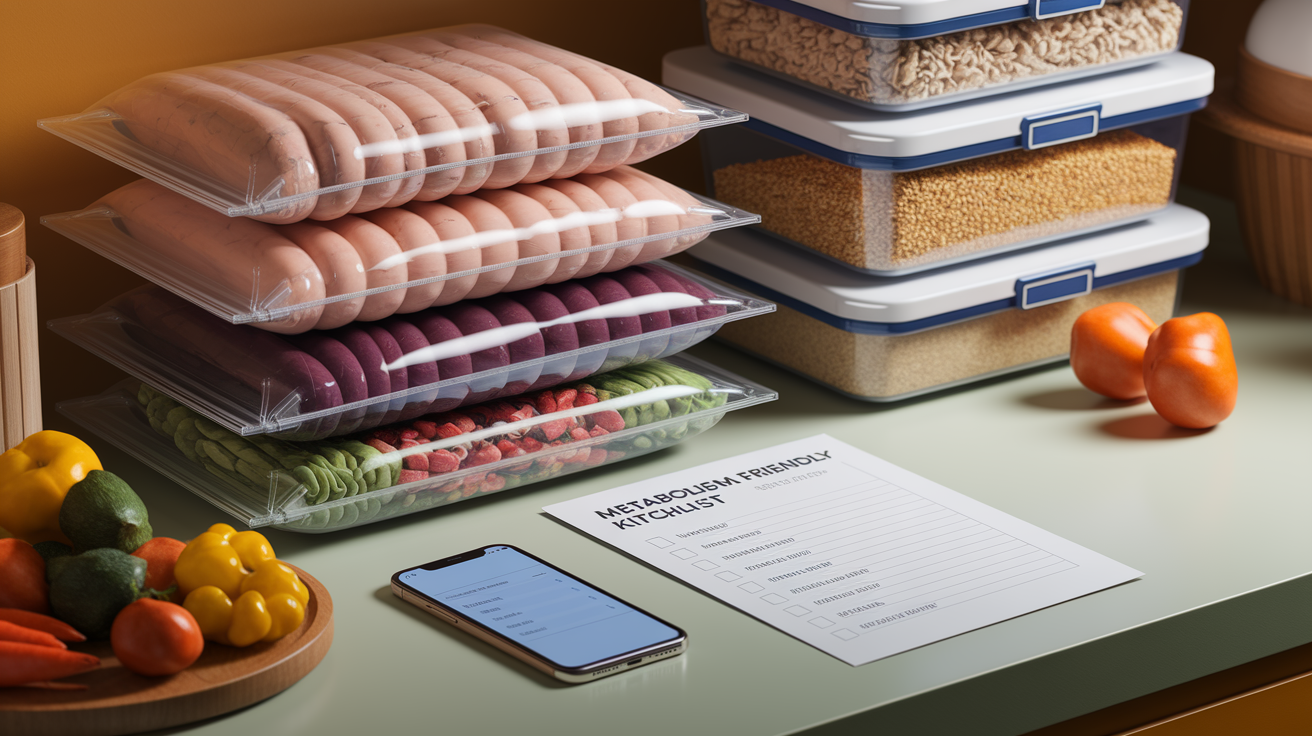
The easiest way to stay consistent is to remove the friction between the store and your dinner table. Frozen vegetables and berries lock in nutrients right at harvest. They cost less than fresh stuff that’s out of season. Stock your freezer and use them however you want.
Buy lean proteins in bulk when they’re on sale. Portion them into four-ounce servings, toss them in zip-top bags, freeze them flat so they thaw fast.
Pre-washed greens, pre-cut vegetables. If the extra two bucks means you actually eat them instead of ordering takeout, it’s worth it.
Store nuts, seeds, whole grains in airtight containers somewhere cool and dark. Keeps the oils from going rancid and the nutrients from breaking down.
Keep a running list on your phone of what’s running low. You won’t get stuck missing the staples that make weeknight cooking possible.
Shop after you’ve eaten. Hunger makes impulse buys happen. It makes high-sugar, high-sodium junk look way better than it actually is.
When you open your fridge or pantry and the building blocks are already there, you skip the decision fatigue that ends with ordering pizza. Stock the list above, rotate through it every week, and your metabolism gets the consistent fuel it needs to stay active instead of slipping into energy-saving mode.
Final Words
Grab the printable list and fill your cart with high-protein foods, fiber-rich produce, omega-3 sources, and hydration-rich items.
You’ve got a category-organized grocery list, a short explanation of why each group supports metabolism, practical portion and timing tips, and simple shopping tricks like frozen produce and bulk proteins to save time and money.
Use this smart grocery list for better metabolism as a quick shopping checklist—swap one meal a week, stick to the list, and you’ll start noticing steadier energy and easier choices.
FAQ
Q: What is the 5 4 3 2 1 grocery rule?
A: The 5 4 3 2 1 grocery rule is a simple shopping formula: buy 5 produce items, 4 protein options, 3 whole grains, 2 healthy fats, and 1 treat to keep meals balanced.
Q: What are the 5 superfoods in Metaboost?
A: The five superfoods commonly highlighted by Metaboost blends are green tea, turmeric, ginger, cinnamon, and berries; they aim to support metabolism, blood sugar balance, and inflammation.
Q: What are the top 5 foods to boost metabolism?
A: The top five foods to boost metabolism are lean protein (chicken, turkey), fatty fish (salmon), eggs, legumes (beans, lentils), and green tea, which raise calorie burn and support muscle maintenance.
Q: What is the 3-3-3 rule for weight loss?
A: The 3-3-3 rule for weight loss is a simple guideline: eat every 3 hours, target about 30 grams of protein per meal, and include at least 3 vegetable servings across the day to stay full.

