

Are the neon colors in your kid’s snack harmless marketing, or a real health worry?
Those bright reds, blues, and yellows are artificial dyes, lab-made chemicals added just to make food look vivid.
They don’t add nutrition, flavor, or preserve anything.
Research ties these dyes to behavior changes in some children, allergic reactions in others, and animal cancer findings that have already prompted bans.
This post breaks it down simply: what these dyes are, why makers use them, who should care, and easy steps to cut exposure.
Clear Definition Of Artificial Food Colors
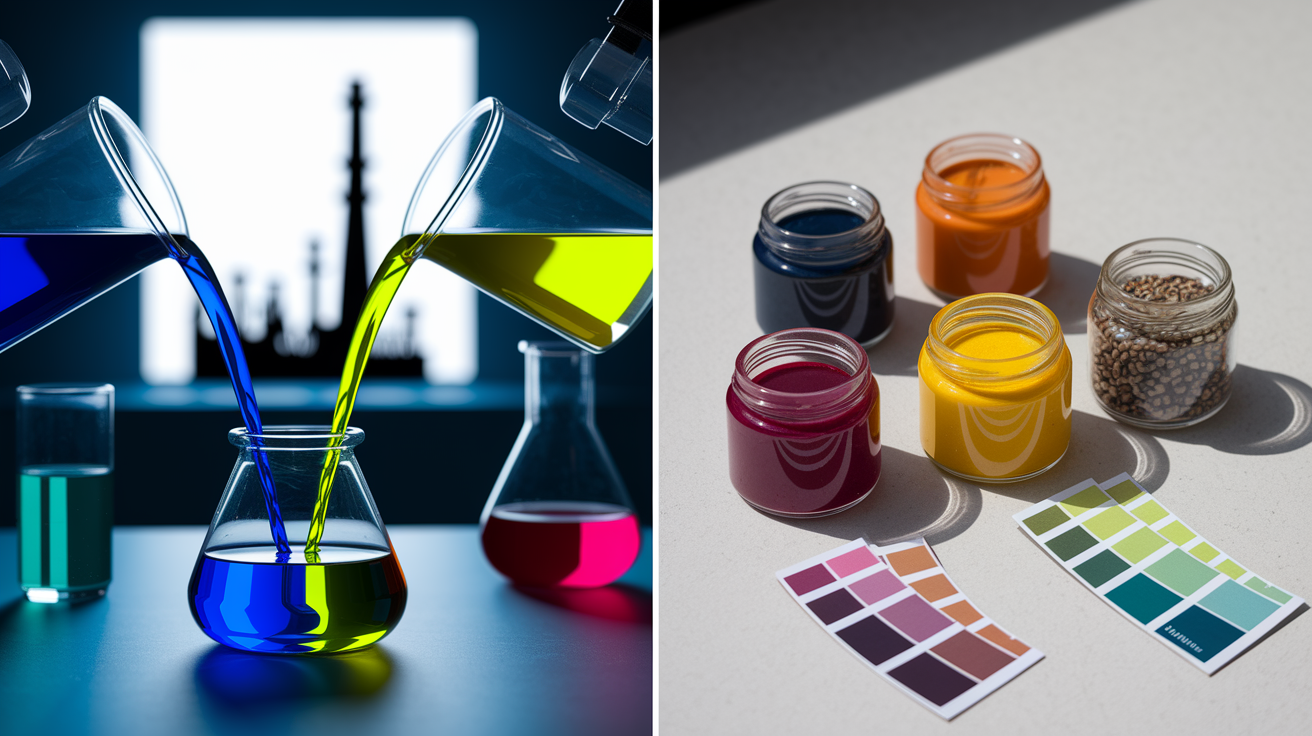
Artificial food colors are lab-made chemicals, usually derived from petroleum, that get added to foods, drinks, and medicines to create bright or uniform colors. They don’t offer any nutrition. They don’t preserve anything. They don’t add flavor. Their only job is making a product look more vivid, consistent, or appealing.
These dyes are different from natural colorings, which come from plants, animals, or minerals. Natural colors like beet juice, turmeric, or spirulina extract might show up on labels as “natural color” or “color added” without naming the actual source. Artificial dyes, though, must be listed by their specific names or numbers on U.S. ingredient panels.
The FDA currently recognizes nine certified synthetic color additives for use in food:
- Blue No. 1, Blue No. 2
- Green No. 3
- Red No. 3, Red No. 40
- Yellow No. 5, Yellow No. 6
- Citrus Red No. 2, Orange B
In April 2025, the FDA announced plans to transition the food supply away from artificial dyes toward natural alternatives. The agency intends to revoke authorization for Orange B and Citrus Red No. 2 in the coming months, phase out the remaining six dyes by the end of 2026, and formally ban Red No. 3 effective January 2027 after two studies found that high exposures produced tumors in male lab rats. While the FDA noted that the tumor mechanism appears specific to rats and doesn’t occur in humans, regulatory rules prohibit approving any additive shown to cause cancer in animals.
These actions come after more than 50 years of research into the safety and effects of synthetic colors. Research that’s led to questions about behavior in children, allergy risk, and long-term health patterns. The rest of this article unpacks those findings, explains where dyes show up in everyday foods, and offers practical steps for reducing exposure.
Common Artificial Food Dyes And Their Chemical Background

Most artificial food dyes approved in the United States belong to a chemical family called azo dyes. Azo compounds contain a nitrogen-nitrogen double bond and are prized by manufacturers for producing intense, stable colors at low cost. When azo dyes enter the digestive tract, gut bacteria can break them down into smaller molecules called aromatic amines. A conversion that’s prompted long-term safety questions.
Red No. 3, known chemically as Erythrosine, isn’t an azo dye. It contains iodine atoms bonded to a carbon ring structure. Two animal studies found that high exposures to Red No. 3 produced thyroid tumors in male rats, a finding that triggered the January 2027 phase-out deadline even though the FDA believes the mechanism is specific to rodents.
The most widely used synthetic dyes include:
Red No. 40 (Allura Red): Azo dye. Most common in candies, beverages, desserts, and condiments.
Yellow No. 5 (Tartrazine): Azo dye. Used in snack chips, cereals, pickles, and some over-the-counter medicines. Known to trigger allergic reactions in sensitive individuals.
Yellow No. 6 (Sunset Yellow): Azo dye. Appears in cheese products, baked goods, and fruit drinks.
Blue No. 1 (Brilliant Blue FCF): Non-azo triarylmethane dye. Adds blue tones to candy, ice pops, and sports drinks.
Blue No. 2 (Indigotine): Indigoid dye. Creates green when mixed with yellows. Found in pet foods, baked goods, and some confections.
Green No. 3: Triarylmethane dye. Historically used in beverages and canned peas but less common today.
| Dye Name | Chemical Type | Notes |
|---|---|---|
| Red No. 40 | Azo | Highest-volume use in U.S. food supply |
| Yellow No. 5 | Azo | Can trigger allergic reactions; common in medicines |
| Red No. 3 | Xanthene (contains iodine) | Linked to thyroid tumors in rats; banned January 2027 |
Where Artificial Food Colors Appear In Everyday Foods
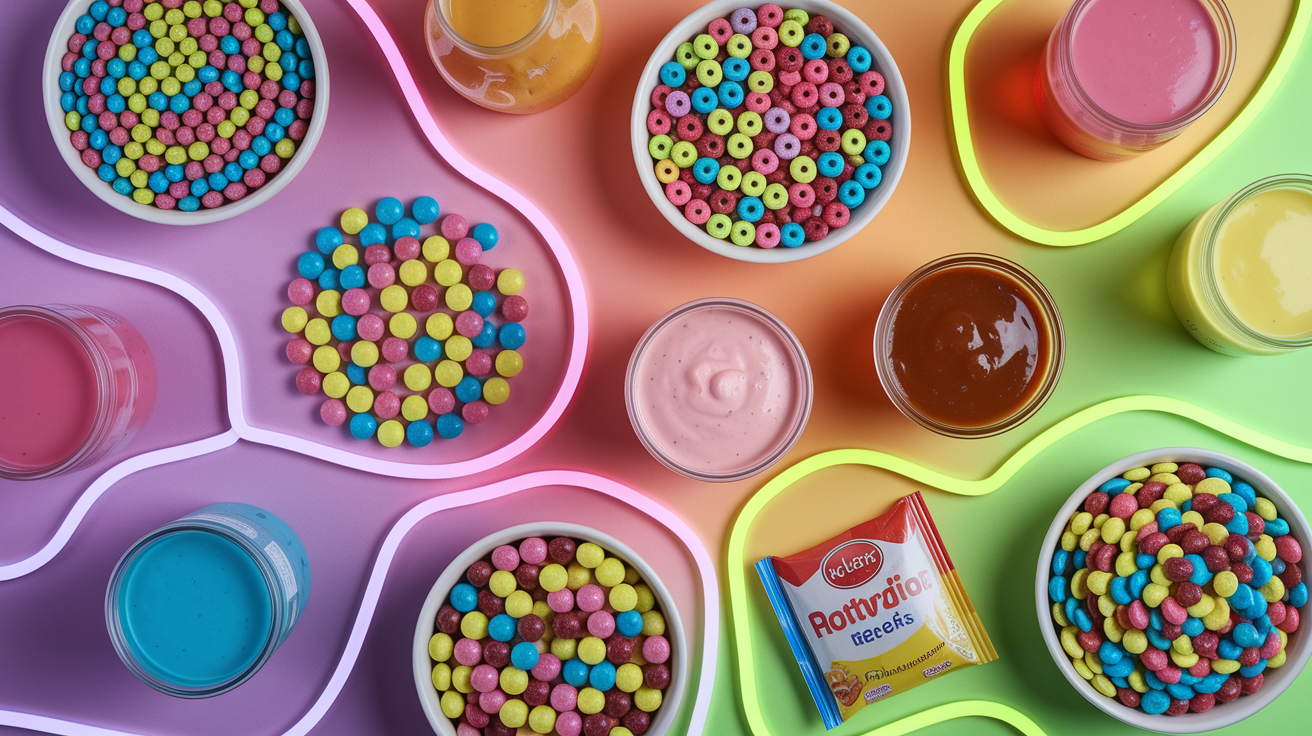
Artificial dyes show up most often in ultra-processed foods. Products that’ve been reformulated in factories to maximize shelf life, flavor intensity, and visual appeal. These items tend to carry higher amounts of added sugar, sodium, and fat, and they often replace whole-food ingredients with cheaper substitutes. The dyes themselves don’t add calories or sweetness, but they signal that the product’s been heavily engineered.
Look for synthetic colors in:
Brightly colored candies, sprinkles, and gummy snacks. Breakfast cereals with unnaturally vivid loops, puffs, or flakes. Fruit-flavored drinks, sodas, energy drinks, and sports beverages. Packaged cookies, crackers, and snack cakes. Bottled salad dressings, barbecue sauces, and condiments. Over-the-counter medicines, including children’s pain relievers, allergy syrups, and cough-and-cold formulas. Some sandwich breads, which use caramel color to create a richer brown appearance.
Citrus Red No. 2 is applied to the peels of some nonorganic oranges to enhance their market color. Orange B, though rarely used today, colors certain sausage casings.
If a product needs a dye to look appetizing, it’s a clue that the food itself, stripped of fiber, whole grains, or fresh produce, may not offer much beyond quick energy and sensory novelty. Dyes don’t make a snack unhealthy on their own. But they’re nearly always passengers in formulations that prioritize appearance over nutrition.
Documented Health Effects Of Artificial Food Colors
Research into the safety of artificial food colors spans more than five decades and covers a range of endpoints: cancer risk in animals, allergic reactions in humans, changes in children’s behavior, digestive inflammation, and cellular damage. The strength of evidence varies by dye and by outcome, but clear patterns have emerged.
A 2022 review of animal and human studies found that artificial colors can trigger behavioral changes in children, including restlessness, irritability, hyperactivity, and trouble sleeping. Reactions often appear within hours of consuming a dye-containing food or drink, though some children show symptoms one to two days later. When dyes are removed from the diet, many parents and clinicians report a reduction in those behaviors. The evidence doesn’t support the claim that dyes cause ADHD, but multiple studies show that artificial colors can worsen hyperactivity and other ADHD symptoms in children who already have the condition or who are predisposed to behavioral sensitivity.
Beyond behavior, research has documented colon inflammation, DNA damage in cell studies, memory problems, and volatile moods in some individuals exposed to synthetic dyes. Red No. 3 produced thyroid tumors in two separate studies of male lab rats. While the FDA concluded that the tumor mechanism is rat-specific, driven by iodine’s effect on rodent thyroid hormone regulation, the agency is bound by a regulatory clause that prohibits approving any additive shown to cause cancer in animals or humans. That rule, known as the Delaney Clause, is the reason Red No. 3 will be pulled from the food supply in January 2027.
Types Of Reactions And Their Onset
Behavioral responses to artificial colors vary by child, dose, and baseline sensitivity. Some kids react to a single juice box. Others tolerate occasional exposure but show cumulative effects after several dye-heavy days. Sleep disturbances, difficulty falling asleep, restless nights, have been reported alongside daytime irritability.
Allergic reactions to Yellow No. 5 (tartrazine) are well-documented and can include hives, asthma symptoms, and in rare cases more serious responses. People with aspirin sensitivity or asthma are at higher risk.
The strongest evidence to date supports the following conclusions:
Artificial colors can increase hyperactivity and behavioral symptoms in some children, with effects often visible within hours to two days. Removal of synthetic dyes from the diet frequently leads to improvement in restlessness, irritability, and sleep quality. Red No. 3 causes thyroid tumors in male rats at high doses, prompting a regulatory ban despite the FDA’s belief that the mechanism doesn’t apply to humans. Questions about long-term cancer risk and immune effects for other dyes remain under investigation, with current human evidence unclear.
Regulatory Actions On Artificial Food Colors In The U.S. And Europe
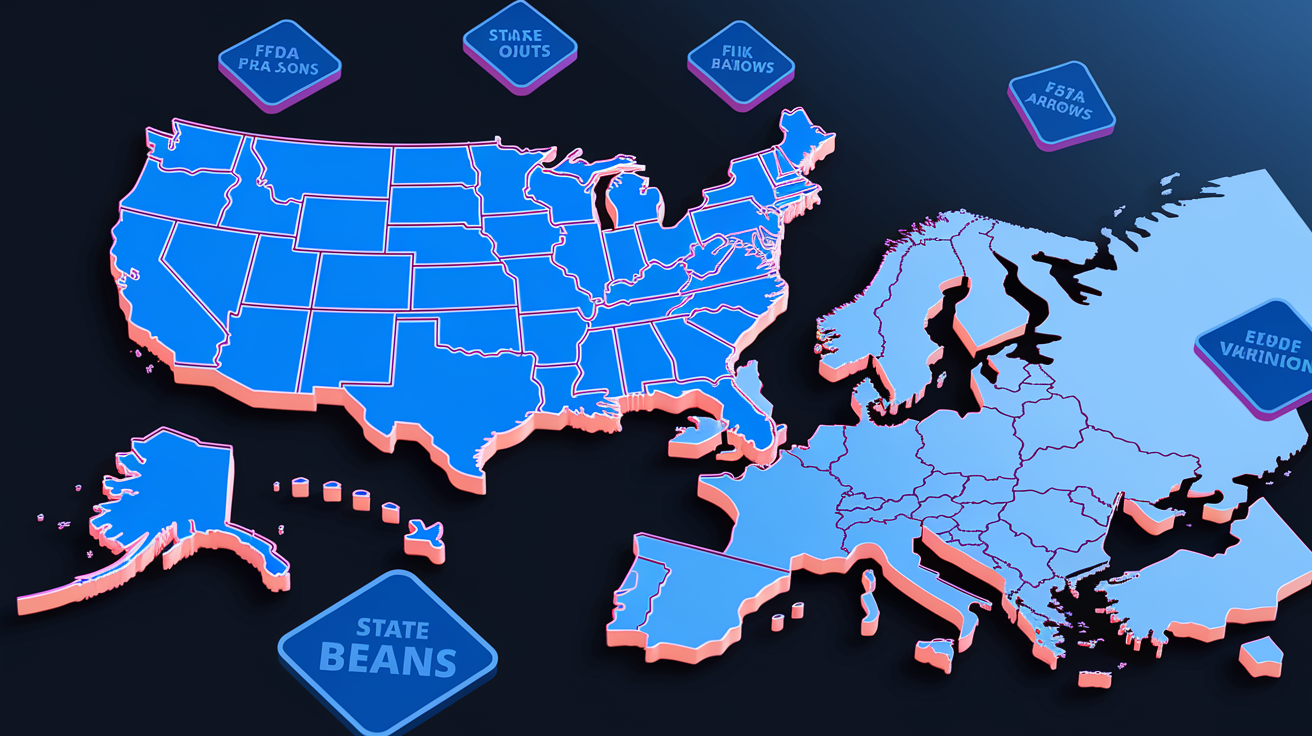
The United States has historically taken a reactive approach to food additives, restricting or banning substances only after harm is demonstrated in controlled studies or population-level surveillance. Europe, by contrast, has adopted a more precautionary stance, requiring warning labels on foods containing certain synthetic dyes and, in some cases, banning colors outright even when definitive human harm hasn’t been proven.
In April 2025, the FDA announced a major shift in U.S. policy. The agency stated it would transition the food supply away from artificial dyes and toward natural color sources. As part of that plan, the FDA will revoke authorization for Orange B and Citrus Red No. 2 in the coming months and intends to end the use of the remaining six certified colors, Blue No. 1, Blue No. 2, Green No. 3, Red No. 40, Yellow No. 5, and Yellow No. 6, by the end of 2026. The deadline for Red No. 3 is January 2027, when manufacturers must have reformulated all food products to remove the dye.
These federal actions follow a wave of state-level legislation. In fall 2024, California became the first state to ban six artificial food dyes from all foods served or sold in public schools. More than 30 other states have introduced similar bills, and one state has enacted a broader ban covering seven synthetic colors across all food categories. Public pressure, driven by parent advocacy groups and emerging research, has accelerated these reforms and prompted many large manufacturers to announce voluntary reformulations ahead of regulatory deadlines.
In Europe, products containing certain azo dyes must carry a warning label stating that the colorants “may have an adverse effect on activity and attention in children.” That requirement has led many multinational brands to use natural colors in European formulations while continuing to use synthetic dyes in products sold in the United States. A regulatory divide that’s now narrowing as U.S. rules catch up.
How To Identify Artificial Colors On Ingredient Labels
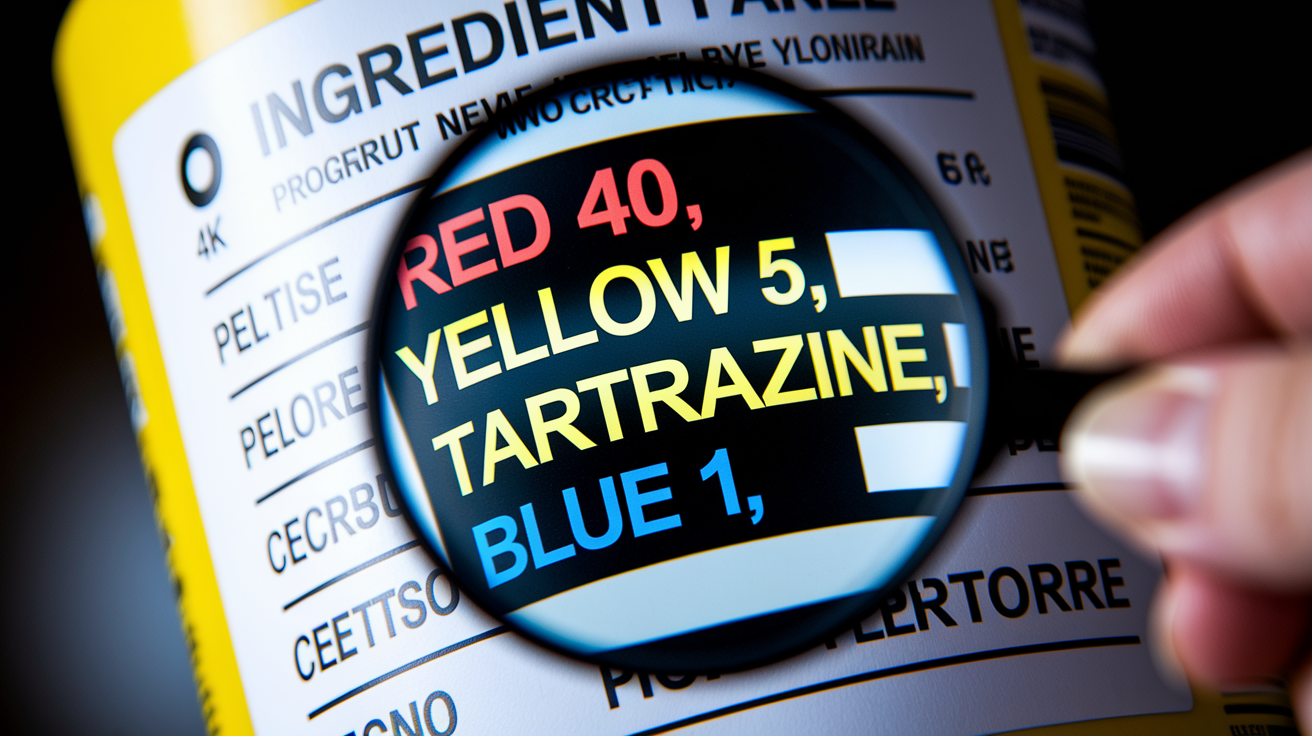
The FDA requires all artificial color additives to be listed by name on ingredient panels. You’ll see entries such as “Red 40,” “Yellow 5,” or “Blue 1.” Some labels use the full chemical name, “Tartrazine” instead of “Yellow 5,” or umbrella terms like “artificial color,” “artificial coloring,” “synthetic color,” or “certified color.”
Natural colors, by contrast, may appear under generic phrases such as “natural color” or “color added,” often without specifying the source. Ingredients are listed in descending order by weight, so if a dye appears near the top of the list, the product contains a relatively high amount of it.
When checking labels, watch for these identifiers:
Explicit dye numbers: Red 3, Red 40, Yellow 5, Yellow 6, Blue 1, Blue 2, Green 3. Chemical names: Tartrazine (Yellow 5), Allura Red (Red 40), Erythrosine (Red 3), Sunset Yellow (Yellow 6), Brilliant Blue (Blue 1), Indigotine (Blue 2). Umbrella terms: “artificial color(s),” “artificial coloring,” “synthetic color,” “certified color.” Medicines: Over-the-counter pediatric drugs list dyes under “inactive ingredients.” Look for “dye-free” or “no artificial colors” claims on packaging, or scan the inactive list for color numbers. Caramel color: Though derived from heating sugar, caramel color is considered a coloring agent and appears in breads, sauces, and soft drinks. It’s not classified as artificial but is also not a whole-food ingredient.
If you’re trying to avoid all added colors, synthetic and natural, scan the full ingredient list and skip products that include any color-related term.
Natural Alternatives To Synthetic Food Dyes

Natural color sources have been used for centuries in traditional cooking and are now the focus of food-industry reformulation as synthetic dyes face regulatory phase-outs. These alternatives come from plants, minerals, and in some cases insects or algae, and they offer a spectrum of hues without the petroleum-derived chemistry of azo dyes.
Beet juice and beet powder provide deep pinks and reds. Turmeric delivers warm yellows and golds. Spirulina extract, a blue-green algae, creates bright blues and teals. Butterfly pea flower extract shifts from blue to purple depending on pH. Fruit and vegetable juices, such as carrot, purple sweet potato, and red cabbage, add gentle tints to yogurts, beverages, and baked goods. Annatto, derived from the seeds of the achiote tree, produces yellow to orange tones and is widely used in cheese and snack foods.
Natural colors tend to be less stable than synthetic dyes. They can fade with heat, light, or acidity shifts, and they often require higher concentrations to achieve the same visual intensity. That means natural-color products may look slightly duller or show batch-to-batch variation in shade. For home bakers and cooks, that variability is often a feature rather than a flaw. A sign that the color comes from real food.
Top natural color options for home use include:
Beet juice or powder for red and pink. Turmeric for yellow and gold. Spirulina for blue and green. Purple sweet potato or purple carrot extract for violet and lavender.
Most natural colors don’t need to be listed by source on U.S. labels, so you may see only “natural color” without further detail. If you want to know the exact source, look for brands that voluntarily disclose it or contact the manufacturer.
Practical Ways To Reduce Exposure To Artificial Food Colors
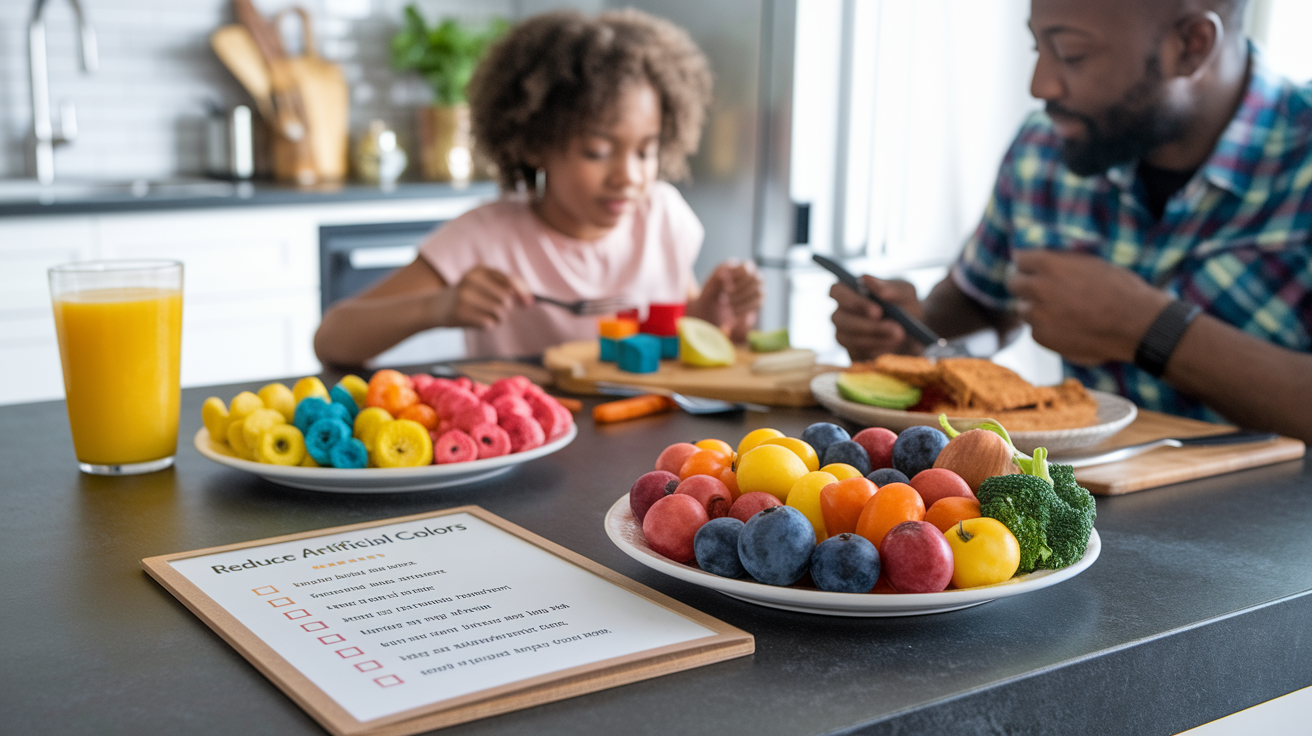
You don’t need to ban all packaged foods or eliminate every trace of color to lower your family’s exposure to synthetic dyes. Small, repeatable changes to shopping and meal routines can cut intake significantly while keeping food practical and enjoyable.
Start by shifting the balance of your plate. Dietitians recommend filling two-thirds of your plate with whole grains, vegetables, fruits, beans, nuts, and seeds, and reserving the remaining one-third for lean animal or plant-based protein. That pattern naturally reduces reliance on ultra-processed foods, which are the primary vehicles for artificial colors.
When you do buy packaged snacks, drinks, or convenience items, scan ingredient lists for color additives. If a product lists Red 40, Yellow 5, or any other synthetic dye, consider whether a dye-free version exists. Many mainstream brands now offer “no artificial colors” lines alongside their classic formulations.
For children showing signs of hyperactivity, irritability, sleep trouble, or mood swings, a pediatrician may suggest a trial elimination of artificial colors. Remove dye-containing foods and drinks for one to two weeks and watch for changes in behavior. If symptoms improve, reintroduce one dye at a time to identify specific triggers. Keep in mind that reactions can appear within hours or take up to two days, so tracking requires patience and consistent observation.
At home, bake cookies, muffins, and cakes using natural color sources or skip coloring altogether. Choose organic oranges to avoid dyed peels. Swap brightly colored fruit snacks and juice boxes for whole fruit, a tangerine, a banana, a handful of grapes, and plain water. Reserve sports drinks and electrolyte beverages for genuine athletic activity, and pick low-calorie, dye-free versions when hydration needs go beyond plain water.
| Action | Purpose |
|---|---|
| Read ingredient lists for color numbers and terms | Identify and avoid synthetic dyes before purchase |
| Prioritize whole foods for snacks and meals | Naturally reduce ultra-processed intake and dye exposure |
| Choose organic oranges | Avoid Citrus Red No. 2 on peels |
| Trial elimination for behavioral symptoms | Test whether dyes worsen hyperactivity or mood in a specific child |
A balanced approach works for most families. Prioritize whole or minimally processed foods most days, treat brightly colored packaged items as occasional choices rather than daily staples, and use your grocery time to build habits that support long-term health without requiring perfection.
Final Words
You’ve seen what artificial food colors are: man-made dyes added to make food look brighter, where they come from, and common examples like Red No. 40 and Yellow No. 5.
You also learned the chemistry behind major dyes, where they hide on labels and in foods, the mixed evidence on behavior and other health signals, and recent FDA moves to phase out several additives.
If you’re asking what are artificial food colors and health effects, start small—read labels, favor whole foods, try natural swaps, and notice any changes. Small steps help.
FAQ
Q: Is artificial food coloring unhealthy?
A: Artificial food coloring isn’t automatically unhealthy. Some dyes have links to short-term behavioral reactions, allergic responses, and animal tumor findings; regulators are phasing out certain dyes. If concerned, limit ultra-processed foods and check labels.
Q: Does ketchup have red dye 40?
A: Ketchup may contain Red 40 in some brands, but many use tomato concentrate instead. Check ingredients for Red 40, “artificial color” or an FD&C listing. Choose no-added-color brands or make homemade ketchup.
Q: What does red 40 do to your body?
A: Red 40 affects people differently. For most it is largely inert, but sensitive children may show increased hyperactivity, some experience allergic or digestive symptoms, and gut bacteria can break it down to other compounds.
Q: Is Doritos removing red dye 40?
A: Doritos may be removing Red 40 from some flavors, but not all. Check the package for “artificial color” or the company’s guidance. Pick labeled dye-free chips if you want to avoid artificial dyes.

