

Tired of standing in front of the pantry at 6 pm and ordering takeout because you don’t know what to cook?
Meal planning doesn’t have to feel like a part-time job.
Start small: check your week’s schedule, take stock of the fridge and freezer, and pick mostly familiar recipes.
This post shows an easy, beginner-friendly routine that turns a confusing week into five to seven ready meals.
You’ll save time, stop duplicate grocery trips, and make dinner one less thing to think about each night.
A Beginner-Friendly Breakdown of Weekly Meal Planning Steps

Weekly meal planning doesn’t need to feel like project management. You’re just writing down five to seven dinners on a piece of paper and sticking it on your fridge so you stop standing in front of the pantry at 6 pm wondering what to make.
Start by checking your week’s calendar. If Wednesday is packed with meetings or soccer practice, that’s a crockpot night. Not a night for some new recipe with twelve ingredients. Then open your fridge, freezer, and pantry and write down what’s already there. You’re not building a menu from scratch. You’re building it around the chicken thighs in the freezer and the half-bag of rice in the cupboard. Next, ask your family what they want to eat. Most of the time, you’ll only need to fill in two or three meals because someone will request tacos and someone else will ask for spaghetti.
Here’s the basic routine:
Check your schedule. Identify busy nights and plan quick or hands-off meals.
Take pantry and freezer inventory. Note proteins, grains, canned goods, and produce you already have.
Ask family for input. Let each person suggest one or two meals to reduce your decision load.
Choose mostly familiar recipes. Pick meals you’ve made before and add only one new recipe per week.
Plan at least one leftover generating meal. Cook extra chicken or roast on Tuesday to turn into tacos or sliders on Thursday.
Write it down and post it. Use a printable weekly planner, write in pencil for flexibility, and stick it on the fridge where everyone can see it.
This system reduces daily guessing, prevents duplicate grocery trips, and keeps you from ordering takeout because you forgot to thaw dinner.
Choosing Simple Recipes for a Beginner Weekly Meal Plan

Pick recipes that won’t leave you chopping for an hour on a weeknight. Look for labels like “5 ingredients,” “15 minutes,” “one pan,” or “slow cooker” when you’re browsing. These recipes are designed for Tuesday at 6 pm when you’re tired and the kids are loud. Save the complicated stuff for weekends when you have buffer time.
Choose recipes that share ingredients across the week. If Monday calls for bell peppers and Thursday calls for bell peppers, you’ve just simplified your shopping and reduced the odds of wasting half a pepper. Plan one or two slow cooker or Instant Pot meals per week so at least two nights are mostly hands off.
When selecting recipes, follow these rules:
Use mostly familiar recipes. At least 60 to 80 percent of your weekly menu should be meals you’ve cooked before.
Add only one or two new recipes per week. Trying too many new things at once increases stress and the chance that dinner fails.
Look for time labels. Favor recipes tagged “20 to 30 minutes,” “sheet pan,” or “dump and go.”
Pick recipes with shared ingredients. If three meals use chicken, buy chicken in bulk and portion it across the week.
Choose recipes you actually want to eat. Don’t plan meals because they sound healthy if no one in your house will touch them.
If a recipe requires an ingredient you’ll only use once and never again, skip it or swap it for something you already stock.
Building a Beginner-Friendly Weekly Meal Planning Template

You don’t need a fancy app or color coded spreadsheet. A simple printable template or a piece of notebook paper works just fine. The most common structure is a five day or seven day grid with columns for the day, the main dish, and one or two sides. Some planners add a spot for appetizers or desserts, but that’s optional.
Post the template on your fridge. Write your meals in pencil so you can swap things around if plans change or if you realize you’re not in the mood for what you planned. The visual reminder helps the whole family know what’s coming and reduces the “what’s for dinner” question loop.
Here’s a simple blank structure you can copy:
| Day | Main | Sides |
|---|---|---|
| Monday | ||
| Tuesday | ||
| Wednesday | ||
| Thursday | ||
| Friday |
Fill in the “Main” column with your protein or main course. Fill in “Sides” with vegetables, salads, rice, or bread. Keep it simple. Most nights, two items on the plate is enough.
How Beginners Create a Simple Grocery List for Weekly Meal Planning

Once your menu is written, it’s time to build your shopping list. Start by making a master ingredient list. Pull every ingredient from every recipe you chose and write it all down in one place. Then walk to your pantry, fridge, and freezer and cross off everything you already have. What’s left is your actual grocery list.
Don’t just scribble items randomly. Group them by store department in the order you move through your grocery store. Most people start in produce, then move to meat, then dairy, then center aisles for pantry staples, and finish in the frozen section. Writing your list this way prevents backtracking and speeds up your trip.
If you’re unsure of your store’s layout, start with this default order:
Produce. All fresh vegetables, fruits, and herbs.
Meat and seafood. Chicken, beef, pork, fish. Visit this section first if you need the butcher to cut or portion anything.
Dairy and eggs. Milk, cheese, yogurt, butter.
Pantry and dry goods. Canned beans, rice, pasta, sauces, spices.
Frozen. Vegetables, chicken tenders, frozen fruit. Save this for last so items stay cold.
Keep a small notepad or magnetic pad on your fridge so family members can jot down items as they run out during the week. Add those notes to your master grocery list before you shop. This habit prevents mid week emergency trips for milk or eggs.
Time-Saving Prep Strategies for a Beginner Weekly Meal Plan
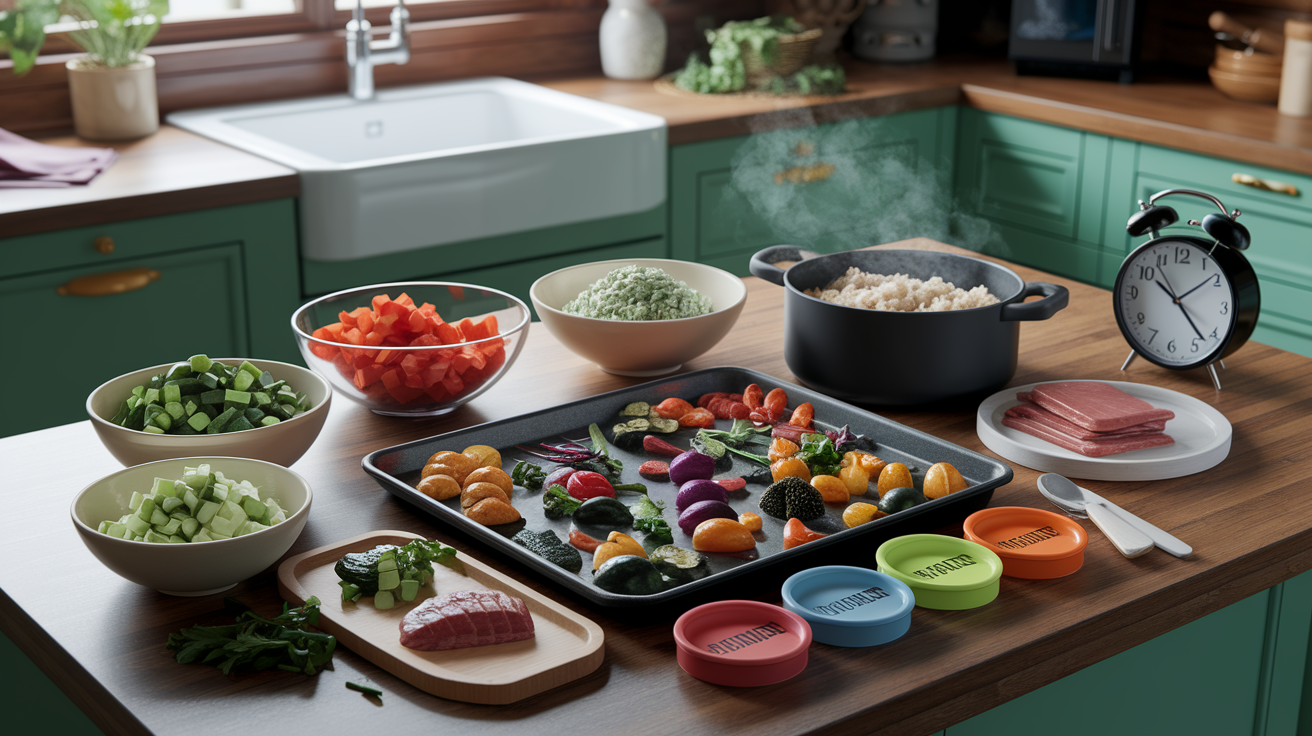
Set aside 60 to 90 minutes on Sunday to prep ingredients for the week. You’re not cooking full meals. You’re doing the repetitive tasks that slow you down on weeknights. Chop onions and peppers, wash and dry lettuce, cook a big pot of rice, roast a sheet pan of vegetables, and prep any proteins that need marinating or portioning.
Store prepped vegetables in airtight containers lined with a paper towel to absorb moisture. Cooked rice and grains keep for about five days in the fridge. Homemade dressings and sauces store for up to a week. Batch cooking proteins like shredded chicken or ground beef means you can assemble tacos, bowls, or pasta in under fifteen minutes on a busy night.
Here are the highest value prep tasks for beginners:
Chop vegetables. Dice onions, bell peppers, carrots, and celery. Store separately or mix into a mirepoix blend.
Wash and dry greens. Wash lettuce and herbs, spin them dry, and store in containers with a paper towel.
Cook a pot of rice or quinoa. Plain grains reheat quickly and pair with almost any protein.
Roast a sheet pan of vegetables. Toss broccoli, Brussels sprouts, or sweet potatoes in oil and roast. Reheat as needed.
Prep proteins. Shred rotisserie chicken, brown ground beef or turkey, or marinate chicken thighs for later in the week.
If 90 minutes feels like too much, start with 30 minutes and focus on the two tasks that will save you the most time during your busiest dinner night.
Budget-Friendly Weekly Meal Plan Tips for Beginners

Meal planning cuts grocery spending because it stops impulse buys and reduces food waste. When you shop from a list built around meals you’ve already planned, you’re less likely to toss unused produce at the end of the week or order takeout because you forgot to plan dinner.
Use your pantry and freezer first. Plan meals around proteins and staples you already own, and only buy what you need to fill in the gaps. If a pantry staple like canned tomatoes or olive oil is running low but not out, wait until it goes on sale to restock instead of paying full price.
Here are six budget tactics that work for beginners:
Choose one or two low cost proteins each week. Ground turkey, dried beans, canned beans, and eggs stretch further than steak or salmon.
Include at least one slow cooker dump meal. Recipes like crockpot chicken or pot roast use inexpensive cuts and require almost no prep.
Use frozen vegetables. Frozen broccoli, peas, and mixed vegetables cost less than fresh and don’t spoil.
Plan leftover based meals. Cook extra chicken on Monday and turn it into chicken tacos on Wednesday or chicken salad on Thursday.
Buy larger packs and freeze portions. Family packs of chicken breasts or ground beef are cheaper per pound. Divide and freeze what you won’t use within three days.
Swap expensive ingredients for pantry staples. Use canned black beans instead of specialty grains, or swap fresh herbs for dried versions in most recipes.
Stick to your list in the store. If something’s on sale and you can use it this week or freeze it, grab it. Otherwise, keep moving.
Portion Planning and Leftover Strategy for a Beginner Weekly Meal Plan

Plan at least one or two meals each week that intentionally make extra. Cook a whole chicken or a pork roast on Tuesday, serve it with sides that night, then use the leftover meat for tacos, sliders, salads, or grain bowls later in the week. This habit cuts your weeknight cooking time and stretches your grocery budget.
Most standard family recipes serve about four people. If you want leftovers, multiply the recipe by 1.25 to 1.5 times the listed quantities. For example, if a recipe calls for one and a half pounds of chicken, use two pounds instead and plan to repurpose the extra. If you’re cooking for two people, make the full four serving recipe and eat leftovers for lunch or freeze a portion for next week.
Leftover friendly proteins include roasted chicken, pulled pork, pot roast, ground beef, and shredded turkey. After the first meal, store the protein separately from sides so you can mix and match it into new dishes. A roasted chicken becomes chicken salad, chicken quesadillas, chicken noodle soup, or chicken fried rice depending on what else you have in the fridge. Planning this way means you’re cooking two or three times but eating five or six meals from that effort.
Sample 5-Day Beginner Menu to Model Your Weekly Meal Plan
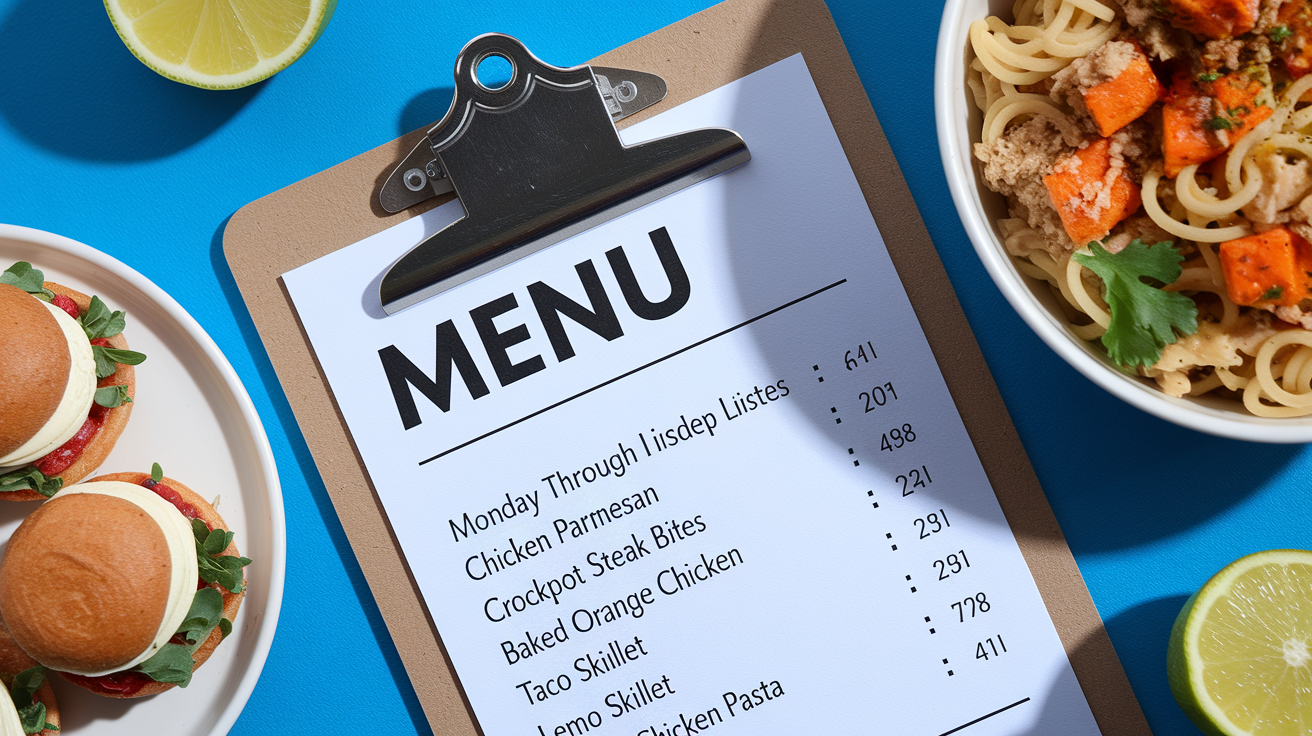
Here’s a ready to copy five day menu that balances quick meals, slow cooker ease, and leftover strategy. Use this structure as a template and swap in your own family favorites.
Monday: Chicken Parmesan Sliders + Creamy Southern Coleslaw + Caprese Salad. Use rotisserie chicken or leftover baked chicken. Assemble sliders in under twenty minutes.
Tuesday: Crockpot Steak Bites + Crockpot Mashed Potatoes + House Salad. Dump ingredients in the slow cooker in the morning. Dinner is ready when you get home.
Wednesday: Baked Orange Chicken + Ham Fried Rice + Sautéed Garlic Green Beans. Sheet pan chicken bakes in thirty minutes. Use leftover rice from Sunday prep for the fried rice.
Thursday: Taco Skillet Dinner + Doctored Canned Black Beans + Cornbread. One pan ground beef tacos with canned beans and boxed cornbread. Total time under thirty minutes.
Friday: Lemon Chicken Pasta + Garlic Bread + Pesto Roasted Vegetables. Dessert: Lemon Cake Mix Crinkle Cookies. Use frozen chicken tenders or leftover shredded chicken. Roast vegetables from Sunday prep. Cookies are optional but easy.
This menu includes one slow cooker meal, one one pan skillet, and three quick dinners. It reuses rice, rotisserie chicken, and roasted vegetables prepped ahead. Adjust portion sizes and swap sides based on what your family actually eats.
Mistakes Beginners Should Avoid When Making a Weekly Meal Plan

The biggest mistake is not checking your schedule before planning meals. If you write down a complicated new recipe for the same night you have back to back meetings or your kid has practice, you’ll end up ordering pizza and feeling like the plan failed. Match meal complexity to available time.
Another common error is skipping the pantry first step. When you plan meals without checking what you already have, you buy duplicate ingredients, waste food, and spend more than necessary. Take five minutes to inventory your fridge, freezer, and pantry before you choose recipes.
Here are six mistakes to watch for:
Planning meals your family won’t eat. If no one likes mushrooms, don’t plan three mushroom recipes hoping this week will be different.
Choosing too many new recipes at once. Stick to one or two new meals per week. The rest should be familiar and low risk.
Forgetting to plan for leftovers. Cooking from scratch every single night is exhausting. Plan to reuse proteins and sides.
Not consolidating your grocery list. Write one combined list grouped by department instead of shopping from five different recipe cards.
Ignoring pantry staples. If you don’t keep basics like canned tomatoes, rice, beans, and frozen vegetables on hand, you’ll struggle to throw together quick meals.
Overloading every night with hour long recipes. Shoot for a mix of fifteen minute meals, thirty minute meals, and slow cooker options.
Meal planning gets easier each week. Save your old menus, rotate favorite meals, and adjust portion sizes and timing as you learn what works for your household.
Final Words
Start by checking the week and the pantry, then pick familiar recipes and one new dish, build a grocery list by aisle, and block 60 to 90 minutes for prep.
Use a simple 5‑ or 7‑day template, plan for leftovers, and post the planner on the fridge so the plan actually sticks.
If you want a quick next move, print a weekly planner, pencil in dinners for the coming week, and try one new recipe. This is how to make a weekly meal plan for beginners that actually works, and you can tweak it as you go.
FAQ
Q: What is the 3 3 3 rule for eating?
A: The 3‑3‑3 rule for eating means spacing food across the day: three meals, three snacks, with roughly three-hour gaps to steady energy and help prevent overeating.
Q: How do I create a weekly meal plan?
A: Creating a weekly meal plan means check your week’s schedule, inventory pantry and freezer, ask family preferences, choose mostly familiar recipes plus one new, write the plan on a printable, and post it on the fridge.
Q: What’s the best meal plan for diabetics?
A: The best meal plan for diabetics focuses on consistent carbs, fiber-rich foods, lean protein, and non-starchy vegetables with modest portions; work with a clinician or dietitian to tailor amounts and timing.
Q: What is the 5 4 3 2 1 food rule?
A: The 5‑4‑3‑2‑1 food rule is a simple daily target some people use: five servings fruit/veg, four protein portions, three whole-grain servings, two snacks, and one small treat to simplify choices.

