

What if hitting your daily macro targets was as easy as pressing a button?
Macro meal planners take your weight, activity, age, and goal and turn that into calories and grams of protein, carbs, and fat in seconds.
They can auto-build a week of meals, let you pin favorites, scan barcodes, and track progress so you stop guessing at every meal.
This post walks through the best planner tools and simple steps to use them so you hit your targets without doing the math or losing time.
Macro Meal Planner Tools and How to Use Them

A macro meal planner sets your daily calorie needs based on what you weigh right now, how much you move, your age, and where you’re trying to go. Lose fat, build muscle, maintain. Whatever you pick, it breaks those calories into grams of protein, carbs, and fat without you doing any math. You fill in your profile. The tool spits out targets in seconds.
Some planners let you dig into an advanced tab if you want control over how you split carbs and fats. Most people don’t touch that. They start with what the tool gives them and adjust once they see how their body responds.
Once targets are locked in, the planner builds a full weekly menu. You tell it what proteins you actually eat, what foods you can’t stand, how many servings you need. It assembles breakfast, lunch, dinner, snacks for seven days. If you’re eating out Friday or you want Wednesday’s dinner to be that one recipe you already know you like, mark those meals as off-plan or pinned. The planner works around them. The whole thing takes seconds. You end up with a week of meals that hit your targets without guessing.
To track macros day to day, you can use the same app that built your plan or a standalone tracker. Most include barcode scanning. You tap your phone on a package, it logs the food instantly. Spreadsheets work too if you’d rather enter things manually. Just log grams of protein, carbs, fat. Watch your running totals. Either way, the goal is making logging fast enough that you’ll do it every day.
Features you’ll find in most macro planners:
- Auto generate weekly meal plans in seconds, fully customizable
- Barcode scanning for quick logging of packaged or off-plan foods
- Modify or swap recipes to match your taste or schedule
- View grocery lists and send them to your store for pickup or delivery
- Add family members to meals, scale servings automatically
- Track progress with charts, graphs, weight logs over time
Setting Macro Targets for Your Meal Planner

Macros are protein, carbs, fat. Protein and carbs each give you 4 calories per gram. Fat gives you 9. To set macro targets, start with total daily calories, then decide how many of those come from each macro. First step is nailing your calorie number. Use an online calculator or let the planner estimate it. Once you have that, set your protein target and split the rest between carbs and fats however you like.
Protein comes first. Aim for 0.8 to 1.0 grams per pound of bodyweight. You weigh 150 pounds, shoot for 120 to 150 grams of protein per day. If you’re significantly above a healthy weight, base the calculation on estimated lean body mass instead of total bodyweight. Otherwise the protein target can get impractically high. After protein is locked in, spend the leftover calories on carbs and fats in whatever ratio keeps you full and energized. There’s no strong evidence that the exact carb to fat split matters for fat loss or muscle gain as long as calories and protein are dialed in.
How to calculate personal macros in four steps:
- Estimate daily calories using your weight, activity level, and goal (lose, gain, maintain).
- Multiply your bodyweight in pounds by 0.8 to 1.0 to get daily protein grams.
- Multiply protein grams by 4 to find protein calories, then subtract that from total daily calories.
- Split the remaining calories between carbs and fats. Divide by 4 for carb grams or by 9 for fat grams.
Macro Meal Planner Templates and Meal-Building Frameworks
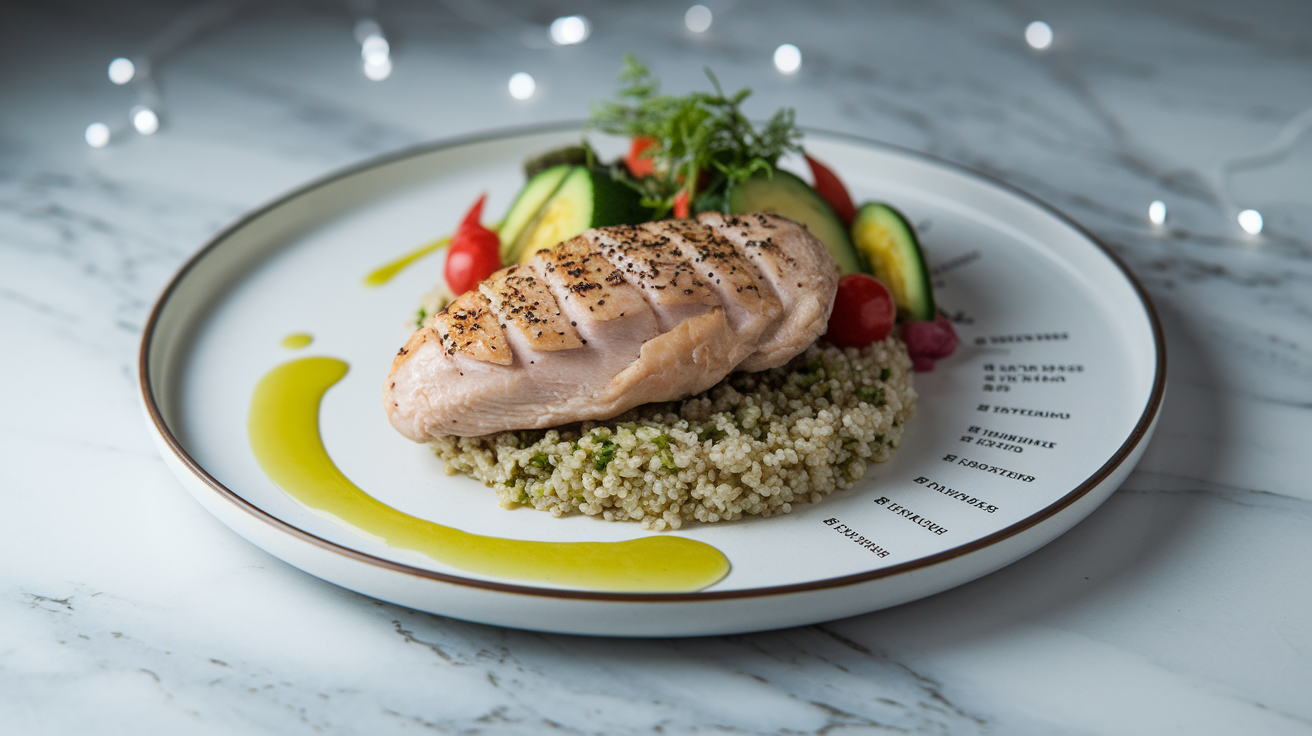
A macro balanced plate starts with a lean protein source, adds a portion of carbs or fats depending on your target split, fills in with vegetables or fruit for fiber and micronutrients. Think of protein as the anchor. Chicken breast, lean beef, turkey, whey or pea protein powder, egg whites, low fat cottage cheese, low fat Greek yogurt. Once you’ve portioned your protein, add your carb or fat source. If you’re running higher carbs, add rice, oats, sweet potato, whole grain bread. If you’re running higher fats, add avocado, nuts, olive oil, or fattier cuts of meat. Vegetables and greens can go on every plate without worrying too much about the macros. They’re mostly fiber and water.
Scaling recipes for individual macro targets is straightforward. Recipe serves four and you need two servings, cut all ingredient quantities in half. If the recipe’s macros per serving are too high or too low for your target, adjust the protein portion size up or down and tweak the carb or fat portion to match. You can also swap ingredients. Use leaner meat if you need fewer fat grams, or swap white rice for cauliflower rice if you need fewer carb grams. The math stays the same: grams times calories per gram.
Creating reusable templates makes daily planning faster. Once you find a breakfast that fits your macros and tastes good, rotate it three or four times a week. Same for lunch and dinner. Build a small collection of go-to meals. You won’t have to calculate from scratch every day. After a few weeks, you’ll know your staple meals by memory.
Five meal template examples to start with:
- High protein bowls: lean protein, quinoa or rice, roasted vegetables, light dressing
- Macro friendly salads: grilled chicken or shrimp, mixed greens, beans, vinaigrette, small portion of nuts or cheese
- Low carb dinners: baked fish or lean steak, steamed broccoli, side salad with olive oil
- Balanced plates: turkey breast, sweet potato, green beans, small serving of butter or oil
- Snack pairings: Greek yogurt with berries, apple with almond butter, cottage cheese with pineapple
Sample Macro Meal Planner Breakdown: 7-Day Plan Overview

A 7-day macro plan gives you a full week of meals mapped out in advance. Each day includes breakfast, lunch, dinner, one or two snacks. All built to hit your daily calorie and macro targets. You don’t have to follow it exactly. Swap days around. Repeat meals you like. Skip a recipe and log something else. The point is having a framework so you’re not starting from zero every morning.
Most planners let you modify or swap recipes on the fly. If Tuesday’s dinner doesn’t sound good, pull in a different recipe that has similar macros.
The meals below are representative examples. They show variety across proteins, carb sources, preparation methods. You can reuse the same protein across multiple days. Grilled chicken on Monday’s salad, sliced cold on Tuesday’s wrap, diced into Wednesday’s stir-fry. That’s how batch prep makes macro planning easier. The plan is a guide, not a strict script.
| Day | Breakfast | Lunch | Dinner | Snack |
|---|---|---|---|---|
| Monday | Greek yogurt parfait with granola and berries | Grilled chicken salad with quinoa and cherry tomatoes | Baked salmon with steamed broccoli and brown rice | Apple slices with almond butter |
| Tuesday | Scrambled eggs with spinach and whole grain toast | Turkey wrap with hummus and mixed greens | Stir-fried tofu with mixed vegetables and soba noodles | Cottage cheese with pineapple |
| Wednesday | Overnight oats with chia seeds and banana | Quinoa bowl with black beans, corn, avocado, and grilled chicken | Lean beef tacos with whole wheat tortillas and salsa | Hard boiled eggs with carrot sticks |
| Thursday | Protein smoothie with spinach, berries, and almond milk | Lentil soup with whole grain bread | Grilled shrimp with couscous and roasted vegetables | Rice cakes with peanut butter |
| Friday | Whole grain waffles with strawberries and Greek yogurt | Tuna salad wrap with mixed greens | Baked chicken breast with sweet potato mash and green beans | Trail mix (nuts, seeds, dried fruit) |
| Saturday | Avocado toast with poached egg | Chickpea salad with cucumbers, tomatoes, and feta | Vegetable stir-fry with tofu and brown rice | Yogurt with mixed nuts |
| Sunday | Almond flour pancakes with blueberries | Grilled vegetable sandwich with hummus | Spaghetti squash with marinara and turkey meatballs | Smoothie bowl with protein powder and granola |
Weekly Macro Meal Prep Strategy for a Planner System
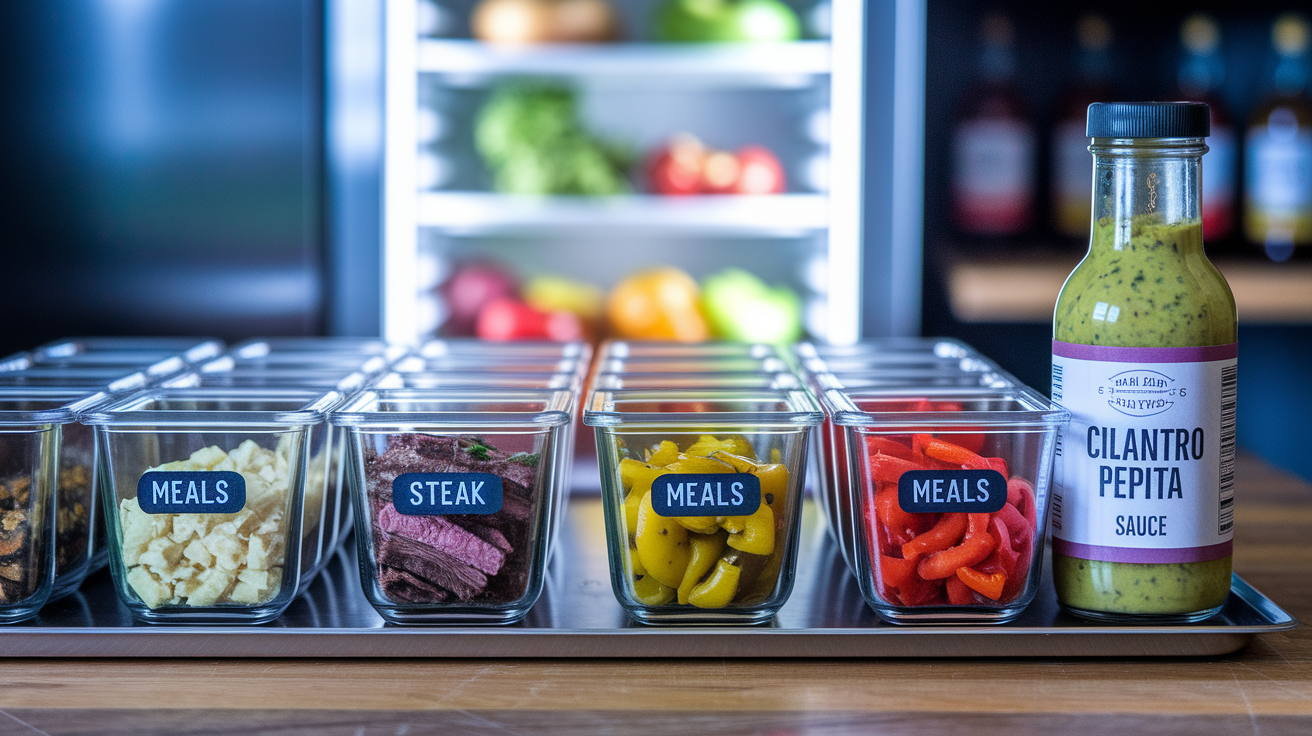
Batch prepping one or two proteins each week saves you from cooking every night. Pick a protein you can use in multiple meals. Flank steak, ground beef, chicken breast, pulled pork, turkey meatballs. Cook it all at once, portion it into containers, store it in the fridge. Over the next few days, you pull out a portion and build a different meal around it.
Monday it’s steak in a pita with peppers. Wednesday it’s the same steak sliced cold over a salad. Friday it’s diced into tacos. Same protein, different meals, no extra cooking.
Making one or two macro friendly sauces at the start of the week adds variety without adding work. A batch of cilantro pepita sauce or romesco can go on salads, grain bowls, wraps, roasted vegetables. You’re not eating the same meal every day. You’re using the same base ingredients in different combinations. If you prep enough protein for six servings but only plan to use four this week, freeze two portions for next week. That rotation keeps you from getting bored and prevents waste.
Storage and reheating are simple. Use airtight containers and label them with the date. Cooked proteins last three to four days in the fridge. Reheat in the microwave or on the stovetop. Add a splash of water or broth to keep chicken or lean beef from drying out. Baked salmon reheats well at 375°F for a few minutes if you want to crisp it back up, but most people just microwave it and move on.
Time saving prep tips:
- Freeze half your batch cooked protein for the following week to cut next week’s prep time in half
- Buy rotisserie chicken or pre-pulled chicken from the store and portion it into containers for soups, casseroles, or pastas
- Chop all your vegetables for the week in one session and store them in the fridge in sealed bags or containers
- Cook a big pot of rice, quinoa, or pasta at the start of the week and refrigerate portions to reheat as needed
Macro Meal Planner Tips for Accuracy and Tracking
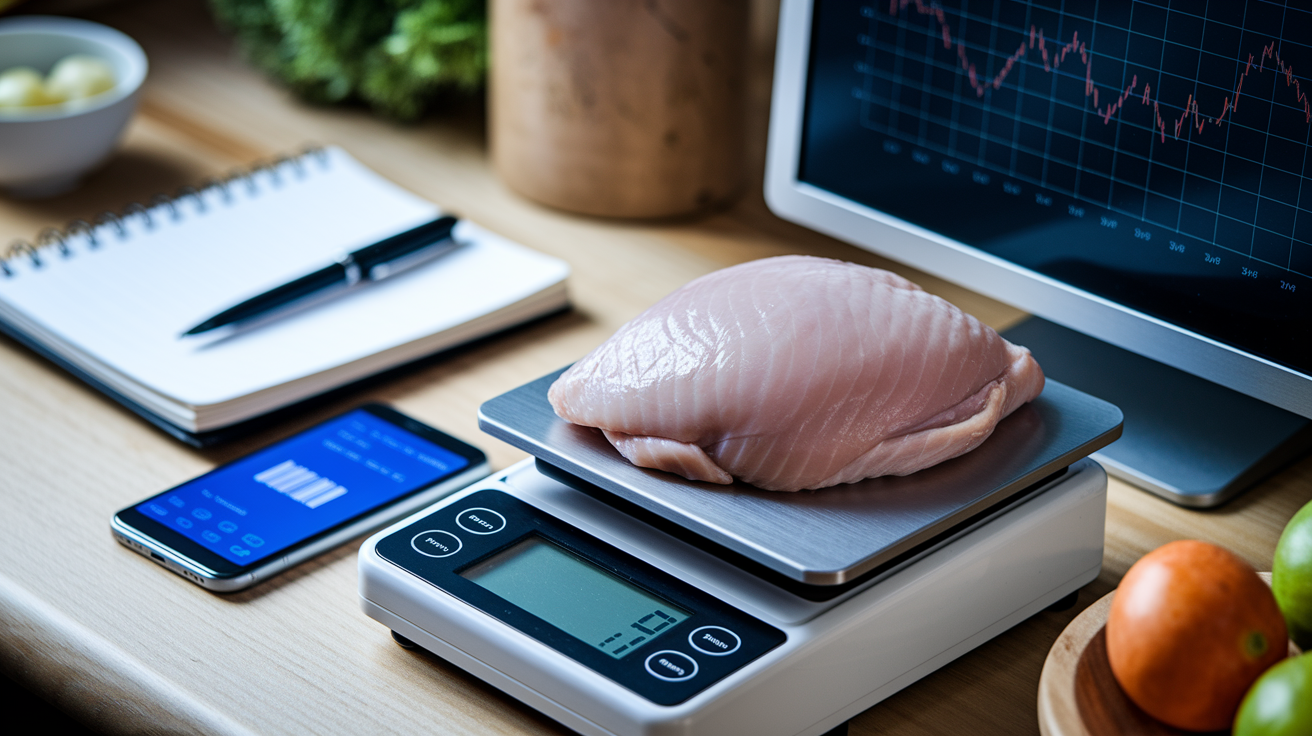
Weighing your food on a kitchen scale is the most accurate way to log macros. Measuring cups and spoons introduce error, especially with calorie dense foods like peanut butter, oils, cheese. You can pack more or less into the same volume. A tablespoon of peanut butter can range from 12 to 20 grams depending on how you scoop it. That’s a 60 calorie swing. A food scale removes the guesswork.
Weigh raw ingredients when possible. Cooking changes water content and therefore weight. If you log cooked chicken, make sure the entry in your app or spreadsheet is for cooked chicken, not raw.
Database accuracy matters. Some apps pull data from user submissions, and those entries can be wrong. Cross check new foods against the nutrition label or USDA database the first time you log them. Barcode scanning speeds up the process and usually pulls accurate data straight from the manufacturer, but it’s still worth glancing at the result to make sure it makes sense. If you’re using a meal planner system that pre-enters recipes into tracking apps, the work is already done. Just make sure portion sizes match what you actually ate.
Common accuracy mistakes to avoid:
- Logging “medium banana” or “large apple” instead of weighing the fruit
- Forgetting to log cooking oils, butter, or salad dressing
- Using generic entries like “chicken breast” when you need to specify raw or cooked
- Eyeballing portion sizes after the first week instead of continuing to weigh periodically
- Not updating your macro targets as your weight or activity level changes
Using a Macro Meal Planner for Different Goals

When your goal is fat loss, you set calories below maintenance and prioritize protein to preserve muscle. Protein keeps you full longer and protects lean tissue when you’re in a deficit. Carbs and fats can be split however you prefer. Some people feel better on higher carbs, others on higher fats. The evidence shows that as long as calories and protein are right, the carb to fat ratio doesn’t significantly affect how much fat you lose.
If you like bread and pasta, keep carbs higher. If you prefer cheese and avocado, shift more calories to fat. Both work.
For muscle gain, calories go above maintenance and protein stays high. Often at the same 0.8 to 1.0 grams per pound. You’re eating more total food, so you’ll naturally get more carbs and fats. Carbs are often increased because they fuel training and support recovery. But again, the split is flexible. Muscle gain is slower than fat loss, so small calorie surpluses work better than aggressive overfeeding. A couple hundred extra calories per day is usually enough.
Body recomposition, losing fat while gaining muscle, sits in the middle. Calories are set close to maintenance, protein is high, training is consistent. Progress is slower in both directions, but you’re improving body composition without dramatic swings in weight. Athletes and people training for endurance events often need higher carbs to fuel performance, and their total calorie needs are higher overall. The planner adjusts for that. But the same principle applies: hit your calories first, protein second, split the rest based on what supports your training and keeps you consistent.
Special Diet Adaptations Within a Macro Meal Planner

Vegetarian and vegan macro plans rely on plant based protein sources. Tofu, tempeh, lentils, chickpeas, black beans, edamame, pea protein powder, soy based products. Dairy sources like Greek yogurt, cottage cheese, whey protein work for vegetarians. Vegans need to combine multiple protein sources throughout the day to cover all essential amino acids. But that happens naturally if you’re eating a variety of beans, grains, nuts, seeds. Protein totals are harder to hit on a vegan plan without powder or high protein meat substitutes, so those become staples.
Gluten free macro planning is straightforward. Swap wheat based grains for rice, quinoa, oats (certified gluten free), or gluten free bread and pasta. The macros stay nearly identical. For people with other food allergies, the same principle applies: find a direct swap with similar macros. Almond butter instead of peanut butter. Coconut milk instead of dairy. Egg replacers if needed. Most macro planners let you exclude specific ingredients. The tool generates recipes that avoid them.
Keto or carb cycling adaptations:
- Set carbs below 50 grams per day in the planner’s advanced settings for keto, fill the remaining calories with fat
- Use carb cycling by alternating high carb days (training days) with low carb days (rest days) while keeping weekly calories and protein consistent
- Track net carbs (total carbs minus fiber) if following a keto protocol, make sure your app supports that calculation
Smart Shopping for a Macro Meal Planner

Macro focused grocery planning starts with your weekly meal plan. Most planner apps generate a grocery list automatically based on the recipes you’ve selected. You can send that list to your phone, print it, or forward it to a store for pickup. The list groups items by category. Proteins, produce, grains, dairy. So you’re not zigzagging around the store.
If you’re shopping without a generated list, build your cart around lean proteins first. Then add carbs and fats to match your target split. Then fill in vegetables and fruit.
Easy swaps let you stay flexible without recalculating everything. If chicken breast is expensive or sold out, swap in turkey breast or lean pork. Macros are nearly identical. If you prefer brown rice but the recipe calls for white, the carb and calorie counts are close enough that you don’t need to redo the math. If a recipe calls for full fat yogurt and you want to save fat grams, use low fat or non-fat Greek yogurt and add a small portion of nuts or seeds elsewhere in the day to make up the fats. The planner gives you structure. But real life shopping requires small adjustments.
A quality first mindset means choosing fresh produce, whole grains, minimally processed proteins most of the time. With room for treats and convenience foods when you need them. Frozen vegetables, canned beans, rotisserie chicken, pre-cut fruit all count as quality choices if they make meal prep easier. Ultra processed snacks and desserts can fit your macros. But they usually don’t keep you as full or provide the vitamins and minerals you get from whole foods.
Common macro friendly grocery staples:
- Chicken breast, lean ground turkey, canned tuna, rotisserie chicken
- Eggs, egg whites, low fat Greek yogurt, cottage cheese
- Brown rice, quinoa, oats, whole grain bread or wraps
- Sweet potatoes, mixed frozen vegetables, fresh greens, berries
Troubleshooting Common Issues in a Macro Meal Planner

One of the most common mistakes is setting protein too low and wondering why you’re hungry all day. If you’re consistently over your calorie target or craving snacks an hour after meals, check your protein. Aim for at least 0.8 grams per pound of bodyweight.
Another mistake is logging everything perfectly for three days, then skipping the weekend and losing track. Consistency matters more than perfection. If you know you’re eating out or skipping the plan one night, log it anyway. Even a rough estimate keeps you aware of patterns.
As you lose weight, your calorie needs drop. As you gain muscle or increase activity, your needs go up. Macro targets aren’t static. If your weight stalls for two weeks or you’re feeling sluggish, it’s time to recalculate. Most planners let you update your profile and regenerate targets instantly. You don’t need to overhaul the whole plan. Just tweak calories up or down by 100 to 200 and give it another week or two to see how your body responds.
Troubleshooting tips:
- If you’re not losing weight after two weeks at the same calorie target, drop daily calories by 100 to 150 and reassess
- If you’re gaining weight faster than expected on a muscle gain plan, pull back calories slightly to slow the rate
- If you feel tired or irritable, check that you’re hitting your protein target and getting enough carbs around training
- If tracking feels overwhelming, simplify by eating the same breakfasts and lunches all week and only varying dinner
Final Words
In the action, you learned how macro planners set calorie and macro targets, generate weekly menus, and let you track meals with apps or spreadsheets. We also covered target math, meal templates, a sample 7-day plan, prep strategies, accuracy tips, shopping swaps, and common fixes.
Pick one small move this week: set your calories in the tool, batch-cook one protein, and log two days.
Use a macro meal planner to make planning less fussy and more predictable. You’ve got this.
FAQ
Q: What is a macro meal planner and how does it work?
A: A macro meal planner is a tool that calculates your daily protein, carbohydrate, and fat targets based on your goals, then generates meal plans or helps you build meals that hit those numbers. It works by setting your calorie target first, prioritizing protein intake, then distributing remaining calories between carbs and fats based on your preferences or diet type.
Q: How do I set macro targets for my meal planner?
A: Setting macro targets for your meal planner starts with calculating calories based on your goal, then setting protein at 0.8 to 1.0 grams per pound of bodyweight. After protein is set, you divide the remaining calories between carbs and fats based on preference, using 4 calories per gram for protein and carbs, and 9 calories per gram for fat.
Q: What features should I look for in a macro tracking app?
A: Macro tracking apps should include barcode scanning for quick food entry, automatic meal plan generation, recipe modification tools, grocery list creation, progress tracking, and the ability to add family members or pin off-plan meals. These features make daily tracking faster and meal planning more practical for busy schedules.
Q: Can I use a spreadsheet instead of an app for macro planning?
A: You can use a spreadsheet for macro planning by manually entering foods and calculating totals, though it requires more time than apps with barcode scanning and auto-calculation. Spreadsheets work well if you eat similar meals repeatedly and want full control over your data without relying on third-party databases.
Q: How do I build a macro-balanced plate without counting everything?
A: Building a macro-balanced plate starts with choosing a lean protein portion that meets your target, then adding carbs like whole grains or starchy vegetables and fats like oils or nuts to fill remaining calories. Using reusable plate templates with consistent portions helps you hit macros without weighing food every single time.
Q: What are some macro-friendly meal template examples?
A: Macro-friendly meal templates include high-protein bowls with grilled chicken and quinoa, macro-balanced salads with lean turkey and avocado, low-carb dinners like baked salmon with roasted vegetables, balanced plates with lean beef and sweet potato, and snack pairings like Greek yogurt with berries. Templates make meal building faster and more repeatable.
Q: How do I meal prep for macros efficiently each week?
A: Efficient macro meal prep involves batch-cooking one or two proteins at the start of the week, reusing them across multiple meals, and freezing portions for the following week. Using rotisserie chicken, pre-chopped vegetables, and batch-cooked grains saves time while keeping meals flexible and macro-accurate.
Q: Should I weigh food or use measuring cups for macro accuracy?
A: Weighing food on a kitchen scale is more accurate than measuring cups, especially for calorie-dense items like nuts, oils, and grains, because volume measurements can vary significantly. If precision matters for your goal, weigh solids in grams and measure liquids in milliliters for the most reliable macro tracking.
Q: How do macros change for weight loss versus muscle gain?
A: Macros for weight loss prioritize a calorie deficit with high protein to preserve muscle, while macros for muscle gain use a calorie surplus with similar high protein to support growth. In both cases, hitting total calories and protein matters most, with carb and fat splits adjusted based on preference and energy needs.
Q: Can I follow a macro meal planner on a vegetarian or vegan diet?
A: You can follow a macro meal planner on a vegetarian or vegan diet by using plant-based protein sources like pea protein, tofu, tempeh, lentils, and Greek yogurt or plant-based yogurt alternatives. Hitting protein targets requires intentional meal building, but modern macro planners support these substitutions easily.
Q: How do I adapt a macro meal planner for keto or low-carb diets?
A: Adapting a macro meal planner for keto or low-carb diets involves setting advanced carb targets lower, often below 50 grams daily, and increasing fat intake to meet calorie goals while keeping protein steady. Most macro planner tools allow flexible carb and fat splits to support ketogenic or carb-cycling approaches.
Q: What should I buy at the grocery store for a macro meal plan?
A: Buy lean proteins like chicken breast, lean turkey, and Greek yogurt, whole grains like brown rice and quinoa, healthy fats like avocado and olive oil, and plenty of vegetables for volume and fiber. Stocking macro-friendly staples makes hitting daily targets easier without needing specialty items or complicated recipes.
Q: How do I handle cravings or off-plan meals while tracking macros?
A: Handle cravings or off-plan meals by logging them honestly and adjusting the rest of your day or week to stay near your targets, rather than abandoning the plan entirely. Macro planners with flexibility features let you include treats without derailing progress, which supports long-term adherence better than rigid rules.
Q: What are the most common macro counting mistakes to avoid?
A: Common macro counting mistakes include not weighing calorie-dense foods like oils and nuts, trusting inaccurate food database entries without verifying, forgetting to log cooking oils or condiments, and setting protein too low while obsessing over carb and fat ratios. Prioritizing accuracy on high-calorie items and protein intake prevents most tracking errors.

