

Is high-fructose corn syrup secretly worse than table sugar, or is that just marketing noise?
Short answer: for most people, the practical health difference is small; both add the same calories and behave very similarly in real meals.
The chemistry differs — HFCS delivers free glucose and fructose while sucrose is a bonded pair — and that can nudge how the liver handles fructose at high doses.
But the real health question is total added sugar and how you eat it, and this post breaks down when the differences matter and what to do in the store.
Core Breakdown of HFCS vs Sugar Differences for Quick Understanding
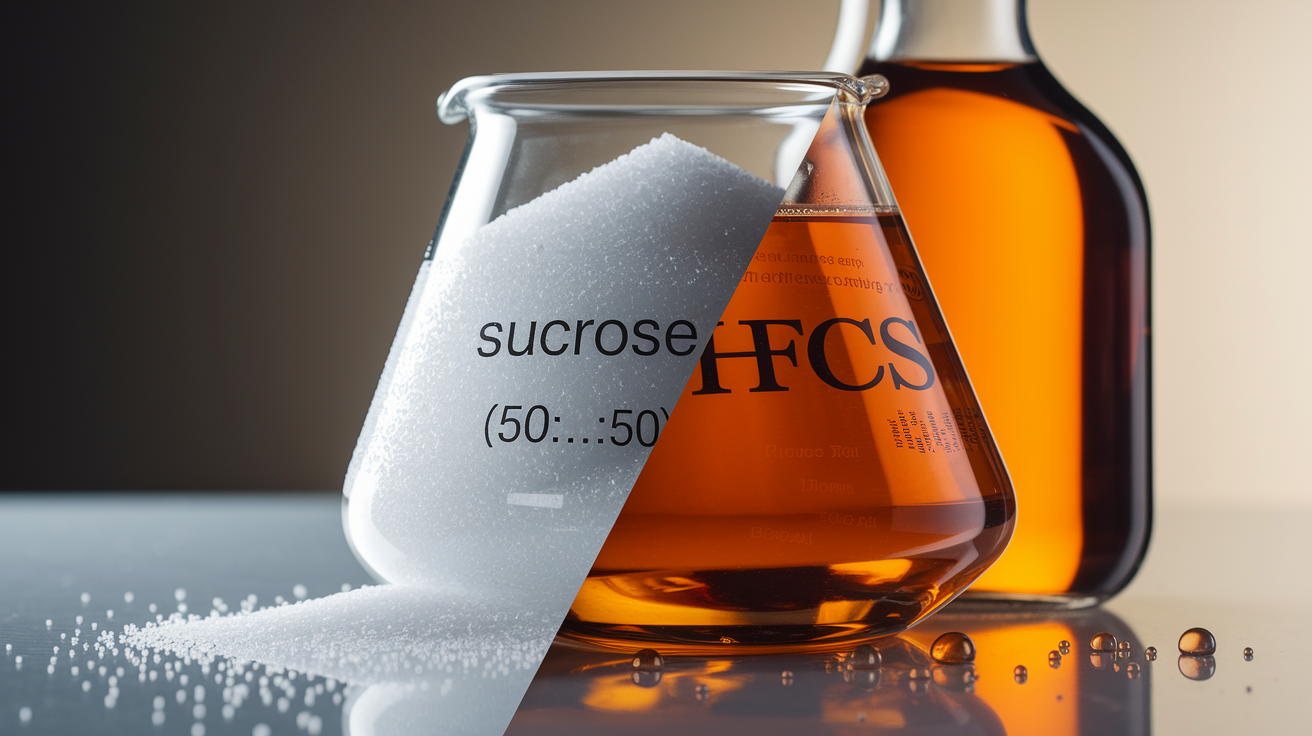
Sucrose, the white sugar you probably keep next to your coffee maker, is built from one glucose molecule bonded to one fructose molecule in a perfect 50:50 split. High-fructose corn syrup isn’t a single molecule. It’s a manufactured blend of free glucose and fructose swimming together in liquid form. The two most common versions are HFCS-42, which runs about 42 percent fructose and 58 percent glucose, and HFCS-55, which flips the balance to roughly 55 percent fructose and 45 percent glucose. HFCS-55 dominates the soft-drink aisle in the United States. HFCS-42 shows up in baked goods, canned fruit, and packaged snacks. Both deliver the same 4 calories per gram, so swapping one for the other without cutting total sugar won’t reduce your calorie load.
Glycemic index measures how fast a carbohydrate raises blood glucose. Pure glucose scores 100. Sucrose lands around 60 to 65 because half of its mass is fructose, which has a much lower glycemic impact, roughly 15 to 25. HFCS-55, with its slightly higher fructose content, produces a glycemic response close to sucrose in real-world use. The small percentage difference in fructose between HFCS-55 and sucrose, about 5 percent, doesn’t translate into a meaningful practical difference in how quickly your blood sugar climbs after a soda or a slice of cake.
Here’s the fast comparison:
Composition: Sucrose is one bonded glucose-fructose pair (50:50). HFCS is free glucose and fructose mixed (typically 42:58 or 55:45).
GI impact: Sucrose around 60 to 65. HFCS-55 similar. Both raise blood sugar less than pure glucose but more than pure fructose.
Sweetness: HFCS-55 sweetness matches sucrose in beverages. HFCS-42 is slightly less sweet. Fructose itself is 1.2 to 1.8 times sweeter than sucrose depending on temperature and concentration.
Typical use: Sucrose for household baking and tabletop sweetening. HFCS-55 for sodas and drinks. HFCS-42 for processed foods and baked goods.
For the average person standing in the grocery aisle, the headline is this: calorie for calorie, HFCS and table sugar deliver nearly identical energy and similar short-term blood-sugar effects. The metabolic differences that do exist, which involve how fructose is processed in the liver, become relevant mainly when total added-sugar intake is high, not because one sweetener is uniquely dangerous at typical serving sizes.
Molecular and Biochemical Mechanisms Behind HFCS and Sugar
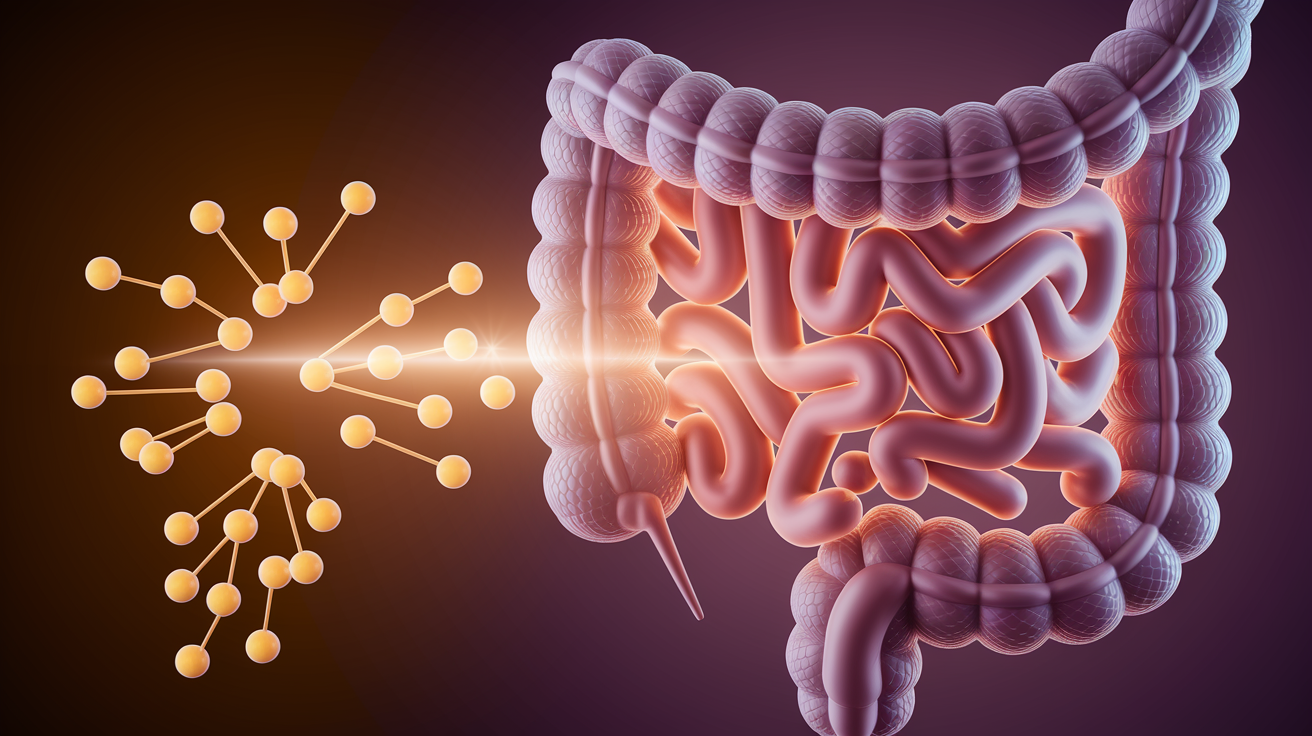
Sucrose is held together by a glycosidic bond linking the number-one carbon of glucose to the number-two carbon of fructose, forming an α(1→2) linkage. This bond must be cleaved before your body can absorb either monosaccharide. The enzyme that does the job, sucrase, sits on the brush border of your small intestine and splits every sucrose molecule into one free glucose and one free fructose as they pass through. HFCS skips this step entirely because the glucose and fructose molecules are already separated during manufacturing.
Because HFCS delivers free monosaccharides from the start, absorption kinetics can differ slightly. Glucose is taken up by active transport via the SGLT1 transporter in the intestinal wall, a process that requires energy and sodium co-transport. Fructose moves through a different channel, the GLUT5 transporter, which is a passive facilitated-diffusion system and doesn’t rely on sodium or energy expenditure. When fructose is still locked inside a sucrose molecule, the sucrase cleavage step adds a brief delay before GLUT5 can act. With HFCS, fructose is immediately available for GLUT5, so the initial absorption wave may be marginally faster. In practice this difference is small and rarely detected in whole-meal or real-world eating scenarios where other macronutrients slow digestion.
| Sweetener | Components | Notes |
|---|---|---|
| Sucrose | 1 glucose + 1 fructose (bonded) | Requires sucrase cleavage; disaccharide structure slows initial absorption |
| HFCS-42 | ~42% free fructose, ~58% free glucose | No enzymatic cleavage needed; slightly less sweet than sucrose |
| HFCS-55 | ~55% free fructose, ~45% free glucose | No enzymatic cleavage needed; sweetness matches sucrose in beverages |
The free-monosaccharide structure of HFCS also means the fructose-to-glucose ratio hits your liver and bloodstream in the proportions blended at the factory, while sucrose always delivers an exact 1:1 split no matter the formulation. This distinction matters more in research labs studying hepatic metabolism than in your kitchen, but it’s the biochemical reason scientists pay attention to fructose percentages when evaluating sweetener effects on liver fat and triglycerides.
Metabolic Differences: How the Body Processes Each Sweetener
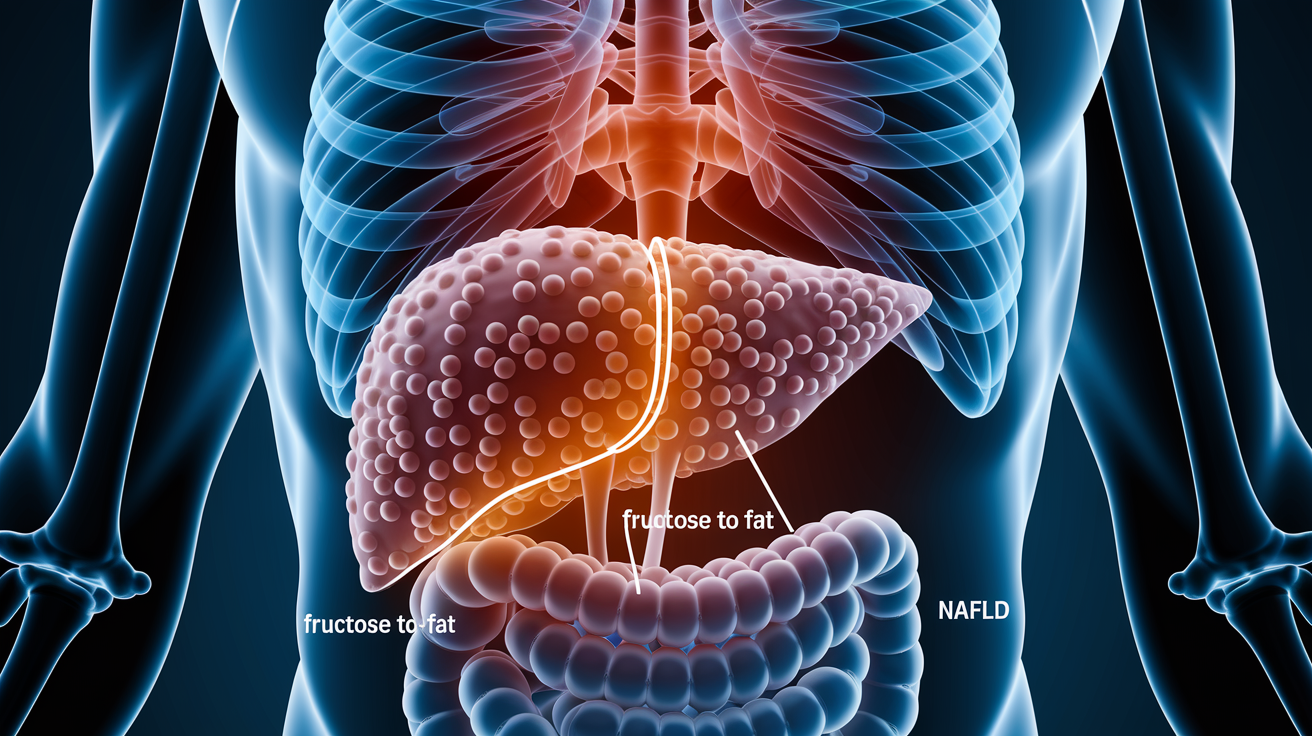
Glucose triggers insulin release from the pancreas and can be used for energy by nearly every cell in your body, including muscle, brain, and fat tissue. Fructose doesn’t stimulate a strong insulin response and instead flows directly to the liver, where specialized enzymes convert it into intermediates that can be stored as glycogen, burned for fuel, or, when liver glycogen stores are full, turned into fat through a process called de novo lipogenesis. This metabolic split is why fructose has a low glycemic index but can still contribute to metabolic problems when consumed in large amounts, especially in liquid form without fiber or protein to slow absorption.
Because HFCS supplies free fructose from the moment it enters your mouth, the liver receives a fructose load without the brief delay imposed by sucrase cleavage of sucrose. In controlled feeding studies where people consume identical grams of fructose from HFCS or from sucrose, the liver workload and metabolic byproducts are nearly identical. The practical difference in real meals is minimal. The free-monosaccharide structure does mean HFCS can deliver its fructose payload marginally faster, which may matter in high-dose scenarios like drinking a large soda on an empty stomach.
Fructose’s Role in Liver Fat Build-Up
When hepatic fructose metabolism runs at high throughput, the liver produces acetyl-CoA faster than the citric acid cycle can burn it. Excess acetyl-CoA gets shuttled into lipogenesis pathways that synthesize triglycerides and pack them into very-low-density lipoproteins (VLDL) for export into the bloodstream. Over time, chronic high fructose intake can overwhelm this export machinery, leaving fat deposits inside liver cells and contributing to nonalcoholic fatty liver disease (NAFLD). This mechanism is the same whether fructose comes from HFCS, sucrose, agave syrup, or fruit juice concentrate. The total fructose dose and frequency matter more than the source.
Here are the three key metabolic distinctions:
Insulin and satiety signals: Glucose raises insulin and leptin (the satiety hormone). Fructose doesn’t, which may weaken the body’s normal “I’m full” feedback and make it easier to overconsume liquid calories.
Hepatic lipogenesis: Fructose is preferentially converted to fat in the liver when glycogen stores are topped off. Glucose is more readily oxidized for immediate energy or stored as muscle glycogen.
Metabolic byproducts: High fructose loads generate uric acid as a byproduct of purine metabolism in the liver, and elevated uric acid has been linked to insulin resistance, hypertension, and gout in observational studies.
Health Effects: What Research Shows About HFCS vs Sugar
Epidemiological data show that the rise of HFCS in the U.S. food supply during the late 1970s and 1980s coincided with sharp increases in obesity prevalence, from 16 percent of adults in 1995 to 36 percent in 2015. A widely cited 2004 hypothesis proposed HFCS as a direct driver of the obesity epidemic. But subsequent randomized controlled trials and systematic reviews have failed to demonstrate that HFCS is uniquely obesogenic compared with sucrose when total calorie intake is held constant. When people eat or drink more calories from added sugars, whether HFCS or table sugar, they gain weight. When they reduce added-sugar calories, they lose weight. The evidence points to excess calories and the displacement of nutrient-dense foods as the core problem, not a unique property of corn-derived fructose.
Mechanistic studies do highlight legitimate concerns about high fructose intakes. Excess fructose increases hepatic triglyceride synthesis, raises circulating triglyceride levels, and promotes fat accumulation in the liver. All risk factors for metabolic syndrome, type 2 diabetes, and cardiovascular disease. Observational research links high consumption of sugar-sweetened beverages, most of which contain HFCS in the United States, to elevated risk of NAFLD, insulin resistance, and chronic low-grade inflammation. The World Health Organization issued guidance in 2015 recommending that free sugars, a category that includes both HFCS and sucrose, make up less than 10 percent of total daily energy intake, with a conditional recommendation to reduce intake further to below 5 percent for additional health benefits. For a person eating 2,000 calories per day, 10 percent translates to fewer than 50 grams of added sugar, roughly the amount in a single 12-ounce can of soda, which typically contains about 39 grams.
In head-to-head trials where researchers replaced HFCS with sucrose at the same calorie level, no meaningful differences emerged in body weight, blood glucose, insulin sensitivity, or lipid profiles. A 2013 comprehensive meta-analysis found that reducing free-sugar intake led to modest weight loss, and increasing it led to weight gain. The type of sugar, HFCS versus sucrose, didn’t alter the outcome. This pattern has led scientific consensus bodies, including the American Heart Association and the U.S. Dietary Guidelines, to focus recommendations on total added-sugar reduction rather than singling out HFCS.
The evidence consensus can be summarized in four points:
HFCS and sucrose produce similar metabolic effects when calorie intake is matched in controlled trials.
Excess added sugars of any type contribute to weight gain, insulin resistance, elevated triglycerides, and liver fat accumulation.
High fructose loads, whether from HFCS, sucrose, or concentrated fruit syrups, stress hepatic metabolism and increase lipogenesis.
Public-health guidance emphasizes limiting total free and added sugars to less than 10 percent of daily calories, ideally closer to 5 percent, regardless of sweetener source.
Calories, Sweetness, and Glycemic Impact of HFCS vs Sugar

Both high-fructose corn syrup and table sugar deliver exactly 4 calories per gram of digestible carbohydrate, the same energy density as all other simple sugars. One level teaspoon of granulated sugar weighs about 4.2 grams and supplies roughly 17 calories. One tablespoon, the amount you might stir into a large coffee, weighs about 12.6 grams and adds roughly 50 calories. A standard 12-fluid-ounce can of soda contains about 39 grams of added sugar, close to 140 calories, whether that sugar is HFCS-55 or sucrose. Swapping one sweetener for the other in a recipe or beverage won’t change the calorie count unless you also adjust the quantity used.
Sweetness intensity varies slightly. Pure fructose tastes 1.2 to 1.8 times sweeter than sucrose depending on temperature and concentration. Cold solutions amplify fructose’s sweetness. HFCS-55, with its 55 percent fructose content, delivers sweetness nearly identical to sucrose in typical beverage applications, which is why soft-drink manufacturers adopted it without reformulating flavor profiles. HFCS-42, at 42 percent fructose, is slightly less sweet than table sugar and is often blended with other ingredients in baked goods and processed foods where precise sweetness matching is less critical.
| Sweetener | Glycemic Index | Relative Sweetness | Calories per gram |
|---|---|---|---|
| Glucose | 100 | 0.7× sucrose | 4 |
| Fructose | 15–25 | 1.2–1.8× sucrose | 4 |
| Sucrose | 60–65 | 1.0 (reference) | 4 |
| HFCS-55 | ~60–65 | ~1.0 (matches sucrose) | 4 |
Glycemic index measures how quickly a carbohydrate raises blood glucose over two hours compared with pure glucose. Because both sucrose and HFCS-55 contain significant fructose, which has minimal immediate impact on blood sugar, their glycemic indices cluster in the low-to-mid 60s. In practice, the GI difference between a soda sweetened with HFCS and one sweetened with cane sugar is negligible. What matters more for blood-sugar control is the total grams of sugar consumed, the presence of fiber or protein in the meal, and individual metabolic factors like insulin sensitivity.
Food Sources and How HFCS vs Sugar Appears in Products

HFCS shows up most reliably in the beverage aisle. Nearly all regular (non-diet) sodas sold in the United States list high-fructose corn syrup as the first or second ingredient, delivering that typical 39 grams per 12-ounce serving. Fruit-flavored drinks, sports drinks, energy drinks, sweetened iced teas, and many flavored coffees also rely on HFCS-55 because it blends smoothly into cold liquids and matches the sweetness profile consumers expect. Outside of beverages, HFCS-42 appears in canned fruits packed in syrup, flavored yogurts, boxed cake mixes, mass-produced cookies and pastries, breakfast cereals, granola bars, and a surprising number of condiments, including ketchup, barbecue sauce, salad dressings, and relish. The liquid form of HFCS makes it easy for manufacturers to pump into production lines and mix into batters, sauces, and syrups without the dissolution step required for crystalline sugar.
Sucrose dominates household kitchens, confectionery, artisan baked goods, jams, jellies, syrups, and many products marketed with “cane sugar” or “pure sugar” labeling. In recent years, consumer demand for “no high-fructose corn syrup” claims has driven some manufacturers to reformulate sodas, snack cakes, and cereals with cane sugar or beet sugar instead. Nutritionally, these reformulations offer no advantage if the total grams of added sugar remain the same, but the label change appeals to shoppers who associate HFCS with highly processed foods.
Common HFCS-containing products:
Regular sodas and fruit punches
Canned fruits in syrup
Flavored yogurts and dairy desserts
Packaged cookies, snack cakes, and pastries
Breakfast cereals and granola bars
Condiments like ketchup, barbecue sauce, and honey mustard
When reading ingredient lists, look for “high-fructose corn syrup” by name. Some labels also use “corn syrup” without the “high-fructose” qualifier, which typically refers to pure glucose syrup rather than the fructose-enriched version. Other added-sugar aliases to watch for include “cane sugar,” “evaporated cane juice,” “invert sugar,” “fruit juice concentrate,” and “agave syrup.” The new nutrition-facts panel in the United States now breaks out “added sugars” as a separate line, listing total grams per serving and percent of the daily value based on a 50-gram limit, making it easier to compare products without decoding every sweetener name.
Manufacturing and Cost Differences: Corn Syrup vs Cane Sugar

High-fructose corn syrup starts with cornstarch, the white powder extracted from the endosperm of corn kernels. Manufacturers add the enzyme alpha-amylase to break long starch chains into shorter glucose polymers, then introduce glucoamylase to cleave those polymers all the way down to free glucose molecules, producing what’s called glucose syrup or corn syrup. To create HFCS, a third enzyme, glucose isomerase, converts a portion of the glucose into fructose by rearranging the molecular structure. The result is a thick, clear syrup that can be blended to any desired fructose-to-glucose ratio, most commonly HFCS-42 or HFCS-55. The entire process is enzymatic and occurs in large stainless-steel reactors at controlled temperatures, yielding a liquid product that requires no further refining or crystallization before it’s shipped to food and beverage manufacturers.
Cane sugar and beet sugar follow a different path. Sugarcane stalks are crushed to extract juice, which is clarified, concentrated by evaporation, and then crystallized into raw sugar. Beet sugar production is similar: sugar beets are sliced, soaked in hot water to extract sucrose, then clarified and crystallized. The raw crystals are washed, filtered, and sometimes further refined to produce the white granulated sugar sold at retail. The final product is a dry, free-flowing powder that dissolves in water but requires mechanical handling and dissolution equipment in industrial settings.
| Sweetener | Production Steps | Final Form |
|---|---|---|
| HFCS | Cornstarch → enzymatic hydrolysis → glucose → isomerization → blending | Liquid syrup |
| Cane/Beet Sugar | Extraction → clarification → evaporation → crystallization → refining | Dry crystals |
| Glucose Syrup | Cornstarch → enzymatic hydrolysis (no isomerization) | Liquid syrup (100% glucose) |
Why US Manufacturers Prefer HFCS
In the United States, corn is abundant, heavily subsidized, and grown domestically across the Midwest, creating a reliable, low-cost feedstock for starch and syrup production. Sugarcane and sugar beets require specific climates. Sugarcane grows in tropical and subtropical regions like Florida, Louisiana, and Hawaii, while sugar beets are cultivated in cooler northern states. Domestic sugar production has historically been protected by tariffs and import quotas that raise the price of sucrose relative to global market levels. HFCS emerged as a cost-effective alternative in the 1970s and rapidly displaced sucrose in beverages and processed foods. The liquid form also simplifies manufacturing logistics: beverage producers can pump HFCS directly into mixing tanks, while granulated sugar must first be dissolved in water, adding an extra step and equipment cost. These combined factors, subsidized corn, trade policy, and processing convenience, explain why HFCS became the dominant sweetener in mass-produced American foods even though nutritionally it performs nearly identically to table sugar.
Practical Guidance for Choosing Between HFCS and Sugar
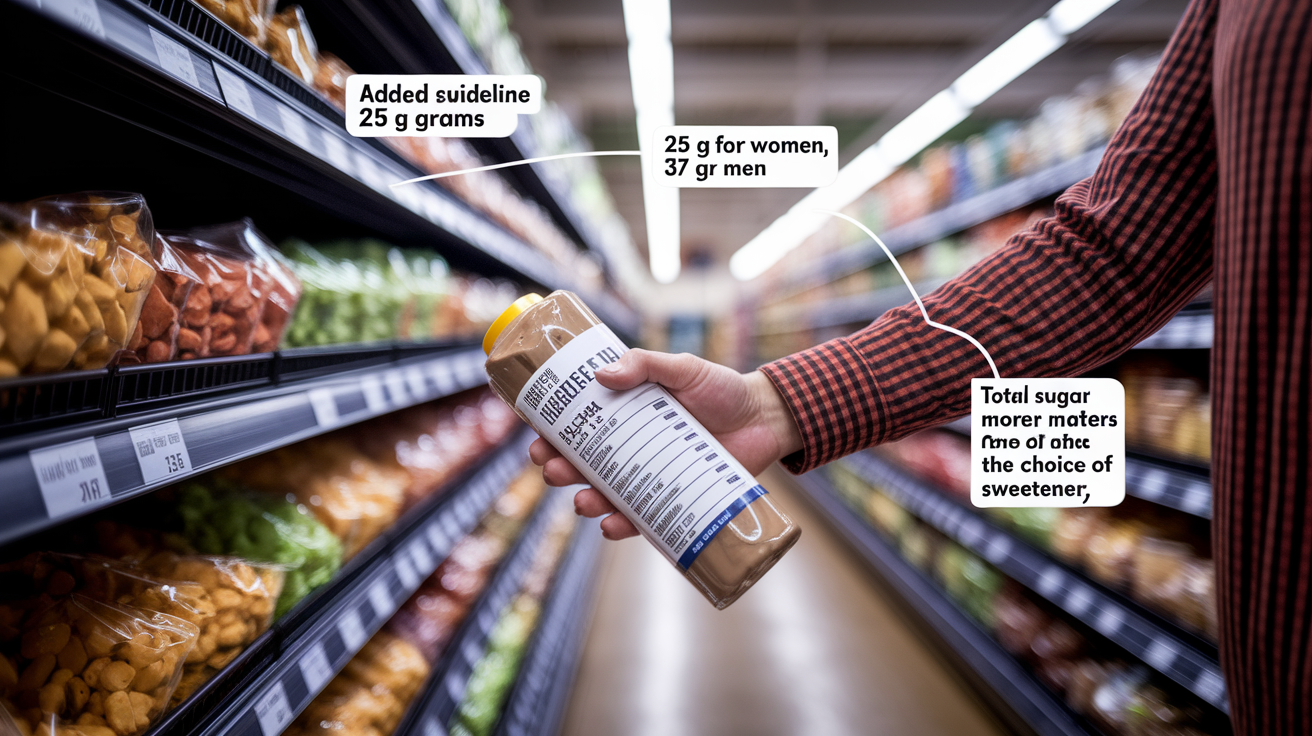
The most important number isn’t which sweetener a product contains but how many grams of added sugar you consume in a day. The American Heart Association recommends limiting added sugars to about 25 grams per day for most women and 37 grams per day for most men, which translates to roughly 6 to 9 teaspoons. A single 12-ounce soda at 39 grams blows past both limits. If your main goal is weight control, blood-sugar management, or reducing triglycerides, cutting total added-sugar intake will deliver far more benefit than switching from HFCS to cane sugar or vice versa while keeping portion sizes the same.
When scanning labels, check the “added sugars” line on the nutrition-facts panel. Products listing “high-fructose corn syrup” high on the ingredient list, especially as the first or second ingredient, typically deliver a large sugar dose per serving. The same is true for products listing “sugar,” “cane sugar,” or “evaporated cane juice” near the top. Compare grams of added sugar across similar products and choose the option with the lowest number. For beverages, the simplest move is to replace sugary drinks with water, unsweetened tea, or sparkling water with a slice of lemon. If you enjoy soda occasionally, treat it as a small dessert rather than an everyday hydration source.
Simple ways to lower HFCS and added-sugar intake:
Swap regular soda for water or unsweetened sparkling water. One can of soda typically contains your entire daily added-sugar budget.
Choose plain yogurt and add your own fresh fruit instead of buying flavored yogurt, which often contains 15 to 25 grams of added sugar per serving.
Read condiment labels. Switch to ketchup, barbecue sauce, or salad dressing with fewer grams of sugar per tablespoon.
Buy canned fruit packed in water or 100 percent juice instead of syrup.
Make your own granola bars or energy bites at home using oats, nut butter, and a small amount of honey or maple syrup so you control the sweetener dose.
Natural Alternatives and When They Make Sense
Stevia is a calorie-free sweetener extracted from the leaves of the Stevia rebaudiana plant and delivers intense sweetness without raising blood sugar or adding calories. It works well in beverages and can replace sugar in recipes, though some people detect a licorice or metallic aftertaste. Agave syrup is marketed as a natural, low-glycemic sweetener and is about 1.5 times sweeter than table sugar, which means you can use less to achieve the same sweetness level. The catch is that agave is 70 to 90 percent fructose, higher than both HFCS-55 and sucrose, so while it has a lower immediate impact on blood glucose, it delivers the same hepatic fructose load and lipogenic concerns as any other high-fructose sweetener. Honey and maple syrup contain small amounts of vitamins, minerals, and antioxidants, but these are present in such tiny quantities per serving that they don’t meaningfully improve nutritional value. Both are still concentrated sources of sugar and should be used sparingly.
Whole fruit remains the best natural sweet option because it packages sugar with fiber, water, vitamins, and phytochemicals that slow digestion and promote satiety. An apple contains about 19 grams of naturally occurring fructose and glucose, but the 4 grams of fiber and the chewing required to eat it make it far more filling and less likely to spike blood sugar than 19 grams of HFCS in a fruit punch. When choosing between HFCS, table sugar, or natural alternatives, prioritize reducing total grams of added sweeteners first, then consider whole-food sources of sweetness whenever practical.
Final Words
We jumped straight into the basics: sucrose is a bonded glucose+fructose pair, HFCS is free glucose and fructose (HFCS‑42, HFCS‑55). We compared GI, calories, and sweetness—both give about 4 kcal/gram, HFCS‑55 tastes like table sugar, and fructose has a lower GI and different liver effects.
Practical takeaway: total added sugar and portion size matter more than tiny chemical differences. Swap drinks for water or whole fruit when you can.
When choosing, let high-fructose corn syrup vs sugar differences guide your portion and habits.
FAQ
Q: What is the difference between HFCS and table sugar (sucrose)?
A: The difference between HFCS and table sugar is that sucrose is a bonded molecule of 50% glucose and 50% fructose, while HFCS is a mix of free glucose and fructose; both deliver similar calories.
Q: How are HFCS‑42 and HFCS‑55 different?
A: HFCS‑42 contains about 42% fructose and is common in many processed foods; HFCS‑55 contains about 55% fructose and closely matches sucrose’s sweetness, so it’s used in sodas.
Q: Do HFCS and sugar have different calories?
A: HFCS and table sugar both provide about 4 kilocalories per gram; a teaspoon of sugar is roughly 4.2 grams, about 17 kilocalories, so calories per serving are essentially equal.
Q: Does HFCS spike blood sugar more than table sugar?
A: HFCS does not reliably cause larger blood sugar spikes than sucrose; both supply glucose and fructose, and glucose is the component that raises blood sugar and insulin.
Q: Is fructose processed differently than glucose?
A: Fructose is mainly metabolized in the liver, while glucose circulates and triggers insulin; fructose has a lower glycemic effect but excess intake can raise liver fat and triglycerides.
Q: Does HFCS cause more liver fat or weight gain than sugar?
A: HFCS does not automatically cause more weight gain than sugar when calories match; consuming high amounts of fructose over time promotes liver fat and metabolic risk for many people.
Q: Which foods commonly contain HFCS and how do I spot it on labels?
A: HFCS appears in sodas, fruit drinks, canned fruit, flavored yogurt, baked goods, and condiments; check ingredient lists for “high‑fructose corn syrup” or “corn syrup” near the top.
Q: Why do manufacturers use HFCS instead of cane or beet sugar?
A: Manufacturers prefer HFCS because it’s cheaper in the US, mixes well in recipes, and can be sweeter in some blends; corn subsidies and processing cost advantages made it widespread.
Q: What practical swaps cut HFCS and added sugars?
A: To cut HFCS and added sugar, pick water or seltzer, choose whole fruit over juice, eat plain yogurt with fruit, and slowly reduce sugar in recipes or swap with low‑calorie sweeteners.

