

What if nutrition labels told you your coffee contained “0% Chill” and “500% Jitters”?
Parody nutrition labels do exactly that, copying the look of a real Nutrition Facts panel but swapping in absurd serving sizes, fake nutrients, and over-the-top percent daily values.
Read the examples below and you’ll see how the joke relies on the same layout manufacturers use to nudge perception, so you can spot the satire and the real labeling tricks behind it.
By the end you’ll laugh, but also learn quick label-reading moves that help in the grocery aisle or when you want to decode a clever poster.
Core Examples of Parody Nutrition Labels and How to Read Them

Parody nutrition labels are satirical takes on the official Nutrition Facts panel you’d find on any packaged food. They copy the same visual structure (serving size at the top, calories displayed big and bold, a list of nutrients with amounts and percentages, ingredients ordered by weight) but swap out real nutritional data for humorous, exaggerated, or completely fictional entries. Instead of grams of protein or milligrams of sodium, you get “100% sarcasm” or “500% drama,” turning that familiar nutrition panel into social commentary or just a solid joke.
The key elements readers should look for on a parody label mirror the real thing: a mock serving size (often absurd, like “1 bad decision” or “1 existential crisis”), fake nutrients with exaggerated units, and satirical Percent Daily Value (%DV) entries that intentionally blow past real thresholds. Real labels use 5% DV to mean “low” and 20% DV to mean “high,” so parody labels crank the joke up by printing values like “1000% Daily Stress” or “0% Chill.” These inversions work because anyone who’s read a real nutrition label immediately recognizes the pattern being twisted.
Real serving size rules make parodies funnier when you flip them. Official labels often list unrealistically small servings (half a cookie, half a chocolate bar, one biscuit) so a parody label that says “Serving size: 1 relationship” or “Serving size: 3 hours of sleep” mimics that same misleading proportion game. The %DV system, which relies on a 2,000 calorie reference and strict numeric thresholds, becomes comedic when the numbers get pushed past 100% or down to zero in contexts where measurement makes no sense.
Common parody nutrition label examples include:
Relationships: serving size “1 toxic partner,” with nutrients like “Drama (500% DV)” and ingredients such as “mixed signals, unresolved issues, passive aggression.”
Sleep: serving size “4 hours,” listing “Exhaustion (200% DV)” and “Caffeine dependency (150% DV),” with ingredients like “interrupted REM cycles, anxiety, blue light exposure.”
Social Media: serving size “1 hour of scrolling,” featuring “Envy (300% DV)” and “FOMO (400% DV),” ingredients including “comparison triggers, algorithm manipulation, dopamine hits.”
Work Stress: serving size “1 meeting that could’ve been an email,” with “Frustration (600% DV)” and “Time wasted (250% DV).”
Coffee Addiction: serving size “1 venti,” listing “Jitters (180% DV)” and “Productivity (40% DV),” ingredients such as “espresso shots, sleep deprivation, denial.”
Visual Structure of Parody Nutrition Label Designs
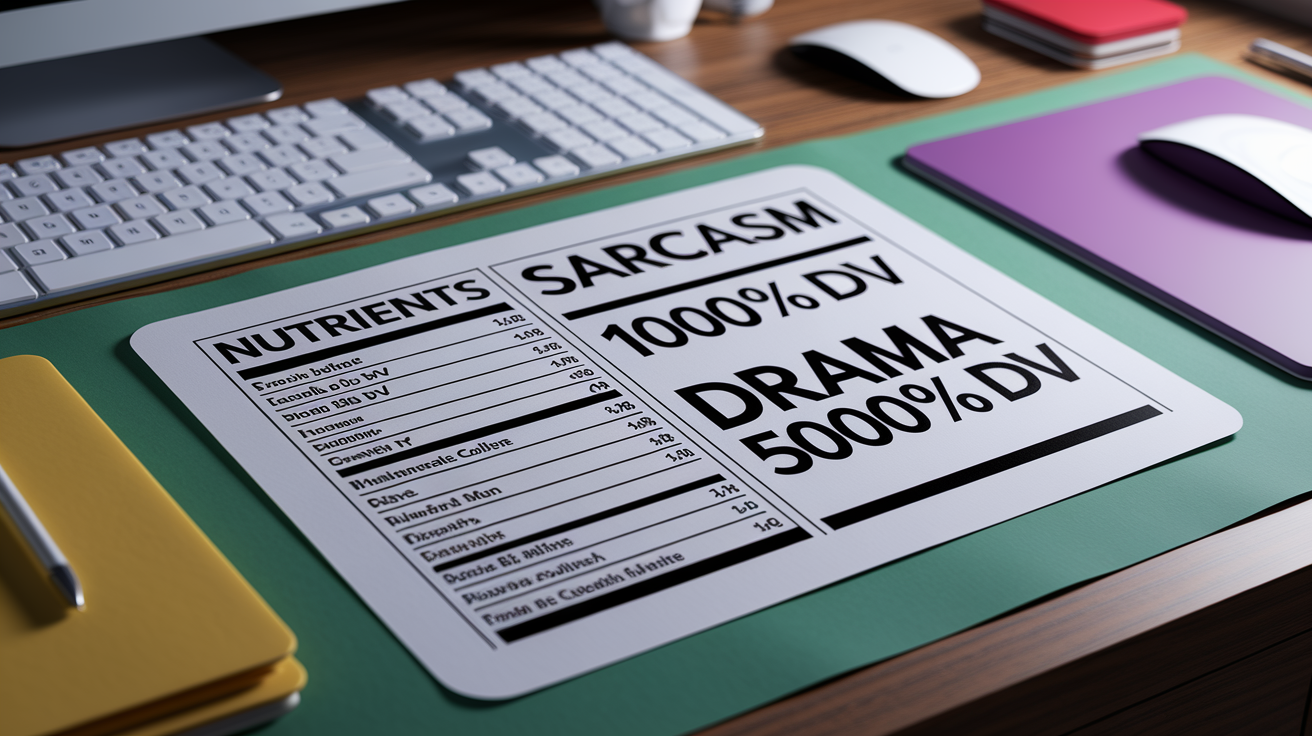
Parody labels rely on visual fidelity to work. They follow the same top down hierarchy as real Nutrition Facts panels: serving size appears first and largest, calories are prominently displayed below it, nutrient amounts are listed in grams (g), milligrams (mg), or micrograms (mcg) on the left, and Percent Daily Values run down a right hand column. Ingredients are listed separately at the bottom in descending order by weight. This strict layout is what makes parody labels instantly recognizable. If the design strays too far from the official template, the joke loses its punch because the visual reference point disappears.
Why does accuracy in mimicking the design increase comedic impact? Because the humor comes from the contrast between a familiar, trusted format and absurd content. When a parody label looks exactly like the real thing (same fonts, same column alignment, same bolding on “Calories”) the brain expects real nutritional data, and the surprise of reading “500% Daily Drama” instead of “5% Daily Calcium” lands harder. The more closely the parody matches real label conventions, the sharper the satire.
| Element | Description | Parody Twist |
|---|---|---|
| Serving Size | Realistic portion reference (e.g., “1 cup,” “2 cookies”) | Absurd or abstract unit (e.g., “1 argument,” “3 bad decisions”) |
| Calories | Energy per serving, prominently bolded | Exaggerated or nonsensical number (e.g., “9,999 calories of regret”) |
| Nutrients & %DV | Amounts in g/mg/mcg; %DV thresholds: ≤5% = low, ≥20% = high | Fictional nutrients with impossible %DV (e.g., “Sarcasm 1000% DV”) |
| Ingredients List | Listed in descending order by weight; shorter lists indicate less processing | Satirical ingredients in descending “weight” (e.g., “Denial (primary), Excuses, Hope”) |
Common Joke Ingredients and Fake Nutrient Lists in Parody Panels

Real ingredient lists are ordered by weight, with the most abundant ingredient listed first. Shorter lists generally signal less processing, while long lists with unfamiliar chemical names suggest highly processed foods. Parody labels mimic this ordering to create believable looking ingredient lists, then fill them with abstract or emotional “ingredients” instead of real foods. A parody relationship label might list “Miscommunication (primary ingredient), Unmet Expectations, Jealousy, Mixed Signals (less than 2%),” following the exact format of a real ingredient list but substituting intangible concepts for flour, sugar, or preservatives.
Real labels also hide sugar under many names (high fructose corn syrup, evaporated cane juice, agave nectar, honey, maple syrup, molasses, brown sugar, turbinado). Parody creators exaggerate this tactic by inventing fictional ingredient names that sound plausible but reveal the joke on closer inspection. A coffee addiction parody might list “Caffeine (primary), Sleep Deprivation, Denial, Espresso Shots, Regret Crystals, Anxiety Powder,” using the structure of a real ingredient list to highlight the absurdity of the “product.”
Nutrients on parody labels often mirror real nutrient categories (protein, fat, sodium, fiber, vitamins) but the values and units are nonsensical. Instead of “Sodium 140 mg (6% DV),” a work stress parody might show “Frustration 2000 mg (600% DV)” or “Patience 0 g (0% DV).” The contrast between real nutrient names and impossible values is where the humor lives.
Typical joke ingredients that appear in parody labels include:
100% sarcasm (replacing “100% whole grain”)
Passive aggression (primary ingredient) (mimicking weight ordered ingredient lists)
Unresolved trauma (substituting for preservatives or stabilizers)
False hope extract (parodying natural flavors or extracts)
How to Read Mock Serving Sizes and Calories for Comedic Effect
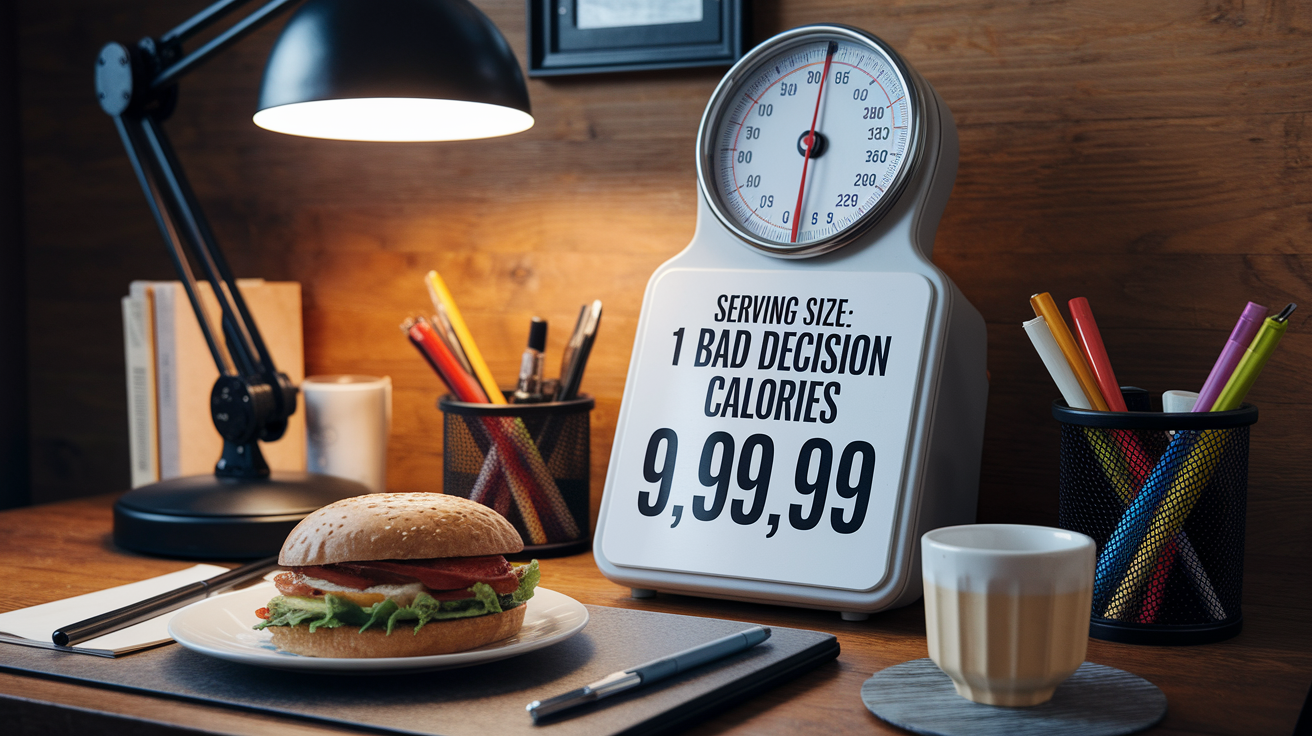
Real serving sizes often mislead consumers by listing portions smaller than what people actually eat. Examples include half a cookie, half a chocolate bar, one quarter of a frozen pizza, or one biscuit when a typical snack involves eating several. This distortion allows manufacturers to present lower calorie and nutrient counts per serving, making products appear healthier than they are when consumed in realistic amounts. Parody labels exploit this exact tactic by using absurd or impossible serving sizes (“1 bad decision,” “1 existential crisis,” “3 hours of scrolling”) that mirror the unrealistic precision of real labels while making the joke obvious.
The calorie line on a parody label amplifies the satire by pairing an exaggerated number with a ridiculous context. A real Nutrition Facts panel might say “Calories 100” for a serving that’s actually one third of what you’ll eat, so a parody label says “Calories 9,999” for “1 relationship” or “Calories 0 (but costs you everything)” for “1 toxic friendship.” The format stays identical (calories bolded and prominently placed) but the content breaks the rules so dramatically that the reader immediately recognizes the joke. Understanding how real serving sizes manipulate perception makes these parody versions sharper and more effective as commentary. For more on how real serving sizes distort nutritional information, see How to Read Food Labels Without Being Tricked.
Reading Satirical Percent Daily Values and Over the Top Numbers
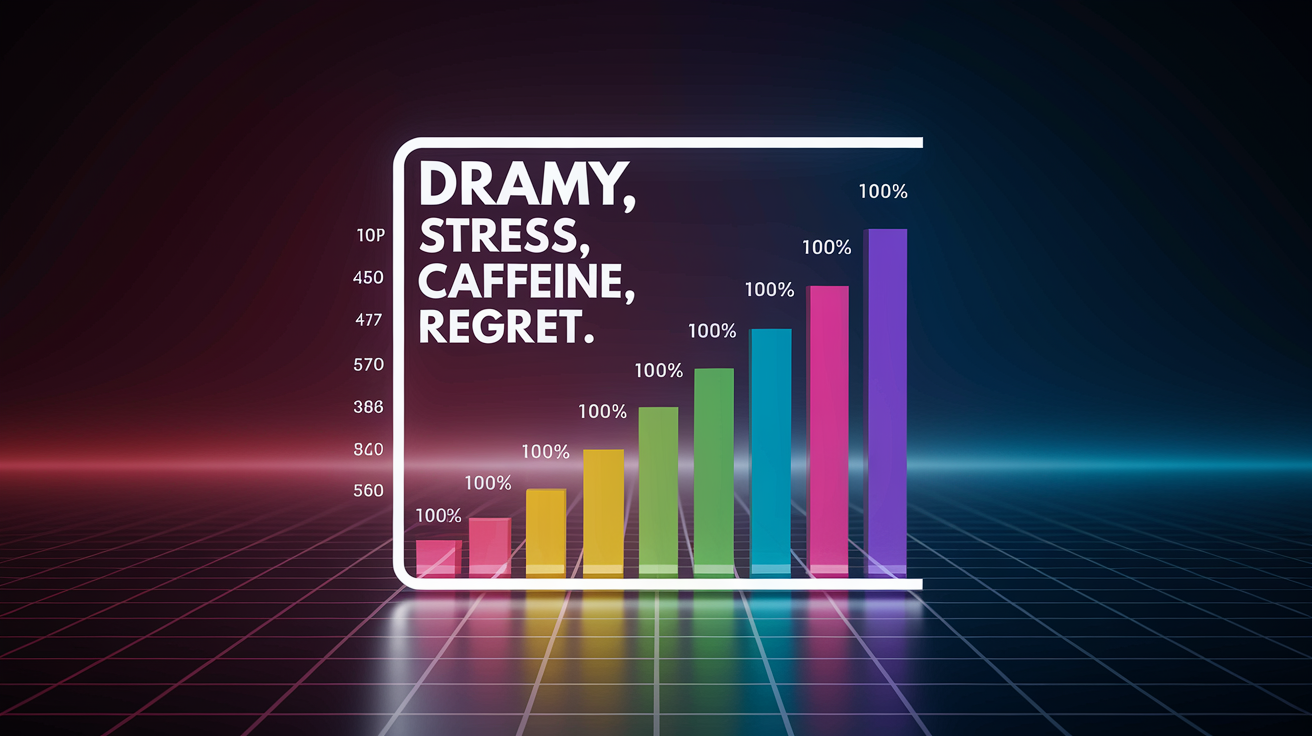
Real Percent Daily Values use a 2,000 calorie baseline and two key thresholds: 5% DV is considered low for a nutrient, and 20% DV is considered high. These thresholds help consumers quickly compare products and make decisions. Favor nutrients like fiber and vitamin D where you want to hit close to 100% DV across the day, and limit nutrients like sodium, saturated fat, and added sugars where you want to stay well below 100% DV. Parody labels exaggerate these numbers to absurd extremes (“500% Daily Stress,” “1000% Drama,” “0% Chill”) which work as jokes because they violate the real world ceiling of 100% and the carefully calibrated thresholds that actual labels use.
The humor in satirical %DV comes from the inversion of real dietary goals. On a real label, you’d see “Calcium 20% DV” and think “that’s a good amount.” On a parody label, you might see “Regret 400% DV” or “Self Doubt 600% DV,” numbers that make no nutritional sense but perfectly capture the exaggerated emotional “dose” the parody is commenting on. The higher the fictional %DV climbs past 100%, the stronger the satirical point. Just as real labels try to keep sodium and added sugars below 100% DV per day, parody labels joke that stress, drama, or caffeine intake is wildly over the recommended limit.
How to decode satirical %DV in three steps:
Check if the %DV is impossibly high or low: Real labels cap out at 100% per serving for most practical purposes. Parodies use 200%, 500%, even 1000% to signal “this is way too much.”
Ask whether the “nutrient” is something you’d actually measure: Real %DVs apply to vitamins, minerals, fiber, and macronutrients. If you see “%DV” next to “Sarcasm” or “Procrastination,” it’s clearly a joke.
Look for inversions of real dietary advice: If a parody shows “0% Patience” or “0% Common Sense,” it’s flipping the real label pattern where 0% of a nutrient you want (like fiber) would be a red flag.
Comparing Real vs Parody Nutrition Labels Side by Side
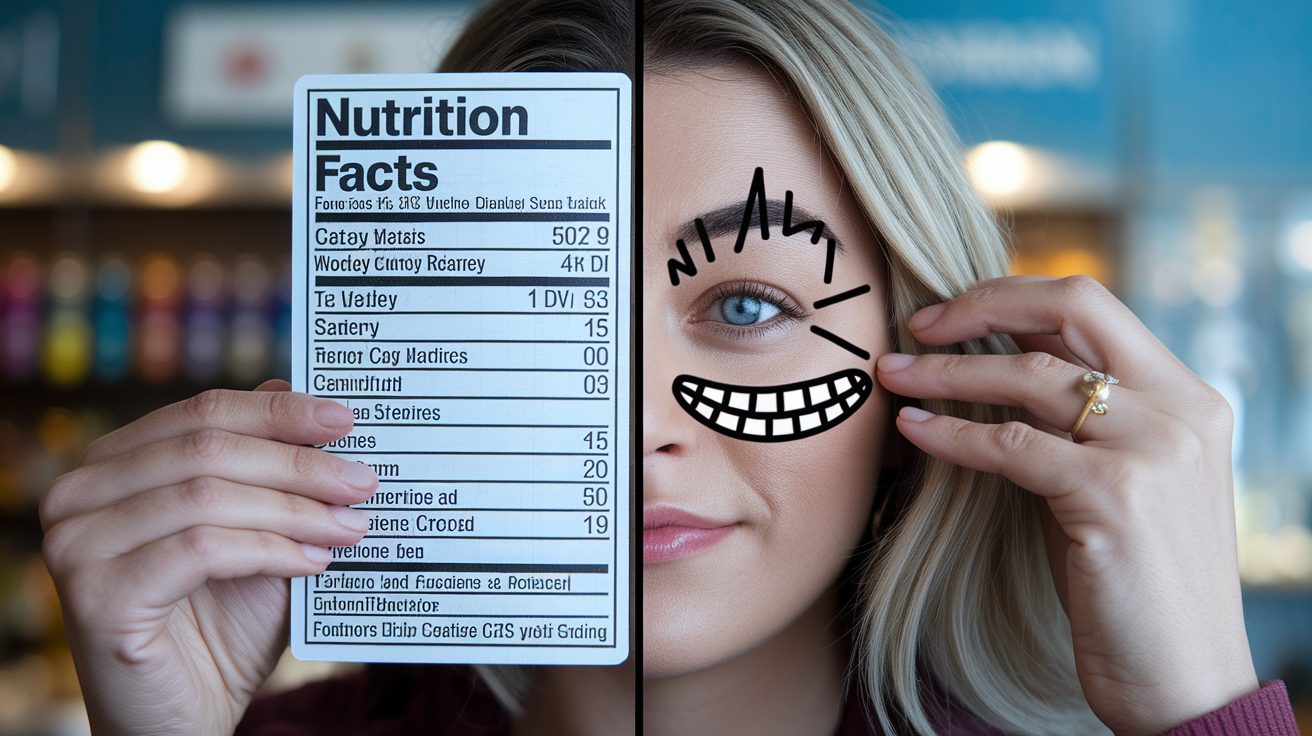
Real labels follow strict federal rules: serving sizes must reflect amounts people typically eat, calories per serving must be prominently displayed, nutrients are listed with specific units (g, mg, mcg), and the %DV column uses a 2,000 calorie reference. Ingredients must be listed in descending order by weight, and certain claims (like “low calorie,” which means no more than 40 calories per serving for individual foods) are legally defined and regulated. Real labels also emphasize nutrients of public health concern, such as vitamin D, calcium, iron, potassium, and fiber, while flagging sodium, saturated fat, and added sugars as items to limit below 100% DV per day.
Parody labels mimic this structure precisely to maximize comedic effect, but every rule is broken in ways that are instantly recognizable. Where a real label lists “Serving size: 1 cup (240 mL),” a parody might say “Serving size: 1 toxic relationship.” Where a real label shows “Total Fat 3 g (4% DV),” a parody might show “Emotional Baggage 50 g (500% DV).” The visual layout stays identical (same fonts, same hierarchy, same bolding) so the brain expects real data and gets absurdity instead. This side by side contrast is what makes parody labels effective as both humor and teaching tools. They highlight how easily packaging design can influence perception.
| Feature | Real Label Standard | Parody Version |
|---|---|---|
| Serving Size | Typical portion (e.g., “1 cup,” “2 cookies”), often smaller than actual consumption | Absurd or abstract unit (e.g., “1 argument,” “1 existential crisis”) |
| Calories | Energy per serving, bolded; based on realistic food composition | Exaggerated or nonsensical number (e.g., “9,999 calories of regret”) |
| Nutrients & Units | Listed in g, mg, or mcg; regulated nutrients like sodium, fiber, vitamin D | Fictional nutrients with impossible units (e.g., “Sarcasm 100 g,” “Drama 2000 mg”) |
| %DV Thresholds | 5% DV = low, 20% DV = high; 100% DV is daily target or limit depending on nutrient | Values far exceeding 100% or dropping to 0% (e.g., “500% DV Stress,” “0% DV Chill”) |
| Ingredients List | Descending order by weight; shorter lists indicate less processing | Satirical ingredients in descending “weight” (e.g., “Miscommunication (primary), Denial, Hope”) |
How to Create Your Own Parody Nutrition Label

Creating a parody nutrition label starts with choosing a non food “product” to satirize (relationships, sleep habits, work stress, social media use, coffee addiction, or any other aspect of daily life). Once you have your topic, follow the same top down structure as a real Nutrition Facts panel: serving size at the top, calories prominently displayed, a list of nutrients with amounts and %DV, and an ingredient list at the bottom. Visual fidelity is critical. Use a bold sans serif font for “Nutrition Facts,” keep the same column layout (nutrient names on the left, amounts and %DV on the right), and mimic the hierarchy of a real label so the parody is instantly recognizable.
Layout consistency makes the joke land harder. Real labels emphasize calories by making them larger and bold, so do the same even if your calorie count is absurd. Real labels use specific units (grams (g), milligrams (mg), micrograms (mcg)) so include those same units next to your fictional nutrients, even when they make no sense. “Sarcasm 100 g” or “Drama 2000 mg” reads as funnier than “Sarcasm: a lot” because the precision mimics the false exactness of real nutrition data. The %DV column should also follow real conventions: align it to the right, use percentages, and intentionally break the 5% = low / 20% = high / 100% = target rules to create exaggeration.
Comedic writing principles matter as much as design. Order your fake ingredients by “weight” just like a real label (list the most important or funniest ingredient first, then descend to lesser ones). Use real ingredient list phrasing like “contains less than 2% of” to heighten the satire. If you’re mocking a relationship, you might write “Miscommunication (primary ingredient), Unmet Expectations, Jealousy, Mixed Signals (less than 2%).” The closer your language mimics real food labels, the sharper the parody.
Include a clear visual or text disclaimer if there’s any risk someone might mistake your parody for a real nutrition claim. A small line like “This is a satirical label and not intended for actual consumption” or “For entertainment purposes only” keeps the humor obvious and legally safe.
Five step process for creating a parody nutrition label:
Choose your non food “product”: Pick a topic with clear emotional or behavioral “ingredients” (e.g., procrastination, dating apps, Monday mornings).
Draft a realistic serving size: Use the same format as real labels but make it absurd (e.g., “Serving size: 1 bad decision” or “Serving size: 3 hours of doom scrolling”).
List 5–8 fake nutrients with units and exaggerated %DV: Follow real nutrient categories (e.g., “Stress 2000 mg (600% DV),” “Regret 50 g (500% DV),” “Hope 0 g (0% DV)”).
Write a satirical ingredient list in descending order: Start with the “primary ingredient,” then list supporting “ingredients” in descending importance, using real phrasing like “contains less than 2% of.”
Mimic real label design exactly: Use bold sans serif fonts, align the %DV column to the right, bold “Nutrition Facts” and “Calories,” and keep the visual hierarchy identical to an official Nutrition Facts panel.
Contexts Where Parody Nutrition Labels Are Used
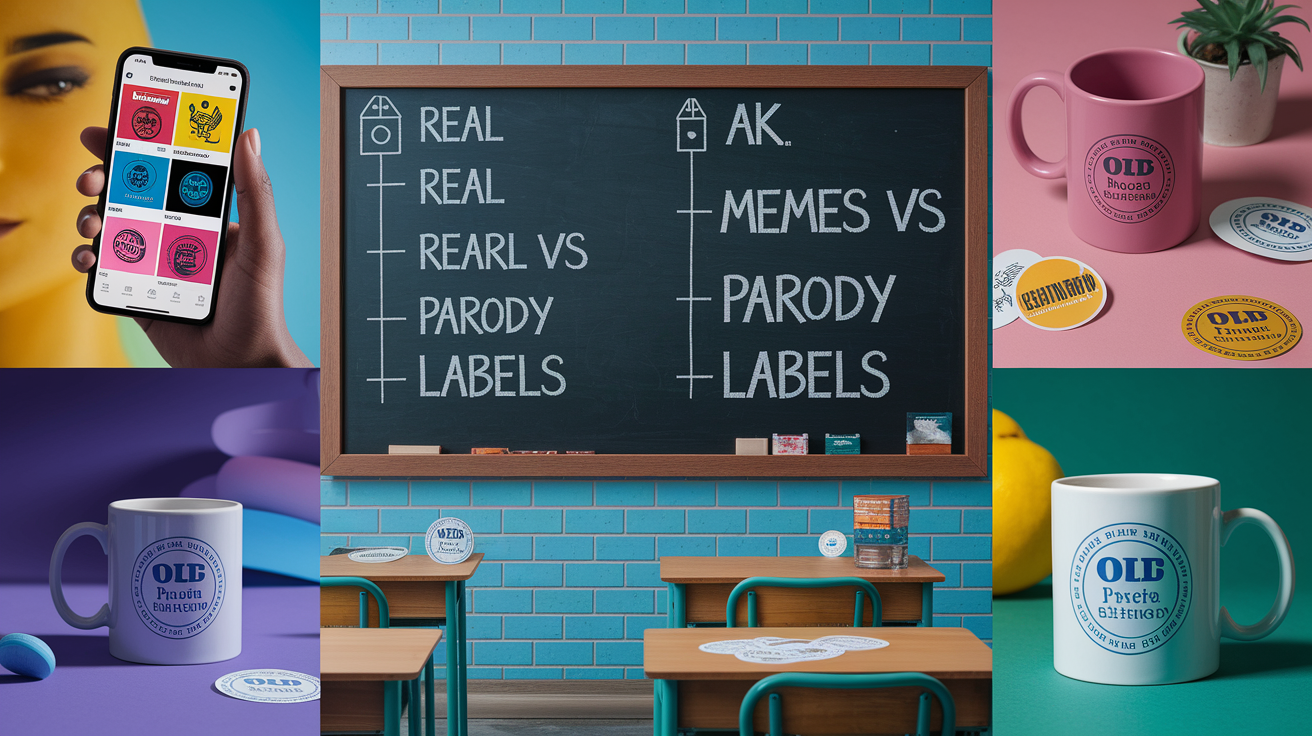
Parody nutrition labels are frequently shared on social media as memes, often going viral because they combine familiar visual design with unexpected humor. Platforms like Instagram, Facebook, and Twitter feature parody labels for everything from toxic relationships to overworked professionals, and the recognizable format makes them easy to understand and share quickly. The joke works across audiences because nearly everyone has read a real nutrition label at some point, so the visual reference is universal.
Classrooms and workshops use parody labels as teaching tools to build media literacy and critical thinking. By creating or analyzing spoof labels, students learn how real labels use serving sizes, %DV thresholds, and ingredient ordering to shape perception (and how easily those same design choices can be manipulated). Parody labels also appear as novelty gifts, printed on stickers, mugs, or T shirts for holidays, birthdays, or office humor. The satirical format makes abstract concepts like “work life balance” or “caffeine dependency” tangible and funny in a way that plain text wouldn’t.
Common use cases include:
Social media memes and viral content: parody labels for dating apps, job stress, or sleep deprivation shared widely for comedic commentary.
Educational tools in health, nutrition, or media literacy courses: students compare real and parody labels to understand how design influences consumer perception.
Novelty gifts and merchandise: parody labels printed on mugs, T shirts, or stickers for holidays, office gifts, or humorous commentary on daily life.
Ethical, Legal, and Clarity Considerations for Spoof Labels

Real food labels are heavily regulated by the FDA, with strict rules about serving sizes, nutrient claims, and ingredient disclosure. Parody labels are not regulated in the same way because they’re not presented as actual nutrition information, but creators must still avoid misleading consumers or infringing on trademarks. The key legal protection for parody is fair use, which allows satirical commentary on recognizable formats or brands as long as the parody is clearly transformative and not likely to confuse consumers into thinking it’s real. To stay within fair use boundaries, parody labels should use unmistakably satirical elements (absurd serving sizes, fictional nutrients, or exaggerated %DV values) that make it impossible to mistake them for genuine nutrition claims.
Consumer confusion is the biggest risk. If a parody label too closely mimics a real product’s branding, packaging, or nutrition panel without clear satirical elements, it could mislead someone into thinking it’s an actual food item. To prevent this, creators should include a disclaimer like “This is a satirical label and not intended for actual consumption” or “For entertainment purposes only,” especially if the parody will be printed, shared widely, or used in contexts where the joke might not be immediately obvious. Avoid using real brand names, logos, or trade dress unless the parody clearly targets that brand for commentary, and even then, ensure the satire is unmistakable to protect against trademark claims.
Final Words
We jumped right in and showed what parody nutrition labels look like and why they mimic real panels. You saw the visual rules they borrow, the serving-size jokes, fake nutrients, and exaggerated %DV that make the gag land.
We also compared real vs spoof formats, listed common joke ingredients, covered design tips, and gave a simple how-to plus legal clarity.
Use this to spot the joke or make your own. If you try one, you’ll see how parody nutrition label examples and how to read them can be both funny and educational.
FAQ
Q: How to read nutrition labels for beginners?
A: Reading nutrition labels for beginners means first checking serving size and calories per serving, then scanning protein, fiber, added sugars, sodium, and %DV. Pick higher protein/fiber and lower added sugar/sodium.
Q: What does “% Daily Value” mean and what does 20% DV mean?
A: The % Daily Value shows how much a nutrient in one serving contributes to a 2,000-calorie daily diet; 20% DV means a high amount for that nutrient, so limit it if you’re trying to cut it.
Q: What is the 4 4 9 rule in nutrition?
A: The 4-4-9 rule means carbs and protein provide four calories per gram, and fat provides nine calories per gram. Multiply grams by those numbers to estimate a food’s calorie total.

