

Think ‘low fat’ means you’re making a smart choice at the grocery store?
Some so-called low fat yogurts have more sugar per cup than a glazed donut.
This lighthearted, slightly snarky guide to low fat marketing claims pulls the curtain back, shows how sugar, starches, and tiny serving sizes replace fat, explains what that does to your hunger, calories, and cart, and gives one simple swap you can use on your next shopping trip.
What “Low Fat” Really Means (Spoiler: Mostly More Sugar)

When fat gets pulled out of food, something’s gotta take its place. Companies don’t just yank the fat and leave you with cardboard. They add sugar, starches, and enough stabilizers to keep things creamy and vaguely edible. You end up with “low fat” yogurt that’s got more sugar per serving than a glazed donut. Or a “reduced fat” salad dressing that tastes like someone dissolved candy in thickened water. Fat carries flavor. It makes food satisfying. Without it, manufacturers dump in sweetness and fake vanilla to trick your taste buds into thinking you’re still eating something worthwhile.
The serving size game adds another layer of nonsense. A label can legally say “fat free” if there’s less than 0.5 grams of fat per serving. So they shrink the serving to almost nothing, slap the magic words on the front, and hope you don’t notice that one “serving” is half a cracker or one sixth of a muffin. You eat a normal amount, do the math on those tiny portions, and suddenly your “zero fat” snack delivered 3 grams of fat and 18 grams of sugar. Meanwhile, the package screams “guilt-free indulgence” in cheerful fonts, pretending that removing fat also removed calories and basic arithmetic.
Here’s what “low fat” labels actually mean:
“We swapped the fat for sugar, and sugar doesn’t sound scary, so we’re good.” The nutrition panel quietly shows 12 grams of added sugar where there used to be 8 grams of fat.
“The serving size is now ridiculous.” One serving equals three bites, keeping all the bad numbers small enough to round down.
“You’ll be hungry again in 20 minutes.” Fat keeps you full. Sugar spikes you, then drops you into a snack-hunting spiral.
“We added gums and starches to fake the texture fat used to give you.” Your mouth might not catch it, but your gut will.
“This is a health halo product, so you’ll buy six boxes and feel virtuous.” One buzzword on the front convinces you the whole thing’s healthy, even when the back tells a different story.
Decoding Popular Low‑Fat Label Phrases

“Light” sounds breezy. Like the food version of a summer dress. Legally, it means the product’s got one third fewer calories or 50% less fat than the regular version. The catch? The baseline. If the original was absurdly high in fat, the “light” version can still be loaded and wear the label. A “light” ice cream might have 140 calories per half cup instead of 210. But you’re eating a pint, so you just put down 1,120 calories while feeling responsible.
“Reduced fat” works the same way. It only means the product’s got at least 25% less fat than the standard version. It doesn’t promise low calories, low sugar, or anything else remotely virtuous. A reduced fat cookie can still pack 9 grams of fat and 15 grams of sugar per serving because the original cookie was basically a butter sculpture. You’re not eating health food. You’re eating a slightly less fatty version of junk, marketed as improvement.
“Fat free” and “99% fat free” are the boldest liars on the shelf. “Fat free” allows up to 0.5 grams of fat per serving, which companies exploit by shrinking servings to laughable sizes. “99% fat free” measures fat as a percentage of total weight, not calories. A product that’s 99% fat free by weight can still get 30% of its calories from fat if it’s mostly water. It’s a math trick dressed up as honesty, and it works because most people don’t carry a calculator to the grocery store or care enough to reverse-engineer percentages while standing next to a crying toddler.
Ingredient Swaps Used to Fake “Healthy” Low‑Fat Products

Once fat’s out of the recipe, manufacturers have a problem. Fat makes food taste good, feel creamy, stay satisfying. Without it, you’re left with a gritty, bland protein puck. So they rebuild flavor and texture using sugar, modified starches, gums, and a parade of ingredients that sound like they belong in a science experiment. The goal? Mimic the mouthfeel of fat while keeping the “low fat” claim alive. Sometimes it works. Often, it results in weirdly slippery yogurt or salad dressing that coats your tongue like craft glue.
Sugar does most of the work. It adds sweetness to cover the flatness left by missing fat, and it also helps with texture and moisture. Gums and starches (xanthan gum, carrageenan, maltodextrin) thicken and stabilize, creating the creamy consistency fat used to provide. “Natural flavors” is code for a lab-designed flavor compound that makes the product taste like something your grandma might’ve baked, even though no grandma’s ever opened a jar of methylcellulose. You end up with a Frankenstein version of the original food, technically lower in fat but often higher in sugar, calories, and ingredients you can’t pronounce.
| Ingredient Swap | What It’s Supposed to Do | Actual Comedic Reality |
|---|---|---|
| Added sugar (corn syrup, dextrose, cane juice) | Replace fat’s flavor and moisture | Turns your “healthy” yogurt into a dessert cup with more sugar than a candy bar |
| Maltodextrin | Thicken and add body without fat | Spikes your blood sugar faster than the fat ever would’ve, but hey, it’s “fat free” |
| Gums (xanthan, carrageenan, guar) | Mimic creamy texture | Makes your salad dressing feel like you’re eating wet wallpaper paste, but thick! |
| “Natural flavors” | Restore taste lost when fat was removed | A vague lab-created compound that technically came from a plant, somewhere, once, maybe |
Portion Size Acrobatics Behind Low‑Fat Claims
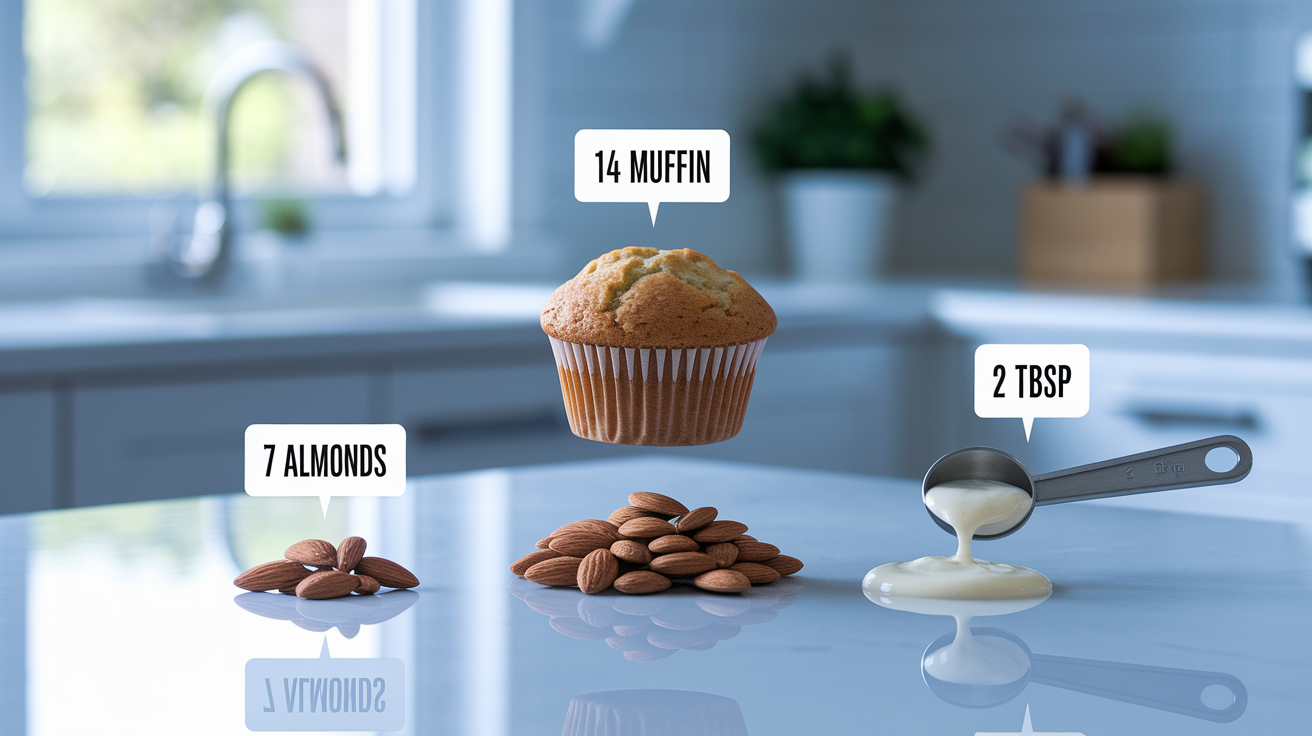
Serving sizes are where food labels become performance art. A product can legally round down to zero grams of fat if there’s less than 0.5 grams per serving. So manufacturers shrink the serving until the numbers cooperate. The label looks clean. You eat a normal portion (actually three or four servings) and wonder why the “fat free” snack didn’t help with anything.
This trick’s everywhere. A muffin gets divided into two servings so each half can claim low fat and low calories. A bag of chips lists a serving as 11 chips, a number so specific it sounds scientific. But you’re eating 40 chips while watching TV. A jar of nut butter calls a serving one tablespoon, which is enough to thinly coat a single slice of toast if you’re being stingy. You use three tablespoons because that’s what a reasonable person does, and suddenly the “low fat” spread delivered 12 grams of fat and you’ve betrayed yourself with math you didn’t know you were doing.
Here are three absurd serving sizes that keep “low fat” claims alive:
“Serving size: ¼ muffin.” No one’s ever eaten a quarter of a muffin on purpose. You eat the whole thing, which means you just ate four servings and all the fat they carefully hid with fractions.
“Serving size: 7 almonds.” Seven. Not six, not eight. Seven almonds keep the fat content per serving low enough to print a friendly number. A normal snack portion’s closer to 20.
“Serving size: 2 tablespoons (30g).” For salad dressing. You pour four tablespoons on your salad without measuring because you’re not a chemist, and the “low fat” dressing just delivered more sugar than the regular version and twice the servings you thought you were eating.
Final Words
We jumped straight into how “low fat” often means more sugar, serving-size sleight of hand, and a pile of texture tricks. You got a phrase-by-phrase decode (light, reduced, fat-free), ingredient swaps, and the portion-size acrobatics that keep labels looking lean.
Quick takeaway: check added sugar and the tiny serving, favor protein and fiber, and treat claims like marketing. Keep this funny guide to decoding ‘low fat’ marketing claims in your head next grocery trip — shopping gets easier and less annoying.
FAQ
Q: What does “low fat” really mean?
A: The term “low fat” means a product has less fat per serving, but manufacturers often replace the fat with added sugar, stabilizers, or tiny serving sizes to keep taste and texture.
Q: Why do low-fat products taste sweeter?
A: Low-fat products taste sweeter because makers replace lost fat with sugar or stronger flavors to restore mouthfeel, sweetness, and texture that fat usually provides.
Q: Are “fat-free,” “low-fat,” and “reduced fat” the same?
A: “Fat-free,” “low-fat,” and “reduced fat” are different labels: fat-free is usually under 0.5g fat per serving, low-fat often up to about 3g, reduced means a cut from the original product.
Q: What do label phrases like “light” or “99% fat free” really mean?
A: The phrase “light” can mean fewer calories or less fat than the regular version; “99% fat free” highlights a tiny-fat serving, often achieved through small portions or label rounding tricks.
Q: What ingredients commonly replace fat in low-fat foods?
A: Common fat replacements include added sugars, maltodextrin, gums, starches, and artificial flavors or stabilizers—these rebuild creaminess but often raise calories and use more processed ingredients.
Q: Do low-fat foods always have fewer calories?
A: Low-fat foods do not always have fewer calories; sugar and starch swaps can keep calories similar, so check total calories and added sugar, not just the fat number.
Q: How do serving sizes help companies claim “0 grams fat”?
A: Serving sizes help by being very small; amounts under 0.5g fat per serving can legally round down to “0 grams fat,” which creates the illusion of no fat.
Q: Should I choose low-fat products or full-fat versions?
A: Choosing low-fat or full-fat depends on your goal: full-fat often keeps you fuller with fewer added sugars, while low-fat can help if you need to limit fat—check calories and protein either way.
Q: Quick shopping tips for spotting genuinely better low-fat options?
A: Look for lower added sugar, decent protein and fiber, realistic serving sizes, short ingredient lists, and fewer stabilizers; when unsure, pick whole foods like yogurt, fruit, or nuts.

