

Think kale can save your health?
If you’ve ever shelled out extra cash for a food with a shiny “superfood” label, I’ve stood in that aisle too.
Most of those claims are marketing, not medicine.
Tiny nutrient differences get blown up into big promises.
This post will poke fun at the hype, show the simple science behind picks like kale, matcha, and avocado, and give clear, realistic swaps that actually help your energy, fullness, and day-to-day habits.
Bottom line: variety and basics beat single-ingredient miracles.
Comedic Reality Check on Today’s Biggest Superfood Claims

The term “superfood” sounds like it should come with a cape and theme song, but it’s really just a 20th-century marketing invention with no official definition and no FDA oversight. If a food can be labeled “super” just because it has slightly more of one nutrient than its boring cousins, then Brussels sprouts deserve their own Netflix documentary. One cup of raw spinach contains about 0.81 mg of iron, while Brussels sprouts pack around 1.2 mg per cup. Yet spinach gets the Popeye treatment and sprouts get forgotten at Thanksgiving.
Here’s the uncomfortable truth: no extensive studies have demonstrated that so-called superfoods directly prevent disease or deliver miraculous health outcomes. The real magic trick is convincing people to pay triple the price for foods that are, nutritionally speaking, only incrementally better than what’s already in the produce aisle. Consider the protein drink marketed as a healthy choice that turned out to contain 30 g of sugar in a 300 ml bottle. That’s 10% sugar. Roughly the same sweetness as a soda with a motivational quote on the label.
Most superfood claims rest on two shaky pillars: cherry-picked lab studies and the assumption that if a little is good, a lot must be life-changing. Neither holds up under scrutiny. The smarter play? Eating a variety of whole foods, checking labels for added sugar, and remembering that no single ingredient can undo a pattern of poor sleep, stress, and sitting all day.
Five superfood promises vs. scientific reality:
- “Boosts your immune system overnight” – Your immune system doesn’t take shortcuts. Sleep and hygiene matter more.
- “Melts belly fat while you sleep” – Fat loss requires a calorie deficit, not a berry with good PR.
- “Detoxifies your liver naturally” – Your liver already does that. It’s literally its job.
- “Reverses aging at the cellular level” – Aging is biology, not a subscription you can cancel.
- “Gives you limitless energy” – Unless it’s plugged into a wall outlet, energy comes from calories, sleep, and not skipping meals.
Satirical Breakdown of the Kale, Matcha, and Turmeric Miracle Narratives

Kale has more Instagram followers than some celebrities, but nutritionally it’s just a leafy green with decent vitamin K, some fiber, and a tough texture that requires either a good massage or a high-speed blender. It’s healthy, sure. But so are collard greens, chard, and even iceberg lettuce if your alternative is a bag of chips. The kale craze turned a vegetable into a personality trait and somehow convinced people that adding it to a smoothie erases last night’s pizza.
Matcha gets hyped as a Zen energy miracle, a powder that delivers “calm focus” thanks to L-theanine and a moderate dose of caffeine. One cup of matcha has roughly 70 mg of caffeine, about half a strong coffee. The antioxidant claims are based on lab measurements that don’t always translate to measurable health benefits in humans. It’s a pleasant drink, but it won’t replace sleep or turn you into a productivity monk.
Turmeric, meanwhile, is sold as a cure for inflammation, aging, and possibly existential dread. Yet the active compound curcumin has low bioavailability, meaning your body absorbs very little of it unless paired with black pepper or fat. Most turmeric lattes contain a pinch of the spice and a lot of steamed milk with honey. Tasty, but not a medical intervention.
Instagram version vs. scientific version:
- Kale: “Superfood that detoxifies and prevents cancer” vs. “Leafy green, high in K and fiber, tastes like a mud-covered leaf”
- Matcha: “Ancient energy elixir for monks” vs. “Green tea powder with moderate caffeine and pleasant flavor”
- Turmeric: “Anti-inflammatory miracle spice” vs. “Spice with poor absorption unless combined with fat or pepper”
- All three: “Will transform your life” vs. “Will add variety to your diet if you actually like the taste”
Funny Evidence-Based Look at Avocado, Acai Bowls, and Goji Berries
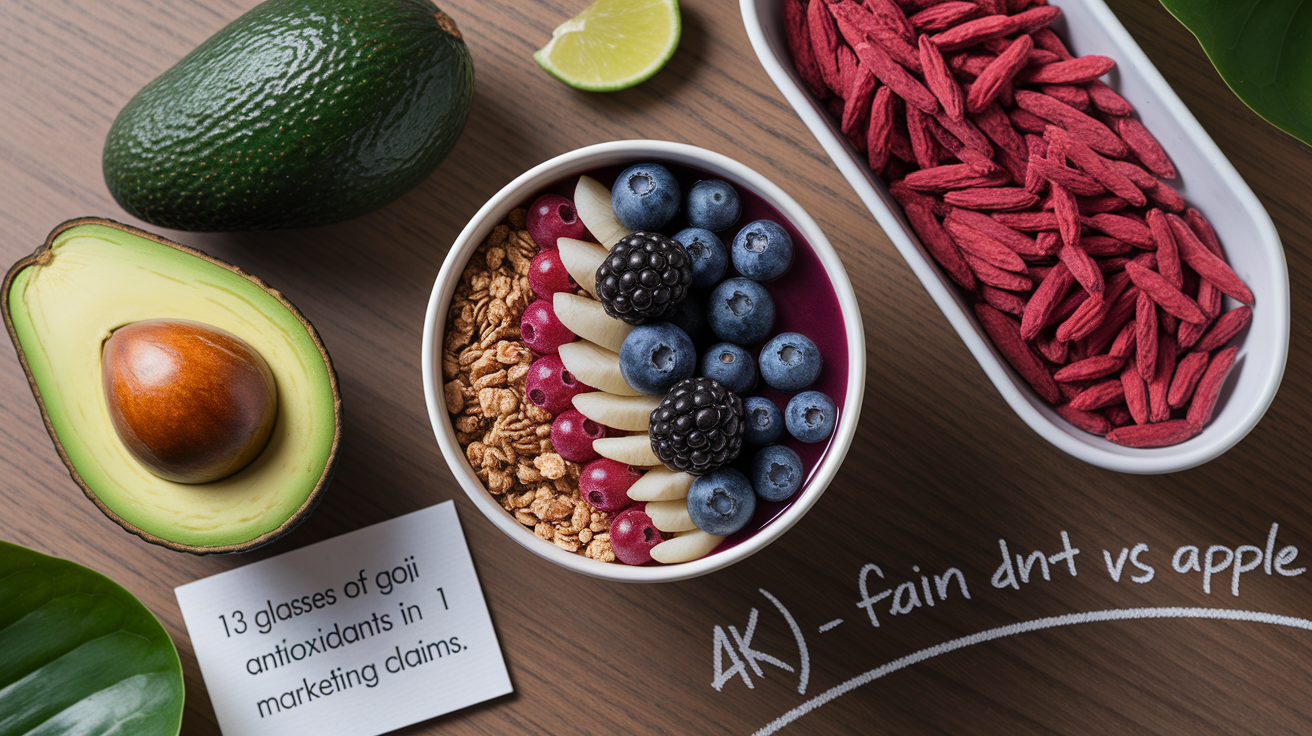
Avocados became the poster child for millennial health culture, blamed for preventing home ownership and praised for delivering healthy fats, fiber, and about 250 calories per whole fruit. They’re nutrient-dense, but calorie-dense too. Smashing one onto toast doesn’t grant immunity from basic energy balance. If you eat three avocados a day because they’re “good fats,” you’re still eating 750 extra calories. Your body will store what it doesn’t need, even if it came from a trendy breakfast.
| Superfood | Marketed Claim | Scientific Reality |
|---|---|---|
| Avocado | Perfect food, prevents aging, supports brain health | Healthy fats and fiber, but 250 cal per fruit; easy to overeat |
| Acai | Weight-loss miracle with double the antioxidants of blueberries | Antioxidant claim is true; weight-loss claim is unsupported; twice the price of blueberries |
| Goji berries | Boosts immunity, fights cancer, improves brain function | 13 glasses of goji juice = antioxidants in 1 red apple; contamination risk from heavy metals common in Chinese-grown batches |
Acai bowls look like art and taste like dessert, which makes sense because many are loaded with granola, honey, and banana, pushing the sugar and calorie count well past a typical breakfast. Acai berries do contain roughly double the antioxidants of blueberries in controlled lab tests, but there’s zero evidence they cause weight loss. They cost about twice as much as blueberries while delivering a similar amount of vitamins per serving.
Goji berries promise longevity and vitality, yet the antioxidant math is embarrassing. You’d need 13 glasses of goji juice to match the antioxidants in one red apple. Worse, many goji products are grown in China and arrive contaminated with heavy metals, turning your “superfood” into a trace-mineral roulette.
Comedic Mythbusting of Coconut Oil, MCT Oil, and “Magical Healthy Fats”

Coconut oil was sold as a metabolism-boosting, fat-burning miracle until the American Heart Association reminded everyone that it’s about 90% saturated fat. Higher than butter. It’s still fine for cooking in moderation, and it smells great, but eating spoonfuls of it won’t melt belly fat. It will just add 120 calories per tablespoon to your daily total.
MCT oil, marketed heavily in keto circles, is a concentrated form of medium-chain triglycerides that may slightly increase fat oxidation during fasting. But the effect is modest and doesn’t override total calorie intake.
The “healthy fats” narrative is true in principle. Salmon, nuts, avocado, and olive oil are nutrient-rich and support satiety. But all fats deliver 9 calories per gram, more than double the calorie density of protein or carbs. A handful of almonds is about 160 calories, and it’s easy to eat three handfuls while working and accidentally consume nearly 500 calories of “health food.” The low-fat craze of the 1990s taught us that cutting fat often means adding sugar, but the pendulum swung so far in the other direction that people now treat coconut oil like a vitamin.
Common magical fat claims and reality checks:
- “Coconut oil speeds up your metabolism” – It raises your calorie intake by 120 per tablespoon. That’s the opposite of a deficit.
- “MCT oil promotes ketosis and fat loss” – Only if your total calories are controlled. Chugging oil won’t override a surplus.
- “Eating fat makes you burn fat” – Eating excess calories, from any macronutrient, makes you store fat.
- “Healthy fats don’t count toward weight gain” – 9 calories per gram means they absolutely count. And they add up fast.
Humorous Deconstruction of Chia Seeds, Spirulina, and Wheatgrass Detox Claims
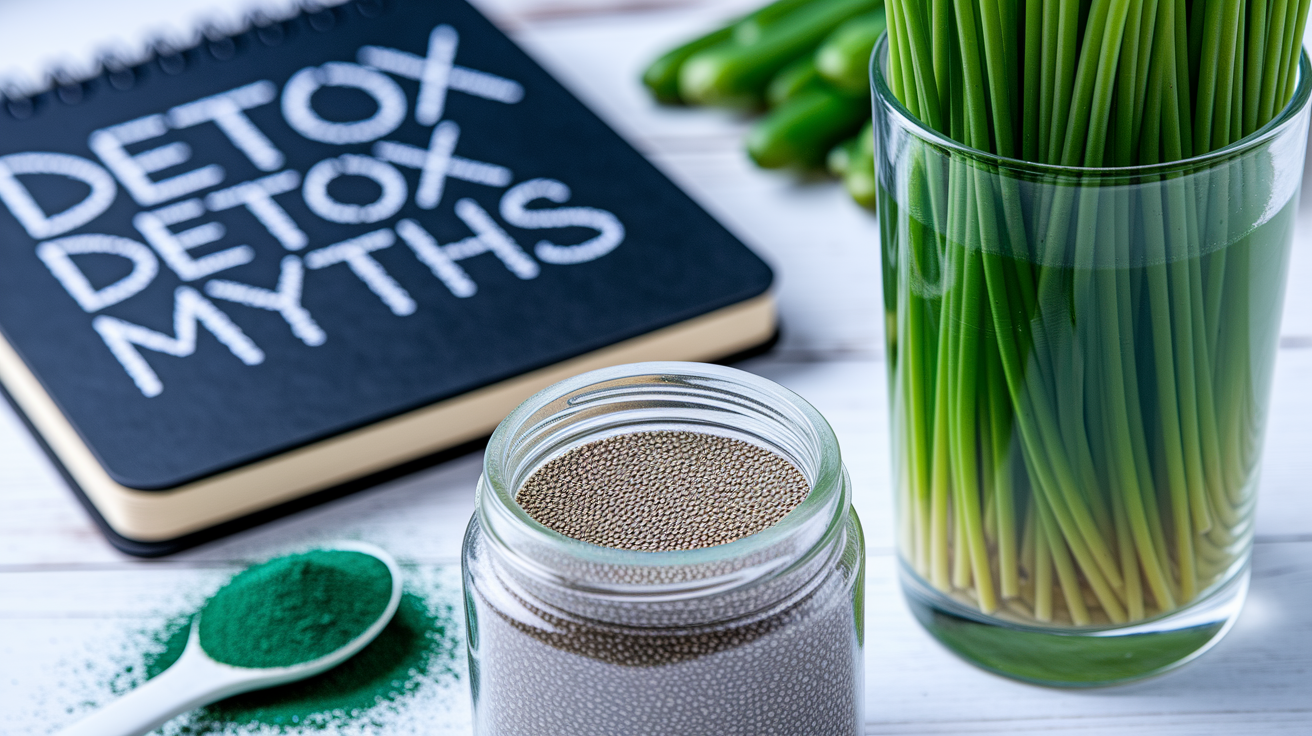
Chia seeds are tiny, tasteless, and swell into a gelatinous blob when wet, which somehow became a trendy pudding base and a symbol of clean eating. They’re high in fiber and omega-3 ALA, a plant-based fat that isn’t as bioavailable as the omega-3s in fish, but they’re still a decent addition to yogurt or oatmeal. The problem is the serving size. Two tablespoons deliver about 140 calories and 10 grams of fiber, which is great unless you dump a quarter cup into your smoothie and wonder why your digestion feels like a science experiment.
Spirulina is marketed as a detoxifying superfood packed with protein, but a typical serving (one tablespoon of powder) contains only about 4 grams of protein and tastes like a pond. Your liver and kidneys already detoxify your body continuously. They don’t need help from algae.
Wheatgrass juice is sold as the most nutrient-dense vegetable on Earth, yet pound-for-pound its nutrient profile is similar to spinach, parsley, or any other dark leafy green. The body also regulates pH naturally, so claims that wheatgrass “alkalizes” your system ignore basic human physiology.
Detox myths that refuse to die:
- “Green powders replace vegetables” – They lack the fiber, volume, and variety of whole produce. You’re basically drinking expensive dust.
- “Juicing removes toxins” – Your liver removes toxins. Juice removes fiber and leaves you with liquid sugar.
- “Chia seeds cleanse your colon” – Chia seeds add fiber, which helps digestion, but they don’t “cleanse” anything except your wallet if you buy them pre-soaked in a $12 pudding cup.
A Witty Take on Kombucha, Bone Broth, and Cold-Pressed Juice Cleanses
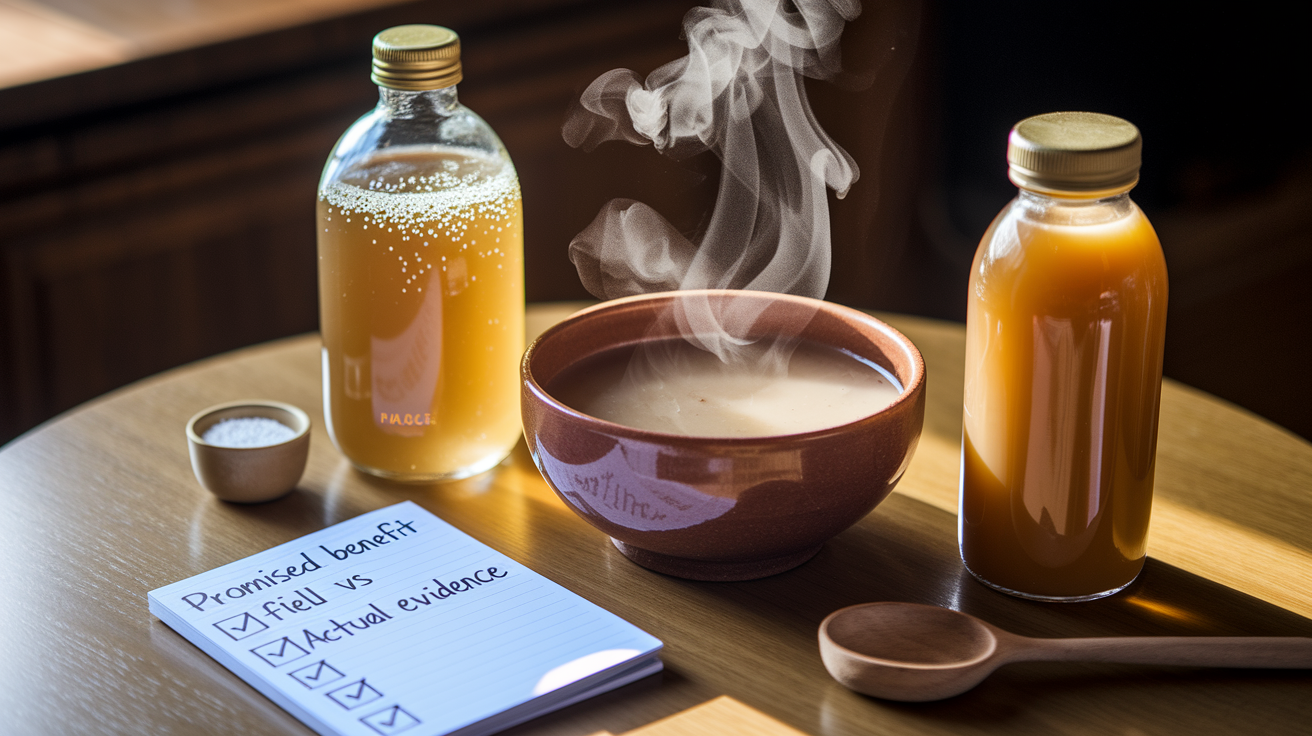
Kombucha tastes like fizzy vinegar and contains trace amounts of probiotics, though most of the bacterial strains don’t survive your stomach acid in meaningful numbers. It’s a fun alternative to soda, lower in sugar than most soft drinks, but it’s not a gut-health miracle. Some bottles contain up to 12 grams of sugar per serving, and if the bottle holds two servings, you’re drinking 24 grams. Almost as much as a Coke.
Bone broth became a wellness darling because it’s rich in collagen and minerals, but your digestive system breaks collagen down into amino acids. The same ones you’d get from chicken, beans, or a hard-boiled egg.
| Trend Drink | Promised Benefit | Actual Evidence |
|---|---|---|
| Kombucha | Probiotic powerhouse that heals your gut | Contains probiotics, but strains and quantities vary; mostly a low-sugar soda alternative |
| Bone Broth | Collagen for skin, joints, and longevity | Collagen is digested into amino acids; no better than eating protein-rich whole foods |
| Cold-Pressed Juice | Detoxifies, floods body with vitamins | High in natural sugar, zero fiber; whole fruit is cheaper and more filling |
| Collagen Shots | Erases wrinkles, strengthens hair and nails | Limited evidence; collagen peptides may support skin hydration but aren’t magic |
| Probiotic Shots | Instant gut reset in one tiny bottle | Most strains don’t colonize; benefits require consistent intake and the right species |
Cold-pressed juice cleanses promise to flush toxins and reset your system, but all they really do is remove fiber, concentrate fruit sugar, and leave you hungry and irritable for three days. One 16-ounce green juice can contain 30 grams of sugar from apples, pineapple, and carrots. Roughly the same as a candy bar, just without the fiber that would slow digestion. There Is Zero Evidence That It’s Any Worse For You than eating whole fruit, and it costs five times as much. The body doesn’t need a juice cleanse. It needs water, sleep, vegetables, and a break from processed snacks.
Satire of Influencer Superfood Testimonials and Clickbait Nutrition Headlines

Influencer wellness content thrives on before-and-after photos, vague science, and the phrase “changed my life,” applied to everything from celery juice to activated charcoal. The formula is simple. Take one trendy ingredient, pair it with a personal story, sprinkle in a few studies taken out of context, and promise results in 30 days or less.
The “eight glasses of water a day” myth is a perfect example. An oversimplified rule that ignores body size, activity level, and climate, yet it’s repeated endlessly because it’s easy to remember and sounds official.
Most superfood testimonials are built on correlation, not causation. Someone starts drinking lemon water, also begins walking daily and sleeping eight hours, then credits the lemon. The same pattern plays out with turmeric lattes, chlorophyll drops, and magnesium sprays. Small changes nestled inside larger lifestyle shifts, but only the photogenic supplement gets the credit.
Influencers cherry-pick studies, highlight the one promising result, and ignore the ten studies that found no effect or the limitations clearly stated in the discussion section.
The result is a flood of content that mixes a kernel of truth with exaggeration, sponsorship bias, and the assumption that what worked for one person in one context will work for everyone. It’s not malicious, usually. But it’s not science either. It’s storytelling with a discount code at the end.
Headline Templates for Overhyped Superfood Articles
- “I Drank Celery Juice for 30 Days and You Won’t Believe What Happened (Spoiler: Mild Digestive Distress)”
- “This One Ancient Seed Cured My Brain Fog, Bloating, and Existential Dread”
- “Doctors Hate This Weird Powder That Fixes Everything (Except It Doesn’t)”
- “I Replaced All My Meals With This Miracle Berry and Lost 10 Pounds (Of Water Weight and Muscle)”
- “The Forgotten Superfood Your Grandma Used (That Science Forgot For Good Reason)”
Balanced Humor: What Actually Matters More Than Superfoods
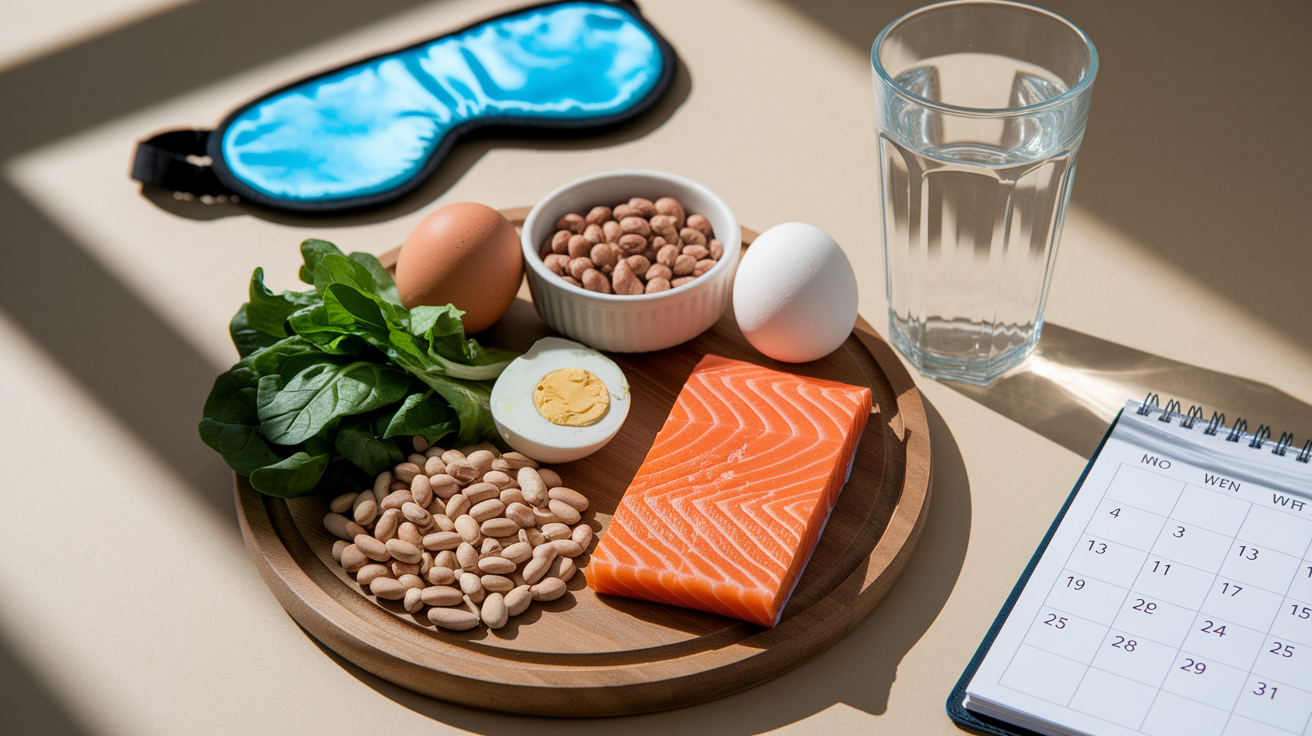
The truth is less exciting than a viral post, but more useful. Eating a variety of whole foods, getting enough protein (around 46 grams per day for women, 56 grams per day for men), drinking water when you’re thirsty, and sleeping enough will do more for your health than any single superfood ever could.
Superfoods aren’t harmful. They’re just overhyped, and the hype distracts from the basics that actually move the needle.
Whole fruit beats juice because it has fiber, which slows sugar absorption and keeps you full longer. A homemade smoothie with protein powder, milk, and frozen fruit costs less and delivers better nutrition than most store-bought options loaded with added sugar. Leafy greens, beans, eggs, chicken, salmon, nuts, and even boring vegetables like carrots and bell peppers all deliver solid nutrition without requiring a second mortgage or a trip to a specialty store.
The goal isn’t perfection or purity. It’s building a pattern that’s sustainable, affordable, and based on evidence rather than Instagram aesthetics. If you like acai bowls or matcha lattes, great, enjoy them. Just don’t expect them to do the work that sleep, movement, and consistent eating patterns actually do.
Practical alternatives to superfood myths:
- Swap expensive powdered greens for frozen spinach, kale, or mixed vegetables. Same nutrients, more fiber, lower cost.
- Replace cold-pressed juice with whole fruit and a glass of water. Better satiety, better blood sugar, better budget.
- Choose plain yogurt with berries over acai bowls with granola and honey. Less sugar, more protein, still tastes good.
- Drink water based on thirst, activity, and climate, not an arbitrary eight-glass rule that ignores your actual needs.
Final Words
We tore through the hype—spinach vs Brussels sprouts iron, matcha’s modest caffeine, acai’s sticker shock, juice that hides sugar, and detox powders that act more like garnish than cure.
None of these are magic. Whole foods, steady protein, fiber, and water move the needle more than a daily miracle powder.
This post is a humorous debunking of popular superfood claims, and the takeaway is simple: enjoy trendy foods if you like them, but build meals around basics. Small, steady choices win.
FAQ
Q: What are the three superfoods that Dr. Gundry recommends?
A: The three superfoods Dr. Gundry recommends are polyphenol-rich plants (berries, olives), fermented foods (yogurt, sauerkraut), and high-quality fats (olive oil, avocado). They support gut health and reduce inflammation.
Q: What are the 5 supreme superfoods?
A: The five supreme superfoods often listed are berries, leafy greens, fatty fish, nuts, and legumes—each offers fiber, protein, healthy fats, and antioxidants. Use them regularly to boost nutrient density and satiety.
Q: What is the number one superfood in the world? / What is the no. 1 healthiest food in the world?
A: There is no single “number one” superfood in the world; dietary patterns matter more. Leafy greens or berries top many lists, but prioritize variety, protein, fiber, and whole foods for lasting benefits.

